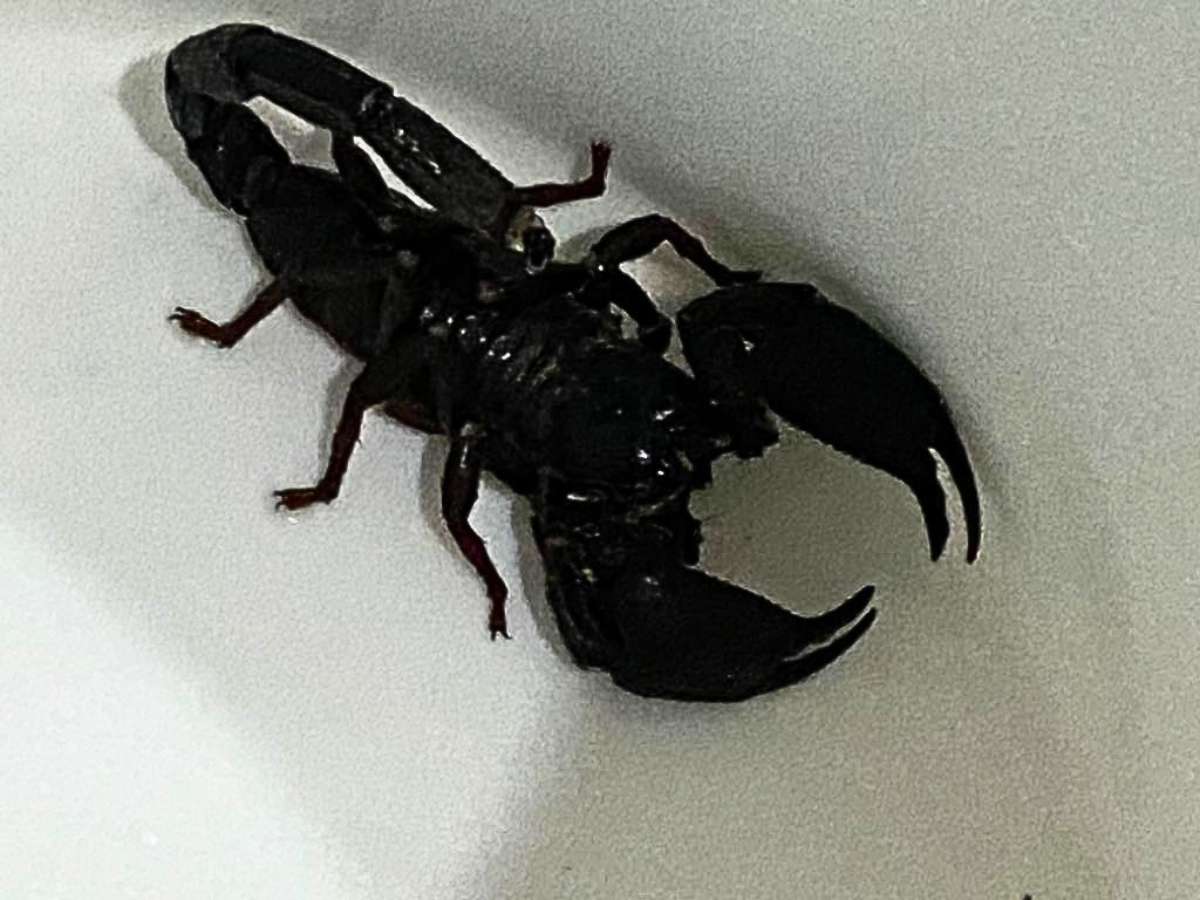
Indian Black Scorpion
Deccanometrus bengalensis
⚠️ Medium Risk
🔵 Neutral
Common Names: Indian Black Scorpion, Bengal Black Scorpion
Local Name: கருந்தேள் (Karundhēḷ)
Family: Scorpionidae
Order: Scorpiones
Size: 95–115 mm
Activity: Nocturnal
🔍 Identification
| Appearance | Large, robust scorpion with broad pedipalps (pincers) and a thick metasoma (tail). Hairy, spherical telson with a poison bladder longer than the stinger. |
| Colour | Dark reddish-brown to light brown body; chelae (pincers) with uneven surfaces |
| Distinguishing Features | Large size (up to 115 mm); pedipalps narrower and longer in males; chelae without pronounced granules or keels; pecten with 14–17 teeth |
| Similar Species | Other Deccanometrus species (D. phipsoni, D. xanthopus); distinguished by chelae surface texture and geographic range |
🌿 Habitat & Behaviour
| Habitat | Dry scrubland, edges of ditches, and areas with thick vegetation and shrubs providing shade and cover; native to West Bengal and Odisha |
| Behaviour | Nocturnal ambush predator; hides under rocks, logs, and debris during the day; solitary and territorial; uses pincers to capture prey |
| Activity Pattern | Strictly nocturnal; emerges after dark to hunt; retreats to burrows or cover at dawn |
| Diet | Carnivorous — insects, spiders, small invertebrates; occasionally small lizards and other scorpions |
| Seasonal Presence | Year-round; more active during warm, humid months; may shelter deeper during extreme heat or cold |
🔄 Lifecycle
| Egg Stage | Viviparous — females give birth to live young (no egg stage); gestation period several months |
| Nymph Stage | Newborns ride on the mother's back for 1–2 weeks until first moult; undergo 5–7 moults over 1–3 years to reach maturity |
| Adult Stage | Adults can live 3–8 years; males perform a courtship dance (promenade à deux) before mating |
| Generations per Year | Slow-reproducing; typically 1 brood per year |
🌾 Orchard Impact
| Impact Type | Neutral — does not damage crops; preys on pest insects |
| Benefit | Controls populations of pest insects, spiders, and other small invertebrates in and around orchards |
| Ecosystem Role | Predator in the soil and ground-level food web; helps regulate invertebrate populations |
🛡️ Pest Status & Safety
| Pest Classification | Not a pest — neutral to beneficial as a predator of pest insects |
| Danger to Humans | Medium — sting is painful but generally not lethal; may cause local swelling, pain, and numbness; allergic reactions possible |
| Danger to Livestock | Low — sting may cause temporary discomfort to small animals |
| Invasive Status | Native to eastern India (West Bengal and Odisha); not invasive |
🚫 Prevention & Control
| Personal Protection | Wear closed-toe shoes and gloves when working in areas with debris, rocks, or leaf litter; shake out shoes and clothing before wearing |
| Habitat Management | Clear debris, woodpiles, and dense leaf litter near living areas; seal gaps in walls and foundations |
| Night Work | Use a UV blacklight torch when working at night — scorpions fluoresce under UV light and are easy to spot |
| If Stung | Clean the sting site; apply cold compress; seek medical attention if severe pain, swelling, or allergic reaction occurs |
| Control Needed | Generally not needed — beneficial predator; relocate rather than kill if found near living areas |
📝 Orchard Observation Notes
Add your field observations here.