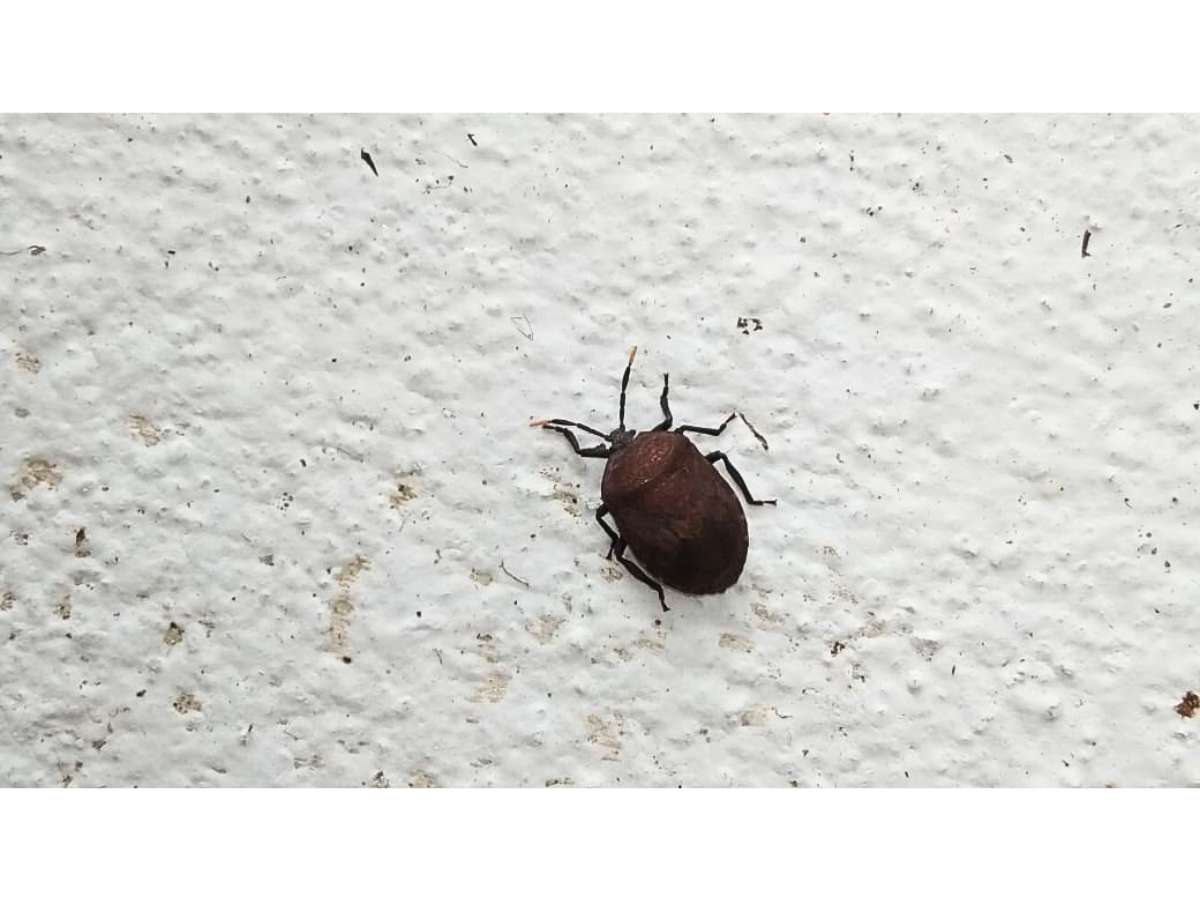
Brown Stink Bug
Euschistus servus
🚨 Pest
Common Names: Brown Stink Bug
Local Name: பழுப்பு நாற்றப் பூச்சி (Pazhuppu Nāṟṟap Pūchchi)
Family: Pentatomidae
Order: Hemiptera
Size: 10–15 mm
Activity: Diurnal
🔍 Identification
| Appearance | Broad, flattened, shield-shaped bug with piercing-sucking mouthparts. Grayish-yellow to brown body with dark punctures on the dorsal surface. |
| Colour | Grayish-brown to yellowish-brown with dark punctures on back; pinkish tinge on ventral surface; darker 4th and 5th antennal segments |
| Distinguishing Features | Rounded humeral angles on pronotum; large cheeks passing the clypeus; yellowish antennal bands; releases foul odour when disturbed |
| Similar Species | Brown Marmorated Stink Bug (Halyomorpha halys) — distinguished by rounded vs. pointed shoulders and less apparent antennal bands |
🌿 Habitat & Behaviour
| Habitat | Orchards, crop fields, pecan groves, soybean and cotton fields; overwinters in ditch banks, fence rows, and leaf litter |
| Behaviour | Feeds on developing fruits and seeds using piercing-sucking mouthparts; releases defensive stink when disturbed; overwinters as adult |
| Activity Pattern | Active during warm months; emerges from overwintering sites in spring during bloom and shuck split |
| Diet | Polyphagous — peaches, pecans, soybeans, cotton, corn, tomatoes, green beans, and various fruit and grain crops |
| Seasonal Presence | Spring through autumn; may remain active year-round in mild winters in southern regions |
| Host Plants | Peach, Pecan, Soybean, Cotton, Corn, Tomato, Green Bean, and various fruit and nut trees |
🔄 Lifecycle
| Egg Stage | Eggs laid in clusters on leaf undersides; yellowish-translucent, turning light pink before hatching |
| Nymph Stage | 5 instars over approximately 29 days; nymphs are pale green, oval, and smaller than adults |
| Adult Stage | Adults overwinter in protected areas; emerge in spring to feed and reproduce |
| Generations per Year | Multivoltine — 2 or more generations per year depending on climate |
| Overwintering | Adults overwinter under leaf litter, in ditch banks, fence rows, and other protected sites |
🌾 Orchard Impact
| Impact Type | Pest — causes catfacing on fruit and kernel damage in nuts |
| Crops Affected | Peaches, pecans, soybeans, cotton, corn, tomatoes, green beans, and other seed, grain, nut, and fruit crops |
| Damage Description | Pierces developing fruit causing catfacing scars on peaches; feeds on pecan kernels causing dark spots; damages corn seedlings and soybean pods |
| Damage Severity | High — serious pest in southern U.S.; sporadic but can cause significant damage especially under drought conditions |
🛡️ Pest Status & Safety
| Pest Classification | Serious polyphagous pest of fruit, grain, nut, and seed crops |
| Danger to Humans | None — harmless to humans; releases a foul-smelling defensive secretion when disturbed |
| Invasive Status | Native to North America; widespread across southern Canada and the United States |
🚫 Prevention & Control
| Physical Control | Hand-pick adults from plants; remove overwintering habitat such as dense weeds and leaf litter near orchards |
| Pheromone Traps | Aggregation pheromone traps can be used for monitoring population levels and timing control measures |
| Biological Control | Egg parasitoids (Telenomus and Trissolcus species) provide natural control; encourage parasitoid habitat |
| Organic Sprays | Kaolin clay spray as a deterrent; pyrethrin-based sprays for heavy infestations |
| Threshold | Treat when populations exceed economic thresholds; scout during bloom and fruit development stages |
| Early Warning Signs | Catfacing scars on developing fruit; dark kernel spots on pecans; stink bugs on trap crops or field edges |
📝 Orchard Observation Notes
Add your field observations here.