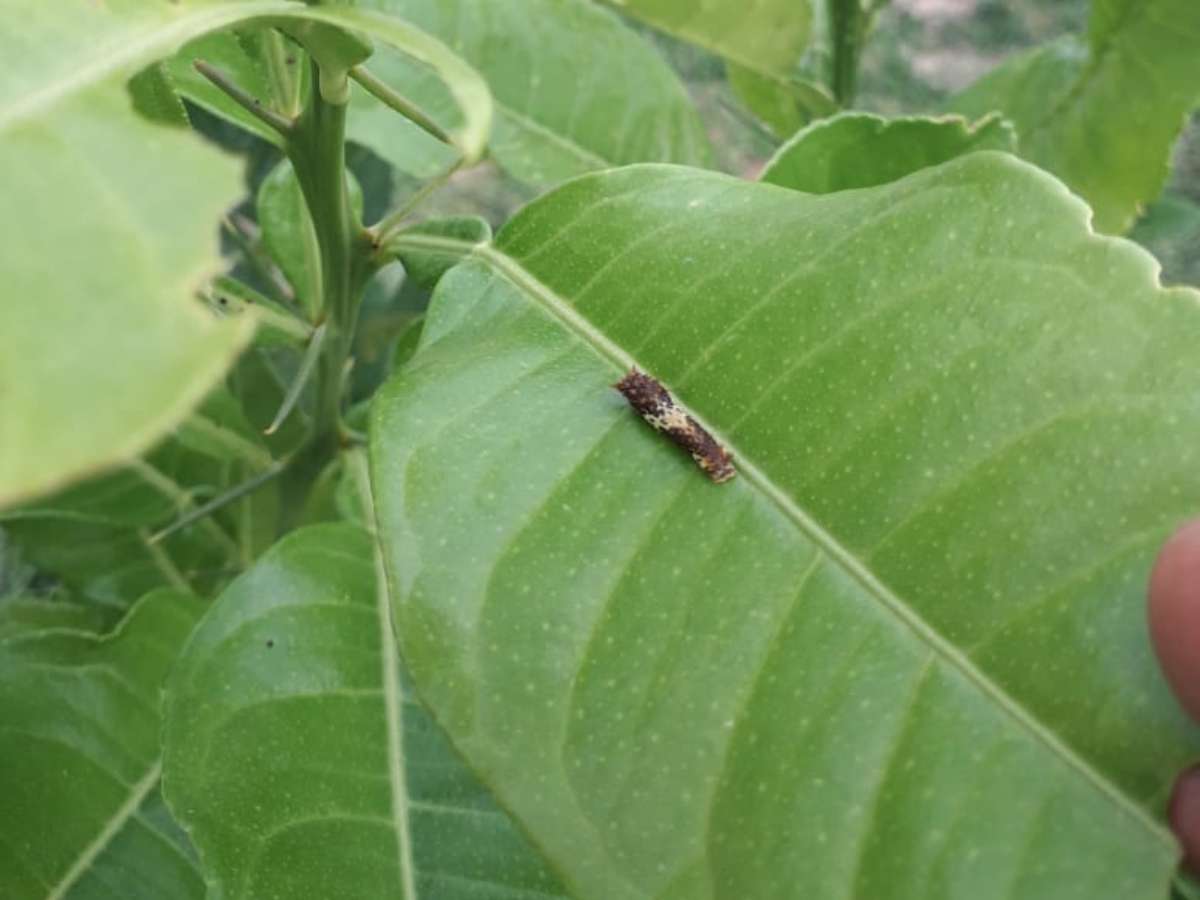
Lime Butterfly
Papilio demoleus
🚨 Pest (Larva)
✅ Pollinator (Adult)
Common Names: Lime Butterfly, Lemon Butterfly, Chequered Swallowtail, Citrus Swallowtail
Local Name: எலுமிச்சை பூச்சி (Elumichai Pucci)
Family: Papilionidae
Order: Lepidoptera
Wingspan: 80–100 mm
Activity: Diurnal
🔍 Identification
| Adult Appearance | Large butterfly with black wings patterned with white/cream patches and spots; red eyespots on hindwings; no tail projections |
| Larva Appearance | Early instars resemble bird droppings (black/white); later instars bright green with white diagonal bands and orange eyespots on thorax |
| Pupa | Green or brown chrysalis attached to twigs; well camouflaged |
| Eggs | Pale yellow, spherical; laid singly on young leaves of host plants |
🌿 Habitat & Behaviour
| Habitat | Orchards (especially citrus), gardens, forests, cultivated areas; widespread across South and Southeast Asia |
| Behaviour | Strong fliers; males patrol territories; attracted to flowers for nectar; larvae feed voraciously on citrus leaves |
| Host Plants | Citrus species (lemon, lime, orange), Curry Leaf (Murraya koenigii), Bael (Aegle marmelos) |
| Seasonal Presence | Year-round in tropical climates; 3–4 generations per year |
🔄 Lifecycle
| Egg Stage | Laid singly on young leaves; hatch in 3–5 days |
| Larval Stage | 4–5 instars over 2–3 weeks; feeds on citrus leaves |
| Pupal Stage | Chrysalis stage 1–2 weeks; attached to twigs or stems |
| Adult Stage | 2–3 weeks; feeds on nectar; mates and lays eggs |
| Generations per Year | 3–4 generations in tropical climates |
🌾 Orchard Impact
| Impact Type | Dual — pest (larva) and beneficial pollinator (adult) |
| Crops Affected | Citrus (lemon, lime, orange, sweet lime), Curry Leaf |
| Damage Description | Defoliation of young citrus shoots; can strip new growth completely; multiple generations cause cumulative damage on young trees |
| Benefit | Adults are important pollinators; visit flowers of many orchard species |
🛡️ Pest Status & Safety
| Pest Classification | Minor to moderate pest on citrus; important pollinator as adult |
| Danger to Humans | None — completely harmless; larvae may emit unpleasant smell when threatened |
| Invasive Status | Native to South and Southeast Asia |
🚫 Prevention & Control
| Physical Control | Hand-pick eggs and young larvae from citrus leaves; check undersides of young leaves regularly |
| Biological Control | Encourage parasitoid wasps (Trichogramma spp.); birds naturally predate larvae |
| Organic Sprays | Bacillus thuringiensis (Bt) spray on young larvae; neem oil on egg clusters |
| Threshold | Control only when larval numbers are high on young trees; established trees can tolerate moderate defoliation |
| Early Warning Signs | Eggs on young citrus leaves; bird-dropping-like early instar larvae; chewed young shoots |
📝 Orchard Observation Notes
Add your field observations here.