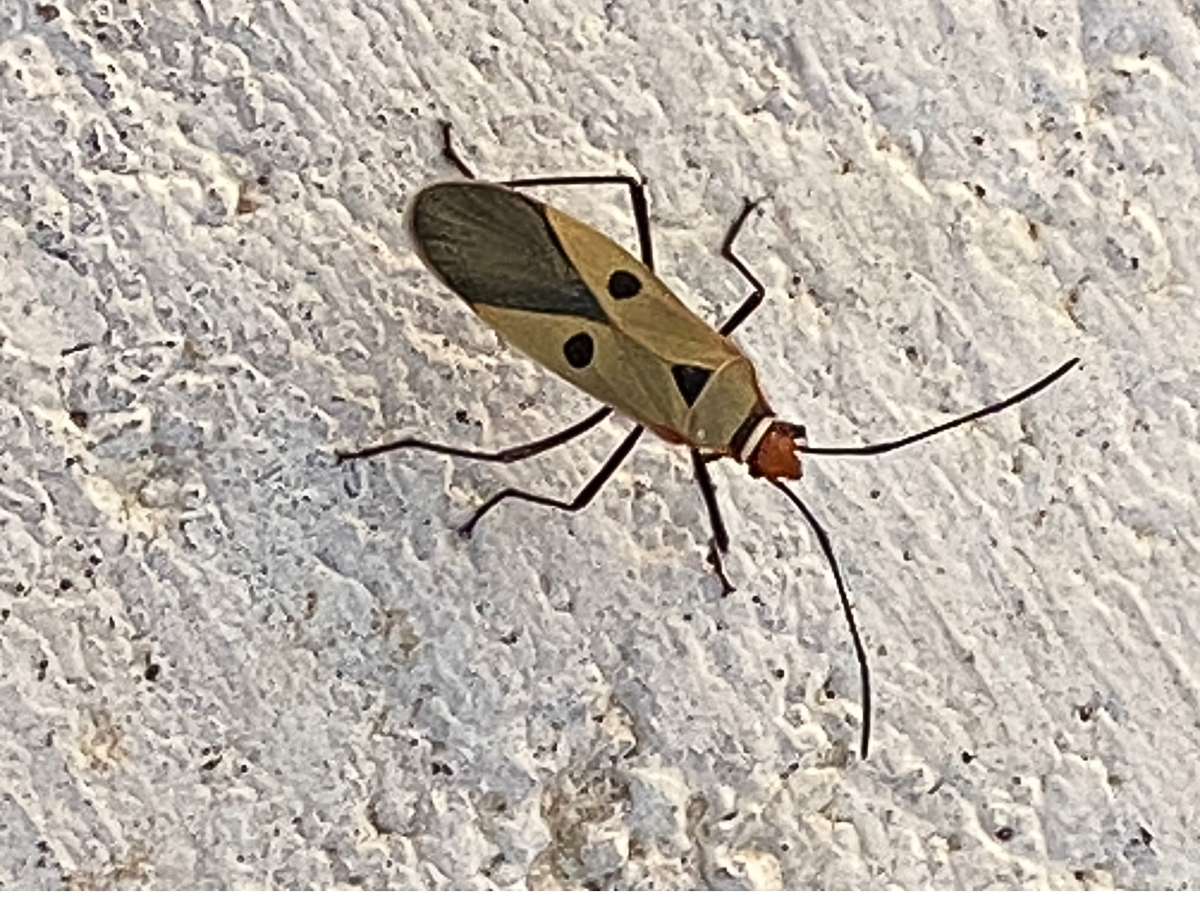
Red Cotton Stainer
Dysdercus cingulatus
🚨 Pest
Common Names: Red Cotton Stainer, Red Cotton Bug
Local Name: சிவப்பு பருத்தி நாசினி (Sivappu Paruthi Nāsini)
Family: Pyrrhocoridae
Order: Hemiptera
Size: 12–18 mm
Activity: Diurnal
🔍 Identification
| Appearance | Elongate-oval bug with a predominantly red body, white collar band, and black markings on the forewings. Abdomen has white stripes ventrally. |
| Colour | Bright red with a white collar; forewings red with black hemelytral spots; ventral abdomen with white stripes |
| Distinguishing Features | Bright red and black coloration with white collar; femora have varying amounts of black; gregarious habit |
| Similar Species | Dysdercus koenigii — very similar but slightly smaller with completely red femora (D. cingulatus has black-marked femora) |
🌿 Habitat & Behaviour
| Habitat | Cotton fields, orchards with malvaceous plants, gardens with okra and hibiscus across South and Southeast Asia |
| Behaviour | Gregarious; forms large aggregations on host plants; migrates between host plants as seeds ripen; feeds on nectar and fruit between hosts |
| Activity Pattern | Active during daytime; adults migrate to new hosts when current food source is depleted |
| Diet | Sap-feeder — cotton bolls and seeds, okra, hibiscus, jute, silk cotton tree, kapok, teak, and citrus fruits |
| Seasonal Presence | Year-round in tropical regions; peak populations during cotton boll formation |
| Host Plants | Cotton (Gossypium), Okra, Hibiscus, White Jute, Silk Cotton Tree (Bombax ceiba), Kapok, Teak, Citrus |
🔄 Lifecycle
| Egg Stage | Females lay 60–90 eggs per batch in chambers dug in soil; eggs hatch in about 5 days |
| Nymph Stage | 4 nymphal instars over 30–40+ days; nymphs are bright red and gregarious |
| Adult Stage | Adults live several weeks; females lay multiple egg batches during their lifetime |
| Generations per Year | Multiple overlapping generations per year in tropical climates |
🌾 Orchard Impact
| Impact Type | Pest — causes direct feeding damage and transmits staining fungi |
| Crops Affected | Cotton, okra, hibiscus, jute, silk cotton tree, kapok, teak, citrus, and other malvaceous crops |
| Damage Description | Pierces cotton bolls to feed on developing seeds, introducing fungi that stain the lint yellow-brown; seeds wither, fibres fail to expand, and bolls may abort |
| Damage Severity | High — most serious pest of cotton in South and Southeast Asia; causes significant economic losses |
🛡️ Pest Status & Safety
| Pest Classification | Major pest of cotton; also damages okra, hibiscus, and other malvaceous crops |
| Danger to Humans | None — harmless to humans |
| Invasive Status | Native to South and Southeast Asia; widespread across tropical regions |
🚫 Prevention & Control
| Physical Control | Hand-collect adults and nymphs from plants; remove and destroy fallen bolls; clean up crop residues after harvest |
| Biological Control | Encourage predatory insects and parasitoids; egg parasitoids can reduce populations |
| Organic Sprays | Neem seed kernel extract; neem oil spray; insecticidal soap for nymph control |
| Early Warning Signs | Aggregations of bright red bugs on cotton bolls or okra pods; stained or discoloured lint; aborted bolls |
📝 Orchard Observation Notes
Add your field observations here.