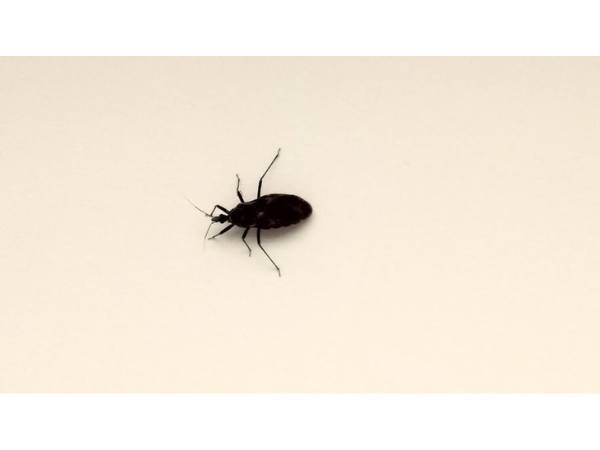
Red-spotted Assassin Bug
Triatoma rubrofasciata
🔵 Beneficial Predator
🩸 Do Not Handle
Common Names: Red-spotted Assassin Bug, Kissing Bug, Cone-nose Bug
Local Name: சிவப்பு புள்ளி கொண்ட கொலை வண்டு
Family: Reduviidae
Order: Hemiptera
Size: 16–24 mm
Activity: Nocturnal
🔍 Identification
| Appearance | Large, flattened bug with dark brown to black body; distinctive red/orange markings on abdomen margins and legs; elongated curved beak (proboscis) |
| Colour | Dark brown/black with red-orange spots or bands on abdomen edges |
| Distinguishing Features | Long curved proboscis folded under head; flattened oval body; red markings on abdomen; attracted to lights at night |
🌿 Habitat & Behaviour
| Habitat | Orchards, gardens, agricultural areas, human habitations; hides in crevices, under bark, in stored materials during day |
| Behaviour | Nocturnal predator; attracted to lights; solitary hunter; hides in dark crevices during day; can enter homes |
| Diet | Primarily predatory — feeds on insects (flies, mosquitoes, beetles, caterpillars); may occasionally feed on blood of sleeping animals or humans |
| Seasonal Presence | Year-round in tropical climates; 1–2 generations per year |
🔄 Lifecycle
| Egg Stage | Eggs laid in clusters in sheltered locations; hatch in 2–3 weeks |
| Nymph Stage | 5 instars over 2–3 months; nymphs resemble adults but lack wings |
| Adult Stage | 6–12 months lifespan; 1–2 generations per year |
🌾 Orchard Impact
| Impact Type | Beneficial — predator of pest insects |
| Benefit | Controls flies, mosquitoes, beetles, caterpillars, and other pest insects through predation |
| Risk | Painful defensive bite if handled or accidentally disturbed; potential disease vector in some regions |
🛡️ Pest Status & Safety
| Pest Classification | Not a plant pest; beneficial predator; human safety concern due to bite |
| Danger to Humans | Medium-High — delivers a very painful bite if handled or disturbed; do not handle with bare hands; bite can cause localised swelling and pain |
| Disease Risk | In the Americas, related species transmit Chagas disease; risk is lower in Asia but caution is advised |
| Danger to Livestock | Low — may bite sleeping animals |
🚫 Prevention & Safety
| Personal Protection | Always wear gloves when working in areas where this bug may hide; never handle with bare hands |
| Habitat Management | Remove debris, bark piles, and stored materials where bugs hide; seal cracks in structures |
| Night Work | Use a torch when working at night; check clothing before wearing if left outdoors |
| If Bitten | Clean wound with antiseptic; apply cold compress for swelling; seek medical attention if severe reaction occurs |
| Lighting | Reduce outdoor lighting near living areas as adults are strongly attracted to lights |
📝 Orchard Observation Notes
Add your field observations here.