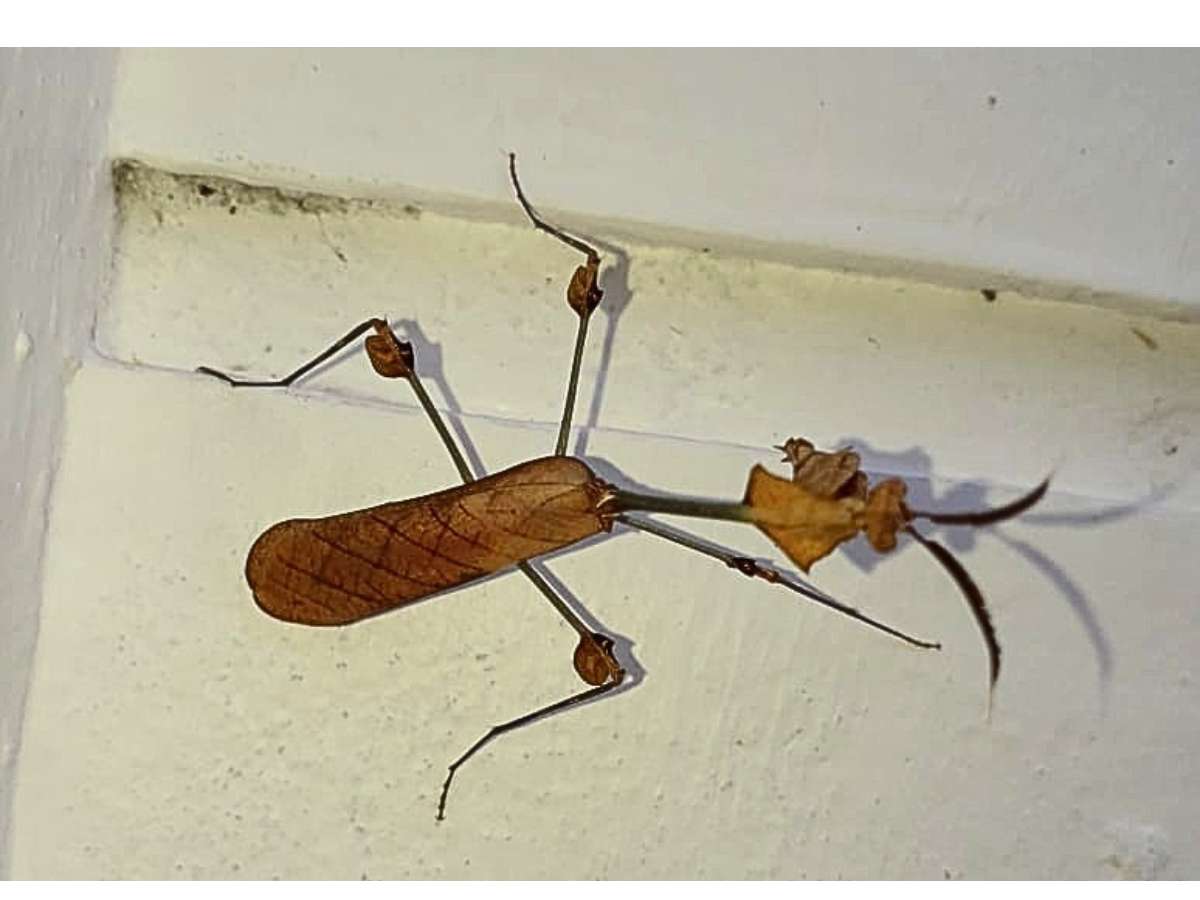
Wandering Violin Mantis
Gongylus gongylodes
✅ Beneficial
⚠️ Low Risk
Common Names: Wandering Violin Mantis, Indian Violin Mantis
Local Name: வயலின் வேடன் (Violin Vēdan)
Family: Empusidae
Order: Mantodea
Size: 60–100 mm
Activity: Diurnal and nocturnal
🔍 Identification
| Appearance | Large, slender mantis with a distinctive violin-shaped body. Brown to tan coloration with leaf-like extensions on legs and thorax. |
| Colour | Brown, tan, or grey — excellent camouflage mimicking dried twigs and leaves |
| Distinguishing Features | Elongated prothorax (violin shape), raptorial forelegs with spines, can rotate head 270° |
| Similar Species | Other mantis species; distinguished by the unique elongated violin-shaped thorax |
🌿 Habitat & Behaviour
| Habitat | Orchards, gardens, shrublands, deciduous forests; prefers dense vegetation with good camouflage opportunities |
| Behaviour | Ambush predator; remains motionless for extended periods waiting for prey; solitary and territorial |
| Activity Pattern | Active both day and night; hunts by stealth |
| Diet | Carnivorous — flies, mosquitoes, grasshoppers, beetles, butterflies, caterpillars, and other insects |
| Seasonal Presence | Year-round in tropical climates; most active during warm months |
🔄 Lifecycle
| Egg Stage | Laid in an ootheca (egg case) containing 40–60 eggs; attached to twigs or bark |
| Nymph Stage | 5–7 instars over 3–4 months; nymphs resemble adults but lack wings |
| Adult Stage | 3–4 months lifespan; females may cannibalize males after mating |
| Generations per Year | 1 generation per year |
🌾 Orchard Impact
| Impact Type | Beneficial — natural pest control |
| Benefit | Controls fruit flies, leaf-eating insects, mosquitoes, and other agricultural pests through predation |
| Ecosystem Role | Valuable natural biocontrol agent; reduces need for chemical pesticides |
🛡️ Pest Status & Safety
| Pest Classification | Not a pest — beneficial predator |
| Danger to Humans | Low — can bite if handled roughly but not venomous; harmless to humans |
| Invasive Status | Native species in South and Southeast Asia |
✅ Conservation & Encouragement
| How to Encourage | Maintain diverse vegetation; provide perches and shelter; avoid broad-spectrum pesticides |
| Threats | Pesticide use; habitat loss; over-collection for pet trade |
| Conservation Status | Not evaluated; locally common in suitable habitats |
📝 Orchard Observation Notes
Add your field observations here.