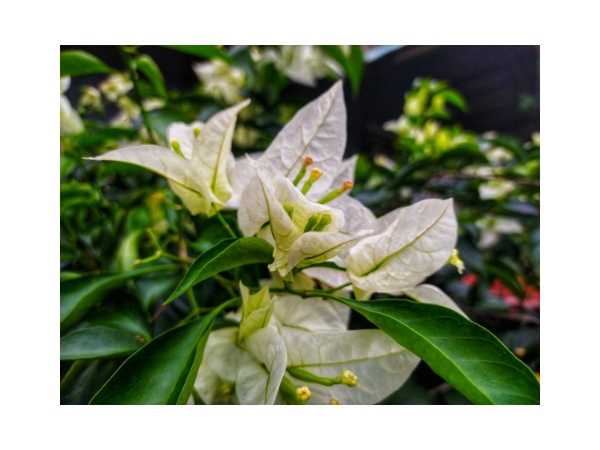
Bougainvillea - White
Bougainvillea spectabilis
Common Names: White Bougainvillea, White Paper Flower, Snow White Bougainvillea
Local Name: Vella Kagitha Poo (Tamil), Safed Bougainvillea (Hindi)
Family: Nyctaginaceae
Origin: Brazil (South America); white variety selected in cultivation
Plant Type: Perennial evergreen thorny climbing shrub
Variety: White-bracted variety; 'Alba' or 'Snow White' cultivar
Average Lifespan: 20–50+ years
🌿 Botanical Description
| Growth Habit | Vigorous thorny climbing shrub; scrambles over supports using thorns |
| Plant Size | 4–12 meters as climber; 1–2 meters as pruned shrub |
| Leaves | Alternate, ovate; 4–10 cm long; mid-green; slightly hairy; deciduous in dry season |
| Flowers | True flowers are tiny white tubular structures; surrounded by 3 large papery pure white bracts |
| Flower Characteristics | Pure white bracts create elegant, clean appearance; blooms profusely after drought stress; bracts last 4–6 weeks |
| Root System | Deep, extensive root system; very drought-tolerant once established |
☀ Growing Conditions
| Climate | Tropical, subtropical, and Mediterranean; thrives in warm, dry conditions |
| Temperature Range | 15–35°C; frost-sensitive; tolerates brief cold spells |
| Rainfall Requirement | 500–1500 mm; dry period triggers prolific flowering |
| Soil Type | Well-drained sandy loam to loam; tolerates poor soils; dislikes waterlogging |
| Soil pH Preference | 5.5–7.0 |
| Sun Requirement | Full sun (6+ hours); essential for prolific flowering |
| Spacing | 2–4 meters apart; needs strong support structure |
| Irrigation Method | Drip or basin; reduce watering to trigger flowering; avoid waterlogging |
| Water Requirement | Low to moderate; drought stress promotes flowering |
| Can it Grow in Pots? | Yes, excellent in pots (20–40 liters); root restriction promotes flowering |
🌾 Cultivation & Care
| Fertilizer Schedule | Monthly; high-phosphorus and potassium; avoid excess nitrogen |
| Recommended Organic Fertilizers | Bone meal, wood ash, vermicompost; banana peel compost for potassium |
| Pesticide Frequency | As needed; generally pest-resistant |
| Recommended Organic Pesticides | Neem oil for aphids and loopers; insecticidal soap for mites |
| Mulching Practice | Light mulch around base; avoid heavy mulching |
| Training System | Train on trellis, pergola, or wall; tie branches to guide; thorns help it grip |
| Pruning Time | After each flowering flush; major prune after monsoon season |
| How to Prune | Cut back by one-third to one-half after flowering; wear thick gloves (sharp thorns) |
| Common Pests | Aphids, loopers (caterpillars), mealybugs, scale insects |
| Common Diseases | Root rot in waterlogged soils; leaf spot; chlorosis in alkaline soils |
| Disease Prevention & Remedies | Excellent drainage; avoid overwatering; iron chelate for chlorosis; neem oil for fungal issues |
🌸 Flowering & Fruiting
| Flowering Months | Multiple flushes; peak November–April (dry season); triggered by drought stress |
| Pollination Type | Insect-pollinated (bees, butterflies) |
| Pollination Notes | White bracts last 4–6 weeks; rarely sets seed in cultivation |
🌱 Pollination & Propagation
| Pollination Details | Insect-pollinated; bracts attract pollinators to small true flowers |
| Propagation by Seeds | Rarely used; seeds not commonly available |
| Propagation by Cuttings | Hardwood or semi-hardwood cuttings root well; preferred method; use rooting hormone; wear gloves |
| Propagation by Grafting | Grafting used to combine multiple colors on one plant |
💧 Environmental Impact & Sustainability
| Water Usage | Very low; one of the most drought-tolerant ornamental plants |
| Soil Conservation Practices | Excellent for erosion control on slopes; dense thorny growth forms protective barriers |
| Organic Practices Used | Minimal inputs; very low maintenance once established |
| Companion Plants | Pairs beautifully with red and purple bougainvillea for color contrast |
| Biodiversity Benefits | Attracts butterflies and bees; thorny growth provides nesting habitat for birds |
🌿 Cultural Significance
| Symbolism | White variety symbolizes purity and elegance; popular for wedding and event decorations |
| Traditional Uses | Bracts used in traditional medicine for respiratory conditions; used in herbal teas in some cultures |
📝 Orchard Observation Notes
Add your field observations here.