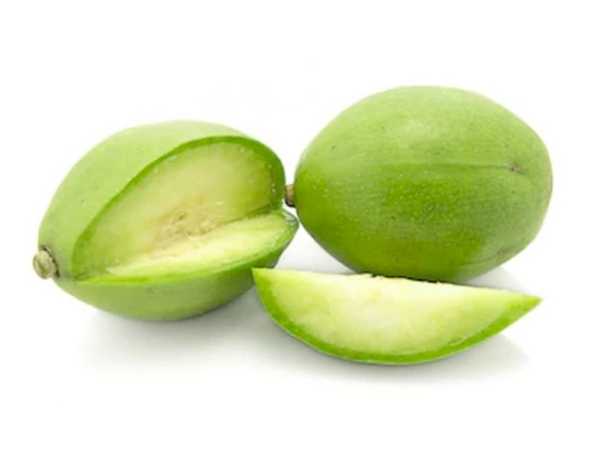
Ambalam (Sweet)
Spondias dulcis
Common Names: Ambarella, Golden Apple, June Plum, Kedondong, Great Hog Plum
Local Name: Ambazhanga (Malayalam), Ambalam (Tamil), Amra (Bengali)
Family: Anacardiaceae
Origin: Melanesia and Polynesia (Pacific Islands)
Plant Type: Perennial semi-deciduous tree
Variety: Sweet ambarella — crisp, mildly sweet-tart fruit
Average Lifespan: 40–60 years
🌿 Botanical Description
| Growth Habit | Fast-growing semi-deciduous tree with erect trunk and spreading crown |
| Plant Size | 10–20 meters tall; canopy spread 8–12 meters |
| Leaves | Pinnately compound, 20–60 cm long, 9–25 glossy leaflets with serrated margins |
| Flowers | Small, white, 5-petaled, borne in terminal panicles 15–30 cm long |
| Flower Characteristics | Mildly fragrant; bisexual flowers; attract bees and insects |
| Fruit | Oval drupe, 6–9 cm long, crisp flesh with fibrous spiny core |
| Fruit Color | Green when unripe, turning golden yellow when ripe |
| Seed Characteristics | Distinctive spiny fibrous stone with 1–5 seeds |
| Root System | Deep taproot with spreading lateral roots; wind-resistant |
☀ Growing Conditions
| Climate | Tropical; frost-sensitive; thrives in humid lowlands |
| Temperature Range | 22–35°C ideal; damaged below 5°C |
| Rainfall Requirement | 1500–2500 mm annually; well-distributed rainfall preferred |
| Soil Type | Deep, well-drained loamy soil; tolerates various soil types |
| Soil pH Preference | 5.5–7.5 |
| Sun Requirement | Full sun (6+ hours daily) |
| Spacing | 8–10 meters between trees |
| Irrigation Method | Rain-fed in tropics; drip or basin irrigation in dry areas |
| Water Requirement | Moderate; regular watering for young trees |
| Can it Grow in Pots? | Young trees in large containers (50+ liters); not long-term |
🌾 Cultivation & Care
| Fertilizer Schedule | 3 times per year — pre-monsoon, post-monsoon, and post-harvest |
| Recommended Organic Fertilizers | Compost, well-rotted manure, bone meal, wood ash |
| Pesticide Frequency | Minimal; monitor during fruiting |
| Recommended Organic Pesticides | Neem oil, fruit fly traps, kaolin clay spray |
| Mulching Practice | Organic mulch around base to retain moisture |
| Training System | Open centre; allow natural branching habit |
| Pruning Time | After harvest; before new growth flush |
| How to Prune | Remove dead wood and water sprouts; maintain manageable height |
| Common Pests | Fruit fly, scale insects, mealybugs |
| Common Diseases | Anthracnose, root rot in waterlogged soils |
| Disease Prevention & Remedies | Good drainage, avoid waterlogging, copper fungicide for anthracnose |
🌸 Flowering & Fruiting
| Flowering Months | April–June |
| Fruiting Season | July–November; fruits in heavy clusters |
| Days to Harvest | 90–120 days from flowering |
| Harvest Indicators | Fruit turns golden yellow, slightly soft; harvested green for cooking |
| Average Yield per Plant | 150–300 kg per tree per year (mature tree) |
| Pollination Type | Insect pollination; partially self-fertile |
| Pollination Notes | Bees are primary pollinators; cross-pollination improves yield |
🌱 Pollination & Propagation
| Pollination Details | Bisexual flowers; self-fertile but benefits from cross-pollination |
| Propagation by Seeds | Seeds germinate in 3–6 weeks; seedlings fruit in 4–6 years |
| Propagation by Cuttings | Large hardwood cuttings root easily; air layering also effective |
| Propagation by Grafting | Wedge grafting for superior cultivars; fruits in 2–3 years |
💧 Environmental Impact & Sustainability
| Water Usage | Moderate; efficient once established |
| Soil Conservation Practices | Large canopy reduces soil erosion; leaf litter adds organic matter |
| Organic Practices Used | Composting, mulching, minimal chemical inputs |
| Companion Plants | Banana, pineapple, leguminous cover crops |
| Biodiversity Benefits | Fruit attracts birds and bats; flowers support pollinators |
💰 Economic Importance
| Commercial Production Regions | Polynesia, Southeast Asia, Caribbean, Sri Lanka, South India |
| Market Uses | Fresh fruit, salads, juices, chutneys |
| Processing Uses | Pickles, preserves, dried fruit, curries, sambal |
| Market Value (Approx.) | ₹40–100 per kg (India); higher in export markets |
🌿 Cultural Significance
| Symbolism | Symbol of abundance in Pacific Island cultures; planted near homes for good fortune |
| Traditional Uses | Green fruit used in Southeast Asian salads and sambals; bark used in traditional Polynesian medicine |
🍈 Nutritional Information
| Calories | 46 kcal per 100g |
| Dietary Fiber | 1.6 g per 100g |
| Vitamin C | 30–42 mg per 100g |
| Vitamin A | 233 IU per 100g |
| Iron | 0.3 mg per 100g |
| Potassium | 127 mg per 100g |
| Antioxidants | Polyphenols, flavonoids, carotenoids |
| Other Key Nutrients | Thiamine, riboflavin, niacin, calcium |
🌿 Medicinal Uses
| Anxiety & Sleep | Not a primary use |
| Immune Support | High vitamin C boosts immunity |
| Anti-inflammatory Properties | Leaf and bark extracts show anti-inflammatory activity |
| Heart Health | Low calorie, antioxidant-rich fruit supports heart health |
| Digestive Health | Fiber content aids digestion; unripe fruit stimulates appetite |
Disclaimer: Information provided is for educational purposes only and not a substitute for medical advice.
📸 Photo Gallery
📝 Orchard Observation Notes
Add your field observations here.