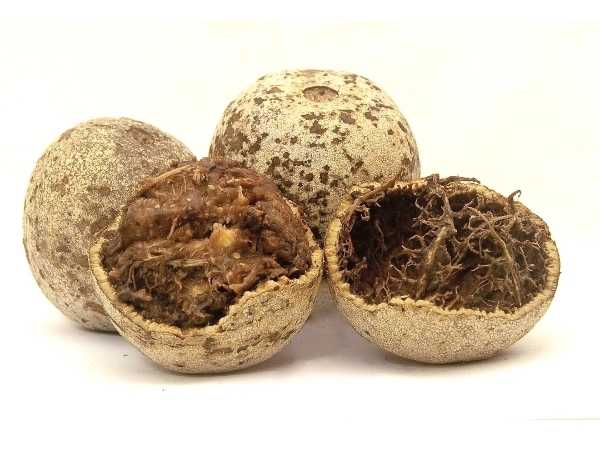
Apple Wood
Limonia acidissima
Common Names: Wood Apple, Elephant Apple, Monkey Fruit, Curd Fruit
Local Name: Vilam Palam (Tamil), Kaitha / Kaith (Hindi), Belada Hannu (Kannada)
Family: Rutaceae
Origin: Indian subcontinent and Sri Lanka
Plant Type: Perennial deciduous to semi-deciduous tree
Variety: Wood Apple — hard-shelled fruit with aromatic, tangy-sweet brown pulp
Average Lifespan: 50–100+ years
🌿 Botanical Description
| Growth Habit | Medium to large, slow-growing tree with spreading, irregular canopy; armed with spines |
| Plant Size | 8–15 meters tall; canopy spread 6–10 meters |
| Leaves | Pinnately compound, 5–7 leaflets, each 2–4 cm long; aromatic when crushed; deciduous in dry season |
| Flowers | Small, 1–1.5 cm, dull red to greenish, in terminal or axillary panicles |
| Flower Characteristics | Bisexual, 5-petaled; mildly fragrant; inconspicuous but numerous |
| Fruit | Round, 5–9 cm diameter; extremely hard woody shell; brown, sticky, aromatic pulp inside |
| Fruit Color | Grey-green turning brownish when ripe; brown pulp inside |
| Seed Characteristics | Numerous small, white, flat seeds (5–6 mm) embedded in sticky pulp |
| Root System | Deep taproot with extensive lateral roots; extremely drought-hardy |
☀ Growing Conditions
| Climate | Tropical to subtropical; thrives in hot, dry conditions; highly drought-tolerant |
| Temperature Range | 25–45°C ideal; tolerates extreme heat; frost-sensitive below 0°C |
| Rainfall Requirement | 500–1500 mm annually; thrives in semi-arid to dry tropical zones |
| Soil Type | Highly adaptable; grows in poor, rocky, laterite, and alkaline soils |
| Soil pH Preference | 5.5–8.5 (very tolerant) |
| Sun Requirement | Full sun (8+ hours daily) |
| Spacing | 8–10 meters between trees |
| Irrigation Method | Minimal irrigation needed; basin irrigation during establishment |
| Water Requirement | Very low; one of the most drought-tolerant fruit trees |
| Can it Grow in Pots? | Young trees can be grown in large pots; slow growth makes it manageable |
🌾 Cultivation & Care
| Fertilizer Schedule | 1–2 times per year; very low maintenance |
| Recommended Organic Fertilizers | FYM (10–20 kg/tree/year), wood ash, compost; thrives with minimal inputs |
| Pesticide Frequency | Rarely needed; naturally pest-resistant |
| Recommended Organic Pesticides | Neem oil for occasional leaf-eating caterpillars; generally pest-free |
| Mulching Practice | Optional; leaf litter provides natural mulch |
| Training System | Natural form; minimal training needed; remove thorny lower branches for access |
| Pruning Time | During dormancy (dry season); remove dead wood |
| How to Prune | Remove dead branches and low thorny growth; thin canopy for light; wear protective gloves |
| Common Pests | Bark-eating caterpillar, leaf miner (rare); fruit bats |
| Common Diseases | Powdery mildew (rare), canker; generally very disease-resistant |
| Disease Prevention & Remedies | Good air circulation; rarely needs treatment; remove infected branches if any |
🌸 Flowering & Fruiting
| Flowering Months | April–June (with new leaf flush) |
| Fruiting Season | October–March (winter season) |
| Days to Harvest | 150–200 days from flowering |
| Harvest Indicators | Shell turns brownish-grey, fruit drops naturally, strong aromatic smell when cracked |
| Average Yield per Plant | 100–300 fruits per tree (mature); begins bearing at 7–10 years from seed |
| Pollination Type | Cross-pollination by insects |
| Pollination Notes | Bees and flies are primary pollinators; good fruit set in dry conditions |
🌱 Pollination & Propagation
| Pollination Details | Insect-pollinated; bisexual flowers; self-fertile but cross-pollination improves yield |
| Propagation by Seeds | Seeds germinate in 1–3 weeks; most common propagation method; slow to fruit (7–10 years) |
| Propagation by Cuttings | Difficult; root suckers can be transplanted |
| Propagation by Grafting | Budding or veneer grafting on seedling rootstock; reduces time to fruiting (4–5 years) |
💧 Environmental Impact & Sustainability
| Water Usage | Very low; one of the most water-efficient fruit trees |
| Soil Conservation Practices | Deep roots stabilize degraded and rocky soils; excellent for wasteland reclamation |
| Organic Practices Used | Naturally organic; requires virtually no chemical inputs |
| Companion Plants | Neem, tamarind, palmyra palm (dryland agroforestry) |
| Biodiversity Benefits | Provides food for elephants, monkeys, and birds; thorny branches shelter nesting birds |
💰 Economic Importance
| Commercial Production Regions | India (Tamil Nadu, AP, Karnataka, Maharashtra), Sri Lanka, Bangladesh |
| Market Uses | Fresh fruit pulp, beverages, chutney, traditional medicine |
| Processing Uses | Wood apple juice, chutney, jam, pickle; shell used as bowls; gum from bark |
| Market Value (Approx.) | ₹20–80 per kg; affordable rural fruit; processed products command higher prices |
🌿 Cultural Significance
| Symbolism | Sacred to Lord Shiva in Hindu tradition; associated with resilience and endurance |
| Traditional Uses | Fruit pulp mixed with jaggery as traditional drink; bark gum used as adhesive; leaves in rituals |
🍈 Nutritional Information
| Calories | 134 kcal per 100g |
| Dietary Fiber | 5.0 g per 100g |
| Vitamin C | 3 mg per 100g |
| Vitamin A | 61 IU per 100g |
| Iron | 0.6 mg per 100g |
| Potassium | 600 mg per 100g (very high) |
| Antioxidants | Tannins, phenolic compounds, coumarins, tyramine |
| Other Key Nutrients | Calcium (130mg), phosphorus, thiamine, riboflavin, protein (7g per 100g) |
🌿 Medicinal Uses
| Anxiety & Sleep | Not a primary use |
| Immune Support | Rich in minerals and antioxidants; traditional tonic for overall health |
| Anti-inflammatory Properties | Bark and leaf extracts show anti-inflammatory activity in Ayurvedic medicine |
| Heart Health | Very high potassium content supports heart health; thiamine supports cardiac function |
| Digestive Health | Pulp used as digestive aid; treats diarrhea and dysentery in Ayurveda; high fiber content |
Disclaimer: Information provided is for educational purposes only and not a substitute for medical advice.
📸 Photo Gallery
📝 Orchard Observation Notes
Add your field observations here.