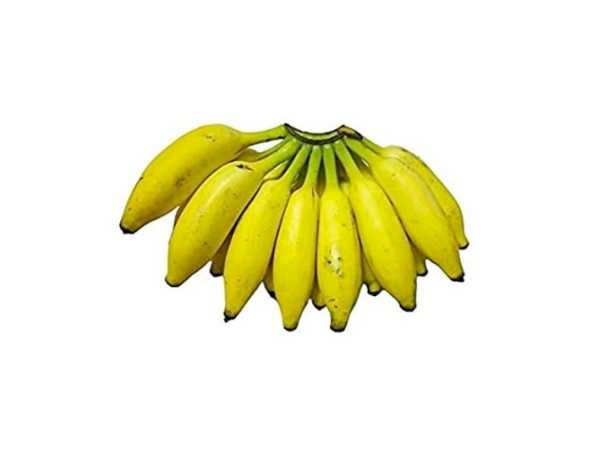
Banana - Poongathali
Musa × paradisiaca
Common Names: Poongathali Banana, Poonkathali Banana
Local Name: Poongathali Vazhai (Tamil)
Family: Musaceae
Origin: South India (Tamil Nadu); traditional variety
Plant Type: Perennial herbaceous monocot; pseudostem-forming plant
Variety: Poongathali — traditional Tamil Nadu variety; small to medium fruits; used in traditional medicine; ABB genome
Average Lifespan: Perennial; ratoon system for 5–10+ years
🌿 Botanical Description
| Growth Habit | Medium-height herbaceous perennial with pseudostem; clump-forming |
| Plant Size | 3–4.5 meters tall |
| Leaves | Large, oblong; 2–2.5 meters long; bright green; midrib prominent |
| Flowers | Purple-red inflorescence; female flowers develop into fruit; parthenocarpic |
| Flower Characteristics | Parthenocarpic; no pollination needed; banana heart edible as vegetable |
| Fruit | Small to medium; 10–14 cm long; thin skin; sweet flavor; used both ripe and unripe |
| Fruit Color | Green turning yellow when ripe; creamy white flesh |
| Seed Characteristics | Seedless (parthenocarpic) |
| Root System | Shallow, fibrous root system; rhizome produces suckers |
☀ Growing Conditions
| Climate | Tropical and subtropical; warm, humid conditions preferred |
| Temperature Range | 20–35°C; frost-sensitive |
| Rainfall Requirement | 1200–2500 mm; high moisture requirement |
| Soil Type | Deep, well-drained fertile loam; rich in organic matter |
| Soil pH Preference | 6.0–7.5 |
| Sun Requirement | Full sun (6+ hours) |
| Spacing | 2.5–3 meters between plants |
| Irrigation Method | Drip or basin irrigation; regular watering essential |
| Water Requirement | High; water stress reduces yield and fruit quality |
| Can it Grow in Pots? | Possible in very large pots (100+ liters) |
🌾 Cultivation & Care
| Fertilizer Schedule | Monthly; high potassium and nitrogen; 3 major applications |
| Recommended Organic Fertilizers | FYM, vermicompost, neem cake, wood ash, banana peel compost |
| Pesticide Frequency | Monthly preventive; treat immediately if pests appear |
| Recommended Organic Pesticides | Neem oil for aphids; Trichoderma for Fusarium wilt |
| Mulching Practice | Heavy organic mulch to retain moisture |
| Training System | Desuckering — keep 1 mother plant + 1 follower sucker |
| Pruning Time | Remove dry leaves regularly; cut pseudostem after harvest |
| How to Prune | Cut pseudostem at ground level after harvest; remove dry leaves; desuck regularly |
| Common Pests | Banana weevil, thrips, aphids, nematodes |
| Common Diseases | Panama wilt (Fusarium), Sigatoka leaf spot, bunchy top virus |
| Disease Prevention & Remedies | Use disease-free suckers; Trichoderma for Fusarium; copper fungicide for Sigatoka |
🌸 Flowering & Fruiting
| Flowering Months | 10–12 months after planting; year-round in tropics |
| Fruiting Season | Year-round; 3–4 months after flowering |
| Days to Harvest | 100–120 days from flowering to harvest |
| Harvest Indicators | Fruit angles fill out; skin turns light green; fingers plump |
| Average Yield per Plant | 15–25 kg per bunch; 12–16 hands per bunch |
| Pollination Type | Parthenocarpic (no pollination needed) |
| Pollination Notes | Seedless; develops without pollination |
🌱 Pollination & Propagation
| Pollination Details | Parthenocarpic; no pollination needed |
| Propagation by Seeds | Not applicable; seedless variety |
| Propagation by Cuttings | Sword suckers from rhizome; preferred method |
| Propagation by Grafting | Tissue culture plantlets available for disease-free planting |
💧 Environmental Impact & Sustainability
| Water Usage | High; drip irrigation reduces water use significantly |
| Soil Conservation Practices | Dense planting reduces erosion; leaf litter improves soil organic matter |
| Organic Practices Used | Vermicompost, green manure, mulching with banana leaves |
| Companion Plants | Ginger, turmeric, taro as understory crops |
| Biodiversity Benefits | Banana heart attracts birds and bats; supports orchard biodiversity |
💰 Economic Importance
| Commercial Production Regions | India (Tamil Nadu); traditional variety with limited commercial cultivation |
| Market Uses | Fresh fruit; temple offerings; traditional medicine use |
| Processing Uses | Fresh consumption; banana chips; traditional medicinal preparations |
| Market Value (Approx.) | ₹25–50 per kg; suckers ₹20–50 each |
🌿 Cultural Significance
| Symbolism | Traditional Tamil Nadu variety; used in religious offerings and traditional medicine |
| Traditional Uses | Used in Siddha medicine for digestive health; banana flower as vegetable; leaves as plates |
🍈 Nutritional Information
| Calories | 89 kcal per 100g |
| Dietary Fiber | 2.6 g per 100g |
| Vitamin C | 8.7 mg per 100g |
| Potassium | 358 mg per 100g |
| Antioxidants | Dopamine, catechins, flavonoids |
| Other Key Nutrients | Vitamin B6, magnesium, folate, manganese |
🌿 Medicinal Uses
| Digestive Health | Used in Siddha medicine for digestive complaints; fiber supports gut health |
| Heart Health | Potassium supports cardiovascular health |
Disclaimer: Information provided is for educational purposes only and not a substitute for medical advice.
📝 Orchard Observation Notes
Add your field observations here.