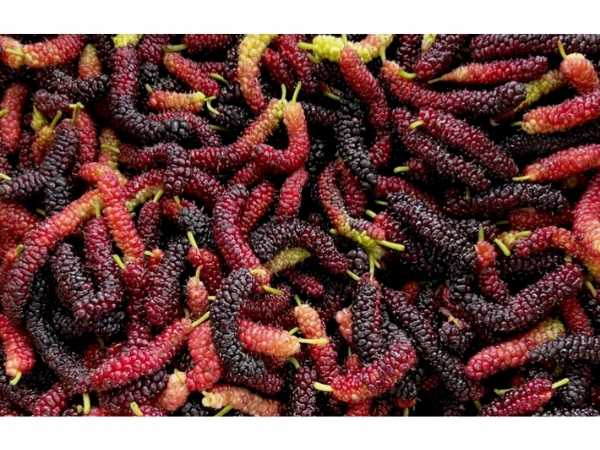
Himalayan Mulberry
Morus serrata
Common Names: Himalayan Mulberry, Mountain Mulberry, Indian Mulberry
Local Name: Kimu / Tut (Hindi), Himshahtoot (colloquial)
Family: Moraceae
Origin: Himalayan region (India, Nepal, Pakistan, Afghanistan)
Plant Type: Perennial deciduous tree
Variety: Wild Himalayan species — dark purple, intensely flavored fruit
Average Lifespan: 60–100+ years
🌿 Botanical Description
| Growth Habit | Large deciduous tree with broad, spreading crown |
| Plant Size | 10–20 meters tall; canopy spread 8–15 meters |
| Leaves | Alternate, ovate to cordate, 8–20 cm long; deeply serrated margins; rough texture |
| Flowers | Greenish catkins, 3–5 cm long; appear before or with new leaves |
| Flower Characteristics | Dioecious (separate male and female trees); wind-pollinated |
| Fruit | Cylindrical syncarp, 2–4 cm long; juicy, sweet-tart flavor |
| Fruit Color | Dark purple to black when fully ripe |
| Seed Characteristics | Tiny seeds within drupelets; barely noticeable |
| Root System | Deep, extensive root system adapted to mountain slopes |
☀ Growing Conditions
| Climate | Temperate to cool subtropical; adapted to mountain conditions |
| Temperature Range | 10–30°C ideal; tolerates -15°C when dormant; very cold-hardy |
| Rainfall Requirement | 800–2000 mm annually; tolerates seasonal drought |
| Soil Type | Well-drained, rocky to loamy mountain soils |
| Soil pH Preference | 5.5–7.5 |
| Sun Requirement | Full sun to partial shade (5+ hours daily) |
| Spacing | 8–12 meters between trees |
| Irrigation Method | Rain-fed in natural habitat; supplemental irrigation in dry periods |
| Water Requirement | Low to moderate; adapted to mountain rainfall patterns |
| Can it Grow in Pots? | Not ideal due to large size; young trees possible in very large containers |
🌾 Cultivation & Care
| Fertilizer Schedule | 1–2 times per year; spring application sufficient |
| Recommended Organic Fertilizers | Compost, FYM, leaf mold from forest floor |
| Pesticide Frequency | Rarely needed; naturally pest-resistant |
| Recommended Organic Pesticides | Neem oil if needed; generally not required |
| Mulching Practice | Natural leaf litter provides mulch; additional organic mulch beneficial |
| Training System | Natural form; minimal training needed |
| Pruning Time | Late winter while dormant |
| How to Prune | Remove dead and damaged branches; thin for light penetration |
| Common Pests | Generally pest-free; occasional scale insects or caterpillars |
| Common Diseases | Leaf spot, canker in stressed trees |
| Disease Prevention & Remedies | Good site selection, avoid waterlogging, remove infected branches |
🌸 Flowering & Fruiting
| Flowering Months | March–April (Himalayan spring) |
| Fruiting Season | May–July; ripens progressively |
| Days to Harvest | 40–60 days from flowering |
| Harvest Indicators | Fruit turns dark purple-black, softens, and drops when ripe |
| Average Yield per Plant | 30–80 kg per tree (mature) |
| Pollination Type | Wind pollination |
| Pollination Notes | Dioecious — needs male tree within wind range for fruit production |
🌱 Pollination & Propagation
| Pollination Details | Strictly dioecious; male trees produce abundant wind-borne pollen |
| Propagation by Seeds | Seeds germinate in 3–6 weeks; cold stratification improves germination |
| Propagation by Cuttings | Hardwood cuttings in winter; moderate success rate |
| Propagation by Grafting | Cleft grafting on Morus alba rootstock for faster fruiting |
💧 Environmental Impact & Sustainability
| Water Usage | Low; adapted to rain-fed mountain conditions |
| Soil Conservation Practices | Excellent for slope stabilization; deep roots prevent landslides |
| Organic Practices Used | Naturally low-input tree; no chemicals needed |
| Companion Plants | Mountain herbs, wild grasses, leguminous shrubs |
| Biodiversity Benefits | Critical food source for Himalayan birds and wildlife; supports forest ecosystem |
💰 Economic Importance
| Commercial Production Regions | Himalayan foothills of India, Nepal, Pakistan |
| Market Uses | Fresh fruit (local markets), timber, fodder |
| Processing Uses | Dried fruit, jam, local wine, timber for furniture and tools |
| Market Value (Approx.) | ₹80–200 per kg (seasonal, local markets) |
🌿 Cultural Significance
| Symbolism | Revered as a sacred tree in Himalayan communities; symbol of mountain resilience |
| Traditional Uses | Fruit eaten fresh and dried for winter; wood used for agricultural tools; bark for rope-making |
🍈 Nutritional Information
| Calories | 43 kcal per 100g |
| Dietary Fiber | 1.7 g per 100g |
| Vitamin C | 36 mg per 100g |
| Vitamin A | 25 IU per 100g |
| Iron | 1.85 mg per 100g |
| Potassium | 194 mg per 100g |
| Antioxidants | High in anthocyanins (dark fruit), resveratrol, flavonoids |
| Other Key Nutrients | Vitamin K, riboflavin, phosphorus, calcium |
🌿 Medicinal Uses
| Anxiety & Sleep | Bark decoction used in Himalayan folk medicine for calming |
| Immune Support | Vitamin C and iron support immune function and blood health |
| Anti-inflammatory Properties | Bark and root extracts used traditionally for inflammation |
| Heart Health | Anthocyanins and resveratrol support cardiovascular health |
| Digestive Health | Fruit aids digestion; bark used in folk remedies for stomach ailments |
Disclaimer: Information provided is for educational purposes only and not a substitute for medical advice.
📸 Photo Gallery
📝 Orchard Observation Notes
Add your field observations here.