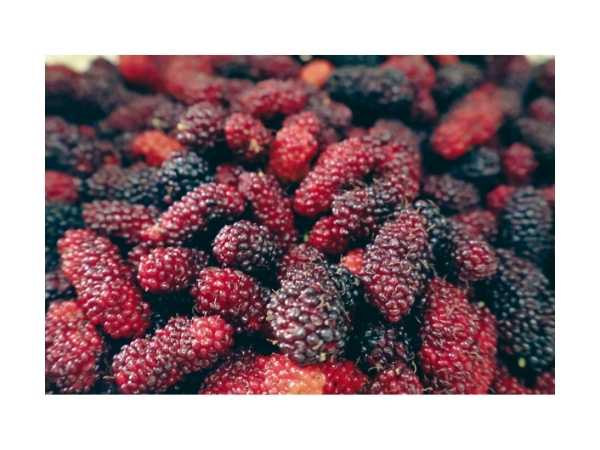
Mulberry
Morus alba
Common Names: Mulberry, White Mulberry, Shahtoot
Local Name: Mucukkattai (Tamil), Shahtoot (Hindi), Tuti (Kannada)
Family: Moraceae
Origin: China; widely cultivated across Asia
Plant Type: Perennial deciduous tree
Variety: Standard white mulberry — sweet, mild-flavored fruit
Average Lifespan: 50–75 years
🌿 Botanical Description
| Growth Habit | Fast-growing deciduous tree with spreading, rounded crown |
| Plant Size | 10–15 meters tall; canopy spread 8–12 meters |
| Leaves | Alternate, simple, ovate to lobed, 5–15 cm long; serrated margins; variable shape |
| Flowers | Inconspicuous catkins; greenish-white, 1–3 cm long |
| Flower Characteristics | Dioecious or monoecious; wind-pollinated; catkins appear with new leaves |
| Fruit | Multiple fruit (syncarp), 1–3 cm long; composed of many small drupes |
| Fruit Color | White to pinkish-lavender when ripe (white mulberry) |
| Seed Characteristics | Tiny seeds within each drupelet; barely noticeable |
| Root System | Deep taproot with extensive lateral roots; can be invasive |
☀ Growing Conditions
| Climate | Temperate to subtropical; very adaptable |
| Temperature Range | 15–35°C ideal; tolerates -10°C when dormant |
| Rainfall Requirement | 600–2500 mm annually; drought-tolerant once established |
| Soil Type | Highly adaptable; prefers deep, well-drained loamy soil |
| Soil pH Preference | 6.0–7.5 |
| Sun Requirement | Full sun (6+ hours daily) |
| Spacing | 6–10 meters between trees; closer for hedge/sericulture |
| Irrigation Method | Basin or drip irrigation; minimal once established |
| Water Requirement | Low to moderate; very drought-tolerant |
| Can it Grow in Pots? | Yes, dwarf varieties in 30–50 liter pots |
🌾 Cultivation & Care
| Fertilizer Schedule | 2–3 times per year; spring and post-harvest |
| Recommended Organic Fertilizers | FYM, compost, neem cake, vermicompost |
| Pesticide Frequency | Minimal; generally pest-resistant |
| Recommended Organic Pesticides | Neem oil for scale or mealybugs if needed |
| Mulching Practice | Organic mulch around base; leaf litter serves as natural mulch |
| Training System | Central leader or open center; can be heavily pruned for sericulture |
| Pruning Time | Late winter while dormant; or after harvest |
| How to Prune | Shape as desired; remove dead wood; can be coppiced for leaf production |
| Common Pests | Scale insects, whiteflies, mealybugs, silkworm (beneficial in sericulture) |
| Common Diseases | Leaf spot, powdery mildew, root rot, bacterial blight |
| Disease Prevention & Remedies | Good air circulation, avoid waterlogging, remove infected parts |
🌸 Flowering & Fruiting
| Flowering Months | February–April (spring) |
| Fruiting Season | April–June; fruits ripen over several weeks |
| Days to Harvest | 30–45 days from flowering |
| Harvest Indicators | Fruit fully colored, soft, and drops easily when branch is shaken |
| Average Yield per Plant | 15–50 kg per tree (mature) |
| Pollination Type | Wind pollination primarily |
| Pollination Notes | Some varieties monoecious (self-fertile); dioecious types need male tree nearby |
🌱 Pollination & Propagation
| Pollination Details | Wind-pollinated; pollen released in explosive puffs from male catkins |
| Propagation by Seeds | Seeds germinate easily in 2–4 weeks; not true-to-type |
| Propagation by Cuttings | Hardwood cuttings (20–30 cm) in winter; root easily in 4–6 weeks |
| Propagation by Grafting | Whip grafting or cleft grafting on seedling rootstock for named varieties |
💧 Environmental Impact & Sustainability
| Water Usage | Low; very drought-tolerant once established |
| Soil Conservation Practices | Deep roots prevent erosion; deciduous leaves enrich soil |
| Organic Practices Used | Minimal inputs needed; leaf litter composting |
| Companion Plants | Leguminous cover crops, herbs, shade-tolerant vegetables |
| Biodiversity Benefits | Fruit attracts birds and wildlife; supports silk industry; provides shade |
💰 Economic Importance
| Commercial Production Regions | China, India (Karnataka, Tamil Nadu), Turkey, Iran, USA |
| Market Uses | Fresh fruit, dried fruit, sericulture (silk production) |
| Processing Uses | Jam, juice, wine, dried mulberries, syrup, tea (leaves) |
| Market Value (Approx.) | ₹100–300 per kg (fresh); leaves valuable for sericulture |
🌿 Cultural Significance
| Symbolism | Symbol of patience and wisdom in Chinese culture; associated with silk production for millennia |
| Traditional Uses | Leaves feed silkworms; fruit in traditional medicine; bark used for paper-making in Asia |
🍈 Nutritional Information
| Calories | 43 kcal per 100g |
| Dietary Fiber | 1.7 g per 100g |
| Vitamin C | 36 mg per 100g |
| Vitamin A | 25 IU per 100g |
| Iron | 1.85 mg per 100g |
| Potassium | 194 mg per 100g |
| Antioxidants | Rich in resveratrol, anthocyanins, and flavonoids |
| Other Key Nutrients | Vitamin K, riboflavin, phosphorus, calcium |
🌿 Medicinal Uses
| Anxiety & Sleep | Not a primary use; leaf tea used in traditional Chinese medicine for calming |
| Immune Support | Vitamin C and iron support immune function and blood health |
| Anti-inflammatory Properties | Resveratrol shows anti-inflammatory and anti-aging effects |
| Heart Health | Resveratrol and fiber support cardiovascular health |
| Digestive Health | Fiber aids digestion; fruit used traditionally as a mild laxative |
Disclaimer: Information provided is for educational purposes only and not a substitute for medical advice.
📸 Photo Gallery
📝 Orchard Observation Notes
Add your field observations here.