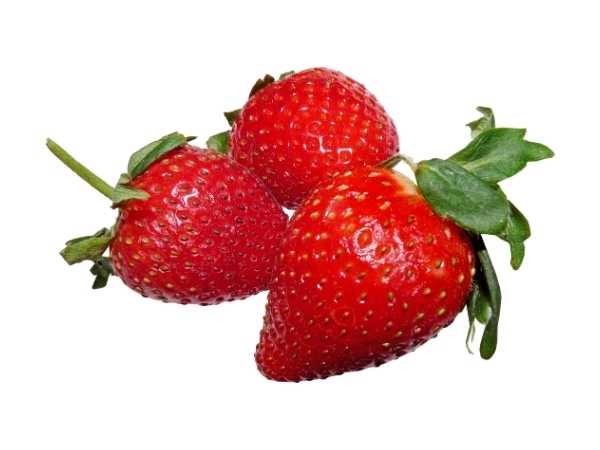
Strawberry
Fragaria × ananassa
Common Names: Strawberry, Garden Strawberry
Local Name: Strawberry (Tamil), Jharberi (Hindi)
Family: Rosaceae
Origin: Hybrid origin (France, 18th century) — cross of F. virginiana and F. chiloensis
Plant Type: Perennial herbaceous plant
Variety: June-bearing, everbearing, and day-neutral types
Average Lifespan: 3–5 years (productive); replant every 3 years
🌿 Botanical Description
| Growth Habit | Low-growing, rosette-forming herbaceous perennial with runners (stolons) |
| Plant Size | 15–30 cm tall; spreads via runners up to 1 meter |
| Leaves | Trifoliate (3 leaflets), serrated margins, bright green, hairy underneath |
| Flowers | White, 5-petaled, 2–3 cm diameter with yellow center |
| Flower Characteristics | Borne in clusters on erect stalks; both male and female parts present |
| Fruit | Accessory fruit (enlarged receptacle), 2–5 cm long; true fruits are the tiny achenes on surface |
| Fruit Color | Bright red when ripe; white to green when unripe |
| Seed Characteristics | Tiny achenes (200+ per fruit) embedded on the surface of the receptacle |
| Root System | Shallow, fibrous root system; most roots in top 15 cm of soil |
☀ Growing Conditions
| Climate | Temperate to subtropical; cool winters and mild summers ideal |
| Temperature Range | 15–25°C ideal for fruiting; tolerates light frost |
| Rainfall Requirement | 600–1000 mm annually; consistent moisture needed |
| Soil Type | Well-drained sandy loam rich in organic matter; raised beds preferred |
| Soil pH Preference | 5.5–6.5 |
| Sun Requirement | Full sun (6–8 hours daily) |
| Spacing | 30–45 cm between plants; 60–90 cm between rows |
| Irrigation Method | Drip irrigation preferred; avoid wetting fruit and foliage |
| Water Requirement | Moderate; 25–30 mm per week; consistent moisture critical during fruiting |
| Can it Grow in Pots? | Yes, excellent in hanging baskets, strawberry pots, or 5–10 liter containers |
🌾 Cultivation & Care
| Fertilizer Schedule | At planting, after first harvest, and early autumn |
| Recommended Organic Fertilizers | Compost, vermicompost, fish emulsion, bone meal |
| Pesticide Frequency | Regular monitoring; treat as needed |
| Recommended Organic Pesticides | Neem oil, insecticidal soap, diatomaceous earth for slugs |
| Mulching Practice | Straw mulch (hence the name) or plastic mulch to keep fruit clean and retain moisture |
| Training System | Matted row, hill system, or raised bed system |
| Pruning Time | After harvest; remove old leaves and excess runners |
| How to Prune | Remove runners for larger fruit; allow some runners for new plants; trim old foliage |
| Common Pests | Slugs, aphids, spider mites, strawberry bud weevil, birds |
| Common Diseases | Botrytis gray mold, powdery mildew, verticillium wilt, leaf spot |
| Disease Prevention & Remedies | Good air circulation, straw mulch, crop rotation, resistant varieties, avoid overhead watering |
🌸 Flowering & Fruiting
| Flowering Months | February–April (India); spring in temperate regions |
| Fruiting Season | March–May (India); everbearing types fruit spring through autumn |
| Days to Harvest | 28–35 days from flowering |
| Harvest Indicators | Fruit turns fully red, fragrant, and slightly soft; pick with cap attached |
| Average Yield per Plant | 300–500 g per plant per season |
| Pollination Type | Self-pollination; insect pollination improves fruit quality |
| Pollination Notes | Bees essential for uniform fruit shape; poor pollination causes misshapen berries |
🌱 Pollination & Propagation
| Pollination Details | Self-fertile; bees improve fruit size and shape significantly |
| Propagation by Seeds | Possible but slow; seeds need light to germinate; 2–3 weeks |
| Propagation by Cuttings | Not applicable; propagated by runners (stolons) — root daughter plants |
| Propagation by Grafting | Not applicable; division and runner propagation are standard methods |
💧 Environmental Impact & Sustainability
| Water Usage | Moderate; efficient with drip irrigation and mulching |
| Soil Conservation Practices | Ground cover habit prevents erosion; raised beds improve drainage |
| Organic Practices Used | Straw mulching, companion planting, biological pest control |
| Companion Plants | Borage (attracts pollinators), thyme, lettuce, spinach, beans |
| Biodiversity Benefits | Flowers attract bees and beneficial insects; ground cover supports soil life |
💰 Economic Importance
| Commercial Production Regions | USA (California, Florida), Spain, Turkey, Mexico, India (Mahabaleshwar, Ooty) |
| Market Uses | Fresh fruit, frozen berries, juice |
| Processing Uses | Jam, ice cream, yogurt, smoothies, desserts, dried fruit |
| Market Value (Approx.) | ₹150–400 per kg (India); varies by season |
🌿 Cultural Significance
| Symbolism | Symbol of spring, romance, and sweetness; associated with Venus in Roman mythology |
| Traditional Uses | Leaves used in herbal teas; fruit in traditional desserts and preserves worldwide |
🍈 Nutritional Information
| Calories | 32 kcal per 100g |
| Dietary Fiber | 2.0 g per 100g |
| Vitamin C | 59 mg per 100g (98% DV) |
| Vitamin A | 12 IU per 100g |
| Iron | 0.41 mg per 100g |
| Potassium | 153 mg per 100g |
| Antioxidants | Rich in anthocyanins, ellagic acid, quercetin, kaempferol |
| Other Key Nutrients | Folate, manganese, vitamin B6, vitamin K |
🌿 Medicinal Uses
| Anxiety & Sleep | Not a primary medicinal use; magnesium content may support relaxation |
| Immune Support | Excellent vitamin C source; boosts immune function |
| Anti-inflammatory Properties | Anthocyanins and ellagic acid show anti-inflammatory effects in studies |
| Heart Health | Anthocyanins may reduce risk of heart disease; fiber supports cholesterol management |
| Digestive Health | Fiber aids digestion; leaf tea used traditionally for digestive complaints |
Disclaimer: Information provided is for educational purposes only and not a substitute for medical advice.
📸 Photo Gallery
📝 Orchard Observation Notes
Add your field observations here.