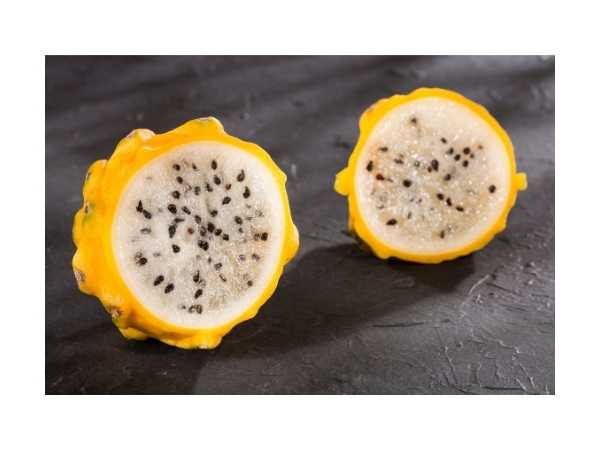
Dragon Fruit - Yellow
Selenicereus megalanthus
Common Names: Yellow Dragon Fruit, Yellow Pitaya, Colombian Pitaya, Yellow Pitahaya
Local Name: Manja Dragon Pazham (Tamil), Yellow Dragon Fruit (Hindi/English)
Family: Cactaceae
Origin: Colombia, Ecuador, Bolivia, Peru (South America)
Plant Type: Perennial epiphytic cactus vine; climbing with aerial roots
Variety: Yellow-skinned with white flesh; considered the sweetest dragon fruit variety
Average Lifespan: 20–30+ years
🌿 Botanical Description
| Growth Habit | Climbing epiphytic cactus; triangular, ribbed stems with prominent spines; climbs using aerial roots |
| Plant Size | 3–8 meters long; trained on posts at 1.5–2 meters height |
| Leaves | No true leaves; photosynthesis in green triangular stems; more spiny than Hylocereus species |
| Flowers | Large white flowers; 20–30 cm across; fragrant; open only at night |
| Flower Characteristics | Night-blooming; pollinated by moths and bats; self-fertile; hand pollination improves yield |
| Fruit | Round to oval; 8–12 cm; bright yellow skin with prominent spines (no scales); white flesh |
| Fruit Color | Bright yellow skin; white flesh with tiny black seeds; sweeter and more aromatic than red varieties |
| Seed Characteristics | Numerous tiny black seeds throughout the flesh; edible; 1–2 mm |
| Root System | Shallow fibrous roots plus aerial roots; drought-tolerant |
☀ Growing Conditions
| Climate | Tropical and subtropical; slightly more cold-tolerant than Hylocereus species |
| Temperature Range | 15–38°C; tolerates slightly cooler temperatures than red dragon fruit |
| Rainfall Requirement | 500–1500 mm; drought-tolerant; excess moisture causes root rot |
| Soil Type | Well-drained sandy loam; high organic matter; excellent drainage essential |
| Soil pH Preference | 6.0–7.0 |
| Sun Requirement | Full sun (6+ hours); tolerates partial shade |
| Spacing | 3–4 meters between posts; 2–3 plants per post |
| Irrigation Method | Drip irrigation; water deeply but infrequently; avoid waterlogging |
| Water Requirement | Low to moderate; drought-tolerant; overwatering causes root rot |
| Can it Grow in Pots? | Yes, in large pots (40–60 liters) with post support |
🌾 Cultivation & Care
| Fertilizer Schedule | Monthly; balanced NPK; high potassium during fruiting |
| Recommended Organic Fertilizers | Vermicompost, neem cake, bone meal, wood ash |
| Pesticide Frequency | As needed; generally pest-resistant |
| Recommended Organic Pesticides | Neem oil for mealybugs and scale; copper fungicide for stem rot |
| Mulching Practice | Organic mulch around base; helps retain moisture |
| Training System | Train on concrete or wooden posts (1.5–2 m tall); allow stems to cascade over top |
| Pruning Time | After harvest; remove old, unproductive stems |
| How to Prune | Remove stems older than 3 years; keep 4–6 productive stems per post; wear gloves (spiny) |
| Common Pests | Mealybugs, scale insects, ants |
| Common Diseases | Stem rot (Fusarium), anthracnose, bacterial soft rot |
| Disease Prevention & Remedies | Excellent drainage; avoid overwatering; copper fungicide; remove infected stems |
🌸 Flowering & Fruiting
| Flowering Months | June–November; multiple flushes; flowers open at night |
| Fruiting Season | July–December; fewer but larger fruits than red varieties |
| Days to Harvest | 35–45 days from flowering to ripe fruit (longer than red varieties) |
| Harvest Indicators | Skin turns bright yellow; spines dry and brown; fruit gives slightly when pressed; sweet aroma |
| Average Yield per Plant | 15–30 kg per post per year (mature); fewer but larger fruits |
| Pollination Type | Night-pollinated by moths and bats; self-fertile |
| Pollination Notes | Self-fertile; hand pollination at night improves fruit set; more self-fertile than Hylocereus species |
🌱 Pollination & Propagation
| Pollination Details | Night-blooming; moth and bat pollinated; self-fertile; hand pollination improves yield |
| Propagation by Seeds | Seeds germinate in 2–3 weeks; slow to fruit (3–5 years) |
| Propagation by Cuttings | Stem cuttings (30–40 cm) root easily; preferred method; fruits in 1–2 years; dry cut end before planting |
| Propagation by Grafting | Grafting on Hylocereus undatus rootstock improves vigor and yield |
💧 Environmental Impact & Sustainability
| Water Usage | Low; drought-tolerant cactus |
| Soil Conservation Practices | Grows on poor soils; minimal soil disturbance needed |
| Organic Practices Used | Vermicompost-based feeding; minimal chemical inputs |
| Companion Plants | Leguminous cover crops; shade-tolerant plants between posts |
| Biodiversity Benefits | Night flowers attract moths and bats; supports nocturnal pollinator populations |
💰 Economic Importance
| Commercial Production Regions | Colombia, Ecuador, Israel, India (limited); premium market worldwide |
| Market Uses | Premium fresh fruit; health food; gourmet market; commands highest price of all dragon fruit varieties |
| Processing Uses | Juice, smoothies, ice cream, health supplements |
| Market Value (Approx.) | ₹200–500 per kg; premium variety; cuttings ₹100–300 each |
🌿 Cultural Significance
| Symbolism | Considered the most prized dragon fruit variety; symbol of exotic luxury in Asian markets |
| Traditional Uses | Fruit used for digestive health; flowers used in traditional medicine in South America |
🍈 Nutritional Information
| Calories | 60 kcal per 100g |
| Dietary Fiber | 3 g per 100g |
| Vitamin C | 9 mg per 100g |
| Potassium | 272 mg per 100g |
| Antioxidants | Polyphenols, flavonoids, vitamin C; white flesh has lower betacyanin than purple variety |
| Other Key Nutrients | Iron, magnesium, calcium, vitamin B3, phosphorus, healthy fatty acids in seeds |
🌿 Medicinal Uses
| Digestive Health | Prebiotic fiber supports gut microbiome; aids digestion |
| Immune Support | Vitamin C and antioxidants support immune function |
Disclaimer: Information provided is for educational purposes only and not a substitute for medical advice.
📝 Orchard Observation Notes
Add your field observations here.