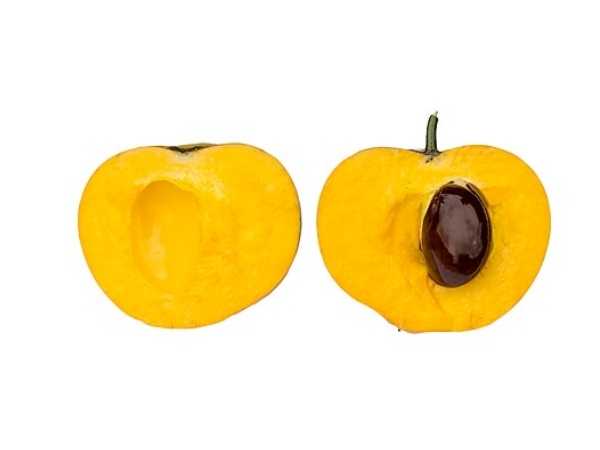
Egg Fruit
Pouteria campechiana
Common Names: Egg Fruit, Canistel, Yellow Sapote, Tiesa
Local Name: Canistel (Spanish), Tiesa (Philippines)
Family: Sapotaceae
Origin: Southern Mexico, Belize, Guatemala, El Salvador
Plant Type: Perennial evergreen tree
Variety: Bruce, Fairchild, Ross Sapote (selected cultivars)
Average Lifespan: 40–60 years
🌿 Botanical Description
| Growth Habit | Medium evergreen tree with dense conical to rounded canopy |
| Plant Size | 8–15 meters tall; canopy spread 5–8 meters |
| Leaves | Alternate, simple, oblanceolate, 10–30 cm long, clustered at branch tips, glossy dark green |
| Flowers | Small, tubular, cream to greenish-white, 5-lobed, fragrant, in leaf axils |
| Flower Characteristics | Inconspicuous; self-fertile; bloom throughout the year in tropics |
| Fruit | Variable shape (round, oval, spindle), 5–12 cm, smooth skin, dense dry flesh like cooked egg yolk |
| Fruit Color | Bright orange-yellow when ripe; flesh deep golden yellow |
| Seed Characteristics | 1–3 large glossy brown seeds, 3–5 cm long |
| Root System | Deep taproot with lateral roots; wind-resistant |
☀ Growing Conditions
| Climate | Tropical to warm subtropical; more cold-tolerant than many tropical fruits |
| Temperature Range | 20–35°C ideal; mature trees tolerate brief frost to -2°C |
| Rainfall Requirement | 1000–2000 mm annually; tolerates some drought |
| Soil Type | Well-drained; tolerates limestone, sandy, and clay soils |
| Soil pH Preference | 5.5–7.5 (adaptable) |
| Sun Requirement | Full sun (6+ hours daily) |
| Spacing | 6–8 meters between trees |
| Irrigation Method | Drip irrigation; moderate watering |
| Water Requirement | Moderate; somewhat drought-tolerant once established |
| Can it Grow in Pots? | Yes, in large containers (40+ liters); may fruit in pots |
🌾 Cultivation & Care
| Fertilizer Schedule | 3–4 times per year; balanced fertilizer |
| Recommended Organic Fertilizers | Compost, well-rotted manure, bone meal, fish emulsion |
| Pesticide Frequency | Minimal; generally pest-free |
| Recommended Organic Pesticides | Neem oil, fruit fly traps |
| Mulching Practice | Organic mulch around base; keep away from trunk |
| Training System | Open centre; maintain manageable height |
| Pruning Time | After main harvest; tip-prune to control height |
| How to Prune | Remove dead wood; tip-prune to encourage branching and reduce height |
| Common Pests | Fruit fly, birds, scale insects (minimal) |
| Common Diseases | Leaf spot, root rot in waterlogged soil |
| Disease Prevention & Remedies | Good drainage, avoid overwatering, remove fallen fruit |
🌸 Flowering & Fruiting
| Flowering Months | Year-round in tropics; main flush in spring |
| Fruiting Season | Winter to spring (November–March in Northern Hemisphere) |
| Days to Harvest | 120–180 days from flowering |
| Harvest Indicators | Fruit turns bright yellow-orange, slightly soft; harvest when colour develops, ripen off tree |
| Average Yield per Plant | 50–150 kg per tree per year (mature tree) |
| Pollination Type | Self-pollination; insect-assisted |
| Pollination Notes | Self-fertile; small insects pollinate flowers |
🌱 Pollination & Propagation
| Pollination Details | Self-fertile; wind and small insects assist pollination |
| Propagation by Seeds | Fresh seeds germinate in 2–5 weeks; seedlings fruit in 3–6 years |
| Propagation by Cuttings | Air layering and marcotting possible; moderate success |
| Propagation by Grafting | Veneer grafting on seedling rootstock; fruits in 2–3 years |
💧 Environmental Impact & Sustainability
| Water Usage | Moderate; somewhat drought-tolerant |
| Soil Conservation Practices | Dense canopy reduces erosion; leaf litter enriches soil |
| Organic Practices Used | Minimal inputs needed; naturally pest-resistant |
| Companion Plants | Other tropical fruit trees, leguminous cover crops |
| Biodiversity Benefits | Fruit attracts birds; flowers support pollinators |
💰 Economic Importance
| Commercial Production Regions | Mexico, Guatemala, Philippines, Vietnam, Florida (USA) |
| Market Uses | Fresh fruit, smoothies, baking ingredient |
| Processing Uses | Egg fruit custard, ice cream, milkshakes, baked goods, flour |
| Market Value (Approx.) | $3–10 per kg (specialty markets); growing popularity |
🌿 Cultural Significance
| Symbolism | Traditional Mesoamerican fruit; gaining popularity in vegan/health food communities |
| Traditional Uses | Eaten fresh or in desserts; Mayan and Aztec heritage fruit; used in traditional Central American cuisine |
🍈 Nutritional Information
| Calories | 139 kcal per 100g |
| Dietary Fiber | 3.6 g per 100g |
| Vitamin C | 58 mg per 100g |
| Vitamin A | 253 IU per 100g (as beta-carotene) |
| Iron | 0.9 mg per 100g |
| Potassium | 344 mg per 100g |
| Antioxidants | Rich in carotenoids, polyphenols |
| Other Key Nutrients | Niacin (3.7 mg), phosphorus, calcium |
🌿 Medicinal Uses
| Anxiety & Sleep | Not a primary use |
| Immune Support | Good vitamin C content supports immune function |
| Anti-inflammatory Properties | Carotenoids provide anti-inflammatory benefits |
| Heart Health | High potassium and niacin support cardiovascular health |
| Digestive Health | High fiber content aids digestion; dense flesh is filling and satisfying |
Disclaimer: Information provided is for educational purposes only and not a substitute for medical advice.
📸 Photo Gallery
📝 Orchard Observation Notes
Add your field observations here.