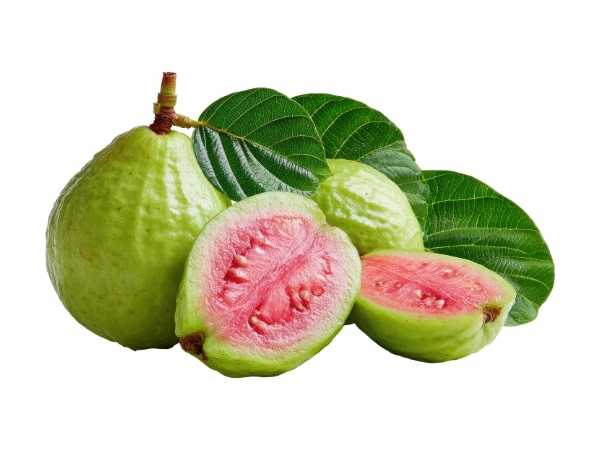
Guava - L-49
Psidium guajava 'L-49'
Common Names: L-49 Guava, Lucknow-49, Sardar Guava
Local Name: Sardar Koiya (Tamil), Sardar Amrood (Hindi)
Family: Myrtaceae
Origin: Selected at CISH Lucknow, India; species native to Central America
Plant Type: Perennial evergreen tree
Variety: L-49 (Lucknow-49) — India's most popular commercial guava; medium-large fruit, white flesh, excellent flavour
Average Lifespan: 30–50 years
🌿 Botanical Description
| Growth Habit | Vigorous, spreading evergreen tree; highly productive; semi-erect branching |
| Plant Size | 4–8 meters tall; canopy 5–7 meters wide |
| Leaves | Opposite, oblong-elliptic, 10–15 cm long, dull green with prominent veins; aromatic when crushed |
| Flowers | White, 4–5 petaled, 2.5–3 cm across with numerous stamens; borne on new growth |
| Flower Characteristics | Fragrant; attract bees; bloom on current season's growth; can flower year-round |
| Fruit | Medium to large, 150–300g, round to ovoid; smooth skin, thick white flesh, sweet with few soft seeds |
| Fruit Color | Green turning yellowish-green when ripe; creamy white flesh |
| Seed Characteristics | Fewer and softer seeds than most varieties; concentrated in central cavity |
| Root System | Shallow to moderately deep fibrous root system; can sucker |
☀ Growing Conditions
| Climate | Tropical to subtropical; tolerates hot summers well |
| Temperature Range | 20–38°C ideal; tolerates up to 45°C; frost-sensitive below −2°C |
| Rainfall Requirement | 800–2000 mm annually; drought-tolerant once established |
| Soil Type | Well-drained loamy soil; adaptable to various soil types including clay |
| Soil pH Preference | 5.5–7.5 |
| Sun Requirement | Full sun (6+ hours daily) |
| Spacing | 5–6 meters between trees; 3–4 meters for high-density planting |
| Irrigation Method | Drip or basin irrigation; regular during fruiting |
| Water Requirement | Moderate; consistent moisture for best fruit quality |
| Can it Grow in Pots? | Yes, in large pots (30+ liters); will produce smaller fruit |
🌾 Cultivation & Care
| Fertilizer Schedule | 3–4 times per year; pre-flowering, post-fruit set, post-harvest |
| Recommended Organic Fertilizers | FYM (20–30 kg/tree/year), vermicompost, neem cake, bone meal |
| Pesticide Frequency | Regular monitoring; 2–3 sprays during fruiting season |
| Recommended Organic Pesticides | Neem oil, fruit fly traps (methyl eugenol), pheromone traps, fruit bagging |
| Mulching Practice | Organic mulch around base; keep away from trunk |
| Training System | Open center system with 3–4 main scaffolds; meadow orcharding for high-density |
| Pruning Time | May–June (India) for winter crop regulation; tip-prune after harvest |
| How to Prune | Crop regulation pruning (remove rainy season flowers for quality winter crop); tip-prune for branching |
| Common Pests | Fruit fly, guava moth, bark-eating caterpillar, mealybug, tea mosquito bug |
| Common Diseases | Guava wilt (Fusarium oxysporum), anthracnose, fruit rot, algal leaf spot |
| Disease Prevention & Remedies | Wilt-resistant rootstock, good drainage, copper fungicide, remove infected trees, soil solarization |
🌸 Flowering & Fruiting
| Flowering Months | Year-round; main flushes in spring (ambe bahar) and monsoon (mrig bahar) |
| Fruiting Season | Winter crop (November–February) is premium; rainy season crop also produced |
| Days to Harvest | 100–120 days from flowering |
| Harvest Indicators | Fruit turns yellowish-green; slight give when pressed; sweet guava aroma |
| Average Yield per Plant | 50–100 kg per tree per year (well-managed mature tree) |
| Pollination Type | Self-fertile; insect-pollinated |
| Pollination Notes | Bees are primary pollinators; self-fertile — single tree produces fruit |
🌱 Pollination & Propagation
| Pollination Details | Self-fertile; bees and wind assist pollination |
| Propagation by Seeds | Seeds germinate in 2–3 weeks; seedlings not true-to-type; used for rootstock |
| Propagation by Cuttings | Air layering (marcotting) is standard commercial method; stem cuttings also used |
| Propagation by Grafting | Veneer or softwood grafting on seedling rootstock; preferred for commercial orchards |
💧 Environmental Impact & Sustainability
| Water Usage | Moderate; efficient with drip irrigation |
| Soil Conservation Practices | Root system holds soil; intercropping possible when young |
| Organic Practices Used | Organic guava production growing in India; fruit bagging reduces pesticide use |
| Companion Plants | Leguminous intercrops, vegetables when young, marigolds for pest deterrence |
| Biodiversity Benefits | Flowers support pollinators; fruit feeds birds and wildlife |
💰 Economic Importance
| Commercial Production Regions | India (Uttar Pradesh, Madhya Pradesh, Bihar, Maharashtra, Gujarat) — most widely planted variety |
| Market Uses | Premium fresh fruit, table fruit, export market |
| Processing Uses | Fresh eating (primary), juice, nectar, jam, jelly, guava cheese |
| Market Value (Approx.) | ₹30–100 per kg; winter crop commands premium prices |
🌿 Cultural Significance
| Symbolism | India's most beloved guava variety; "Sardar" means leader — named for its superior quality |
| Traditional Uses | Guava leaf tea used in Ayurveda for diabetes and diarrhoea; fruit is a staple winter snack across India |
🍈 Nutritional Information
| Calories | 68 kcal per 100g |
| Dietary Fiber | 5.4 g per 100g |
| Vitamin C | 228 mg per 100g (4× more than oranges) |
| Vitamin A | 624 IU per 100g |
| Iron | 0.26 mg per 100g |
| Potassium | 417 mg per 100g |
| Antioxidants | Polyphenols, flavonoids, carotenoids, quercetin |
| Other Key Nutrients | Folate, manganese, copper, niacin, pantothenic acid |
🌿 Medicinal Uses
| Anxiety & Sleep | Guava leaf tea has mild calming properties |
| Immune Support | Exceptionally high Vitamin C — powerful immune booster |
| Anti-inflammatory Properties | Leaf extracts show anti-inflammatory and antimicrobial activity |
| Heart Health | High potassium and fiber support cardiovascular health |
| Digestive Health | High fiber aids digestion; guava leaf tea clinically shown to help manage blood sugar and diarrhoea |
Disclaimer: Information provided is for educational purposes only and not a substitute for medical advice.
📸 Photo Gallery
📝 Orchard Observation Notes
Add your field observations here.