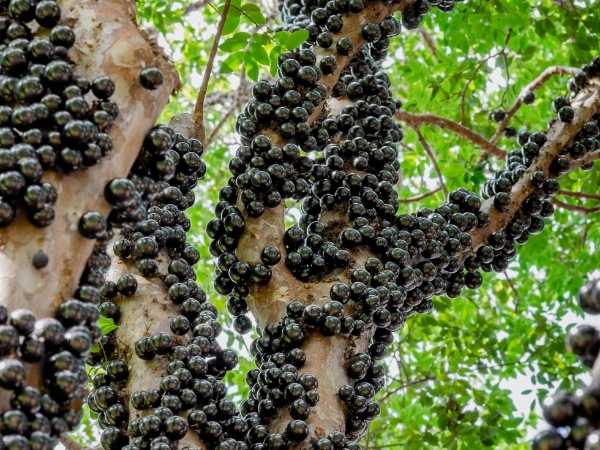
Jaboticaba / Brazilian Grape
Plinia cauliflora
Common Names: Jaboticaba, Jabuticaba, Brazilian Grape Tree
Local Name: Jabuticaba (Portuguese/Brazilian)
Family: Myrtaceae
Origin: Southern Brazil (Minas Gerais, São Paulo, Goiás)
Plant Type: Perennial evergreen tree
Variety: Sabará (most common), Paulista, Rajada
Average Lifespan: 100+ years; extremely long-lived
🌿 Botanical Description
| Growth Habit | Slow-growing evergreen tree with smooth, mottled bark that peels in patches |
| Plant Size | 5–12 meters tall; compact rounded canopy |
| Leaves | Opposite, lanceolate, 2–7 cm long, salmon-pink when young turning glossy dark green |
| Flowers | Small, white, 4-petaled, borne directly on trunk and major branches (cauliflorous) |
| Flower Characteristics | Cauliflorous — flowers emerge directly from bark; numerous stamens; fragrant |
| Fruit | Round berry, 1.5–4 cm diameter, thick dark skin with translucent gelatinous pulp |
| Fruit Color | Dark purple to nearly black; resembles large grapes |
| Seed Characteristics | 1–4 flat seeds per fruit; lose viability quickly |
| Root System | Shallow, fibrous root system; sensitive to root disturbance |
☀ Growing Conditions
| Climate | Subtropical to tropical; tolerates mild frost when mature |
| Temperature Range | 18–32°C ideal; mature trees tolerate brief frost to -3°C |
| Rainfall Requirement | 1000–2000 mm annually; consistent moisture needed |
| Soil Type | Rich, acidic, well-drained soil with high organic matter |
| Soil pH Preference | 5.0–6.5 (prefers acidic) |
| Sun Requirement | Full sun to partial shade |
| Spacing | 5–8 meters between trees |
| Irrigation Method | Drip irrigation; consistent moisture essential |
| Water Requirement | Moderate to high; does not tolerate drought |
| Can it Grow in Pots? | Yes — excellent container tree; slow growth makes it ideal for large pots (40+ liters) |
🌾 Cultivation & Care
| Fertilizer Schedule | Monthly during growing season with acidic fertilizer |
| Recommended Organic Fertilizers | Compost, coffee grounds, pine bark mulch, fish emulsion |
| Pesticide Frequency | Rarely needed; generally pest-free |
| Recommended Organic Pesticides | Neem oil for scale insects if needed |
| Mulching Practice | Acidic mulch (pine needles, coffee grounds) around base |
| Training System | Natural form; minimal training — beautiful ornamental shape |
| Pruning Time | After harvest; light pruning only |
| How to Prune | Minimal pruning; remove dead branches and suckers only |
| Common Pests | Scale insects, birds, fruit flies (minimal) |
| Common Diseases | Rust, anthracnose (rare); root rot in waterlogged soil |
| Disease Prevention & Remedies | Good drainage, avoid overwatering, maintain acidic soil pH |
🌸 Flowering & Fruiting
| Flowering Months | Multiple times per year in tropics; spring and autumn in subtropics |
| Fruiting Season | Can fruit 2–5 times per year in ideal conditions |
| Days to Harvest | 20–30 days from flowering (remarkably fast) |
| Harvest Indicators | Fruit turns dark purple-black, slightly soft; falls easily when ripe |
| Average Yield per Plant | 50–100 kg per tree per year (mature tree) |
| Pollination Type | Self-pollination; insect-assisted |
| Pollination Notes | Self-fertile; bees improve fruit set; trunk-borne flowers are easily accessible |
🌱 Pollination & Propagation
| Pollination Details | Self-fertile; cauliflorous flowers easily accessed by small insects |
| Propagation by Seeds | Fresh seeds germinate in 2–4 weeks; seedlings take 8–15 years to fruit |
| Propagation by Cuttings | Air layering possible but slow; semi-hardwood cuttings with rooting hormone |
| Propagation by Grafting | Grafting onto seedling rootstock reduces fruiting time to 3–5 years |
💧 Environmental Impact & Sustainability
| Water Usage | Moderate; efficient with mulching |
| Soil Conservation Practices | Dense canopy and leaf litter protect soil |
| Organic Practices Used | Naturally pest-resistant; minimal chemical inputs needed |
| Companion Plants | Azaleas, blueberries, other acid-loving plants |
| Biodiversity Benefits | Attracts birds, bees; beautiful ornamental tree for gardens |
💰 Economic Importance
| Commercial Production Regions | Brazil (Minas Gerais, São Paulo), Bolivia, Paraguay, Argentina |
| Market Uses | Fresh fruit, wine, liqueur, jelly |
| Processing Uses | Wine, liqueur, jam, jelly, vinegar, dried fruit |
| Market Value (Approx.) | R$15–40 per kg (Brazil); premium pricing due to short shelf life |
🌿 Cultural Significance
| Symbolism | National treasure of Brazil; symbol of Brazilian biodiversity and gastronomy |
| Traditional Uses | Fruit eaten fresh; bark used in traditional medicine for diarrhoea and asthma; wine-making tradition |
🍈 Nutritional Information
| Calories | 43 kcal per 100g |
| Dietary Fiber | 0.8 g per 100g |
| Vitamin C | 16–25 mg per 100g |
| Vitamin A | Trace amounts |
| Iron | 0.5 mg per 100g |
| Potassium | 130 mg per 100g |
| Antioxidants | Extremely rich in anthocyanins, ellagic acid, and jaboticabin |
| Other Key Nutrients | Calcium, phosphorus, B vitamins, phenolic compounds |
🌿 Medicinal Uses
| Anxiety & Sleep | Not a primary use |
| Immune Support | Antioxidant-rich skin boosts immune function |
| Anti-inflammatory Properties | Skin extracts show strong anti-inflammatory and anti-cancer properties in studies |
| Heart Health | Anthocyanins support cardiovascular health |
| Digestive Health | Bark decoction traditionally used for diarrhoea and dysentery |
Disclaimer: Information provided is for educational purposes only and not a substitute for medical advice.
📸 Photo Gallery
📝 Orchard Observation Notes
Add your field observations here.