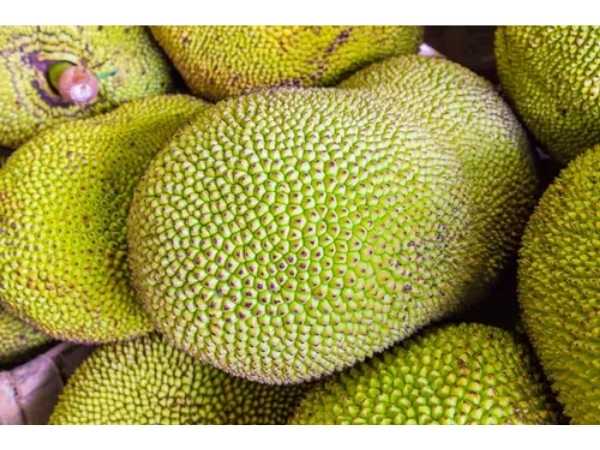
Jackfruit - Panruti
Artocarpus heterophyllus 'Panruti'
Common Names: Panruti Jackfruit, Panruti Palaa
Local Name: Panruti Palaa Pazham (Tamil), Panruti Kathal (Hindi)
Family: Moraceae
Origin: Panruti, Cuddalore District, Tamil Nadu, India
Plant Type: Perennial evergreen tree
Variety: Panruti — renowned Tamil Nadu selection known for sweet, aromatic, firm bulbs
Average Lifespan: 60–100+ years
🌿 Botanical Description
| Growth Habit | Large evergreen tree with dense, rounded canopy |
| Plant Size | 12–20 meters tall; canopy spread 8–14 meters |
| Leaves | Alternate, elliptic, 10–25 cm, dark green, leathery, glossy upper surface |
| Flowers | Monoecious; cauliflorous inflorescences on trunk and major branches |
| Flower Characteristics | Male spikes club-shaped; female spikes barrel-shaped; appear on older wood |
| Fruit | Large, 10–25 kg; oblong to irregular; thick sweet bulbs with excellent aroma and firm texture |
| Fruit Color | Green rind with prominent spines; deep golden-yellow bulbs |
| Seed Characteristics | Large oval seeds (2–3 cm); edible when boiled or roasted |
| Root System | Deep taproot with extensive lateral root system; excellent anchorage |
☀ Growing Conditions
| Climate | Tropical; thrives in hot, humid conditions of coastal Tamil Nadu |
| Temperature Range | 25–38°C ideal; tolerates up to 45°C; frost-sensitive |
| Rainfall Requirement | 1000–2000 mm annually; tolerates seasonal dry periods |
| Soil Type | Red laterite, alluvial, or sandy loam; well-drained |
| Soil pH Preference | 6.0–7.5 |
| Sun Requirement | Full sun (8+ hours daily) |
| Spacing | 8–12 meters between trees |
| Irrigation Method | Basin irrigation; drip for young trees |
| Water Requirement | Moderate; drought-tolerant once established |
| Can it Grow in Pots? | Young trees only; requires ground planting for production |
🌾 Cultivation & Care
| Fertilizer Schedule | 3 times per year — pre-flowering, post-fruit set, post-harvest |
| Recommended Organic Fertilizers | FYM (30–50 kg/tree/year), neem cake, vermicompost, bone meal |
| Pesticide Frequency | 2–3 sprays during flowering and fruiting |
| Recommended Organic Pesticides | Neem oil, panchagavya, Beauveria bassiana |
| Mulching Practice | Organic mulch with coconut fronds or leaf litter |
| Training System | Modified central leader; maintain accessible lower branches |
| Pruning Time | After harvest (August–September) |
| How to Prune | Remove dead, diseased, and crossing branches; thin canopy for light |
| Common Pests | Shoot borer, fruit borer, mealybug, bark-eating caterpillar, spittle bug |
| Common Diseases | Rhizopus fruit rot, leaf spot, pink disease, dieback |
| Disease Prevention & Remedies | Good sanitation, proper spacing, copper fungicides, prompt removal of infected material |
🌸 Flowering & Fruiting
| Flowering Months | December–March (Tamil Nadu) |
| Fruiting Season | April–August; Panruti jackfruit festival held annually in June–July |
| Days to Harvest | 100–150 days from pollination |
| Harvest Indicators | Hollow sound when tapped, strong sweet aroma, spines flatten, last leaf on stalk yellows |
| Average Yield per Plant | 100–200 fruits per tree per year (mature); Panruti is a reliable bearer |
| Pollination Type | Wind and insect pollination |
| Pollination Notes | Monoecious; wind is primary pollinator; good natural fruit set |
🌱 Pollination & Propagation
| Pollination Details | Wind-pollinated primarily; gall midges also contribute |
| Propagation by Seeds | Seeds germinate in 3–8 weeks; not true-to-type |
| Propagation by Cuttings | Air layering possible but not common commercially |
| Propagation by Grafting | Softwood or approach grafting on seedling rootstock; preferred for maintaining Panruti quality |
💧 Environmental Impact & Sustainability
| Water Usage | Low to moderate once established; deep roots access groundwater |
| Soil Conservation Practices | Large canopy reduces erosion; leaf litter enriches soil |
| Organic Practices Used | Panchagavya, jeevamrutha, composting, mulching |
| Companion Plants | Pepper vine, banana, turmeric, ginger as intercrops |
| Biodiversity Benefits | Provides habitat for birds, bats, and insects; large shade canopy |
💰 Economic Importance
| Commercial Production Regions | Panruti (Cuddalore), Villupuram, and surrounding districts in Tamil Nadu |
| Market Uses | Fresh fruit, unripe vegetable, seeds as snack; Panruti jackfruit has GI tag recognition efforts |
| Processing Uses | Chips, papad, jam, halwa, dried jackfruit, canned bulbs |
| Market Value (Approx.) | ₹30–100 per kg (whole fruit); premium during Panruti jackfruit season |
🌿 Cultural Significance
| Symbolism | Panruti is known as the "Jackfruit Capital" of Tamil Nadu; annual jackfruit mela celebrates the harvest |
| Traditional Uses | Wood for furniture and temple carvings; unripe fruit as vegetable in Tamil cuisine; seeds in curries |
🍈 Nutritional Information
| Calories | 95 kcal per 100g |
| Dietary Fiber | 1.5 g per 100g |
| Vitamin C | 13.7 mg per 100g |
| Vitamin A | 110 IU per 100g |
| Iron | 0.23 mg per 100g |
| Potassium | 448 mg per 100g |
| Antioxidants | Carotenoids, flavonoids, phenolic compounds |
| Other Key Nutrients | Thiamine, riboflavin, magnesium, manganese, copper |
🌿 Medicinal Uses
| Anxiety & Sleep | Not a primary medicinal use |
| Immune Support | Vitamin C and antioxidants support immune function |
| Anti-inflammatory Properties | Phenolic compounds show anti-inflammatory effects |
| Heart Health | Potassium supports blood pressure regulation |
| Digestive Health | Fiber aids digestion; seeds used in traditional remedies |
Disclaimer: Information provided is for educational purposes only and not a substitute for medical advice.
📸 Photo Gallery
📝 Orchard Observation Notes
Add your field observations here.