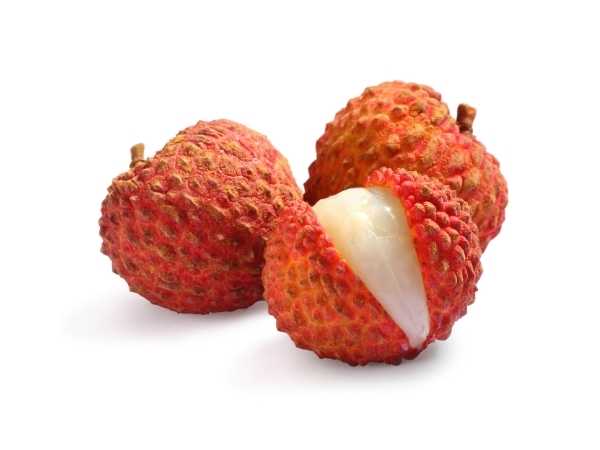
Litchi
Litchi chinensis
Common Names: Litchi, Lychee, Lichee
Local Name: Litchi (Tamil), Litchi / Lichi (Hindi)
Family: Sapindaceae
Origin: Southern China (Guangdong, Fujian provinces)
Plant Type: Perennial evergreen tree
Variety: Shahi, China, Bombai, Rose Scented, Calcuttia
Average Lifespan: 100+ years; some trees over 1000 years in China
🌿 Botanical Description
| Growth Habit | Medium to large evergreen tree with dense rounded canopy |
| Plant Size | 10–20 meters tall; canopy spread 8–12 meters |
| Leaves | Pinnately compound, 4–8 leaflets, 5–15 cm long, glossy dark green above, grey-green below |
| Flowers | Small, greenish-white to yellowish, borne in terminal panicles 10–30 cm long |
| Flower Characteristics | Apetalous (no petals); functionally male, female, and bisexual flowers on same panicle; fragrant |
| Fruit | Oval to heart-shaped, 2.5–4 cm, rough bumpy rind enclosing translucent sweet flesh |
| Fruit Color | Bright red to pinkish-red rind; white translucent flesh |
| Seed Characteristics | Single glossy brown seed; some varieties produce small "chicken tongue" seeds |
| Root System | Deep taproot with extensive lateral roots; mycorrhizal associations |
☀ Growing Conditions
| Climate | Subtropical with distinct cool dry winter; needs winter chill for flowering |
| Temperature Range | 20–35°C growing; needs 10–15°C winter chill for 6–8 weeks to induce flowering |
| Rainfall Requirement | 1200–2000 mm annually; dry period before flowering beneficial |
| Soil Type | Deep, well-drained, slightly acidic soil rich in organic matter |
| Soil pH Preference | 5.0–6.5 |
| Sun Requirement | Full sun (6+ hours daily); shelter from strong winds |
| Spacing | 8–12 meters between trees |
| Irrigation Method | Drip or micro-sprinkler; reduce watering before flowering |
| Water Requirement | Moderate to high during fruit development; reduce in winter |
| Can it Grow in Pots? | Possible in very large containers (50+ liters) but fruiting may be limited |
🌾 Cultivation & Care
| Fertilizer Schedule | 3–4 times per year; heavy feeding after harvest and before flowering |
| Recommended Organic Fertilizers | Well-rotted FYM, vermicompost, bone meal, neem cake |
| Pesticide Frequency | Monitor regularly; spray during flowering and fruiting |
| Recommended Organic Pesticides | Neem oil, garlic extract, sticky traps for fruit borers |
| Mulching Practice | Thick organic mulch; keep away from trunk |
| Training System | Open centre; maintain 3–4 main scaffold branches |
| Pruning Time | Immediately after harvest |
| How to Prune | Tip-prune after harvest to encourage new flush; remove dead and crossing branches |
| Common Pests | Litchi mite, fruit borer, bark-eating caterpillar, mealy bug |
| Common Diseases | Anthracnose, leaf blight, dieback, fruit rot |
| Disease Prevention & Remedies | Good air circulation, copper fungicide, remove infected parts, avoid overhead irrigation |
🌸 Flowering & Fruiting
| Flowering Months | February–March (India); after winter chill period |
| Fruiting Season | May–June; short harvest window of 2–3 weeks |
| Days to Harvest | 60–80 days from flowering |
| Harvest Indicators | Fruit turns bright red, bumps flatten slightly, sweet aroma develops |
| Average Yield per Plant | 80–150 kg per tree per year (mature tree) |
| Pollination Type | Insect pollination (bees, flies, wasps) |
| Pollination Notes | Cross-pollination between different flower types on same panicle; bees essential |
🌱 Pollination & Propagation
| Pollination Details | Complex flowering with male, female, and bisexual phases; requires insect pollinators |
| Propagation by Seeds | Seeds germinate in 1–2 weeks but seedlings take 8–12 years to fruit; not true to type |
| Propagation by Cuttings | Air layering (marcotting) is the primary commercial method; roots in 8–12 weeks |
| Propagation by Grafting | Approach grafting and veneer grafting on seedling rootstock |
💧 Environmental Impact & Sustainability
| Water Usage | Moderate to high; efficient with drip irrigation |
| Soil Conservation Practices | Large canopy prevents erosion; deep roots stabilize soil |
| Organic Practices Used | Composting, mulching, integrated pest management |
| Companion Plants | Turmeric, ginger as understorey; leguminous cover crops |
| Biodiversity Benefits | Flowers attract diverse pollinators; fruit supports birds and bats |
💰 Economic Importance
| Commercial Production Regions | China, India (Bihar, West Bengal), Vietnam, Thailand, Madagascar |
| Market Uses | Fresh fruit, canned, dried (litchi nuts) |
| Processing Uses | Canned litchi, juice, wine, ice cream, dried fruit, squash |
| Market Value (Approx.) | ₹100–300 per kg (India); premium for Shahi variety |
🌿 Cultural Significance
| Symbolism | Symbol of romance and love in Chinese culture; imperial fruit of the Tang Dynasty |
| Traditional Uses | Prized in Chinese medicine for tonifying qi; featured in Chinese poetry and art for over 2000 years |
🍈 Nutritional Information
| Calories | 66 kcal per 100g |
| Dietary Fiber | 1.3 g per 100g |
| Vitamin C | 71.5 mg per 100g (119% DV) |
| Vitamin A | Trace amounts |
| Iron | 0.31 mg per 100g |
| Potassium | 171 mg per 100g |
| Antioxidants | Rich in oligonol, polyphenols, proanthocyanidins |
| Other Key Nutrients | Copper, phosphorus, B vitamins (B6, niacin, riboflavin, folate) |
🌿 Medicinal Uses
| Anxiety & Sleep | Litchi seed extract studied for calming properties in traditional Chinese medicine |
| Immune Support | Very high vitamin C content strongly supports immune function |
| Anti-inflammatory Properties | Oligonol (polyphenol) shows anti-inflammatory and anti-oxidant activity |
| Heart Health | Potassium and antioxidants support cardiovascular health |
| Digestive Health | Fiber and water content aid digestion; seed used in TCM for digestive issues |
Disclaimer: Information provided is for educational purposes only and not a substitute for medical advice.
📸 Photo Gallery
📝 Orchard Observation Notes
Add your field observations here.