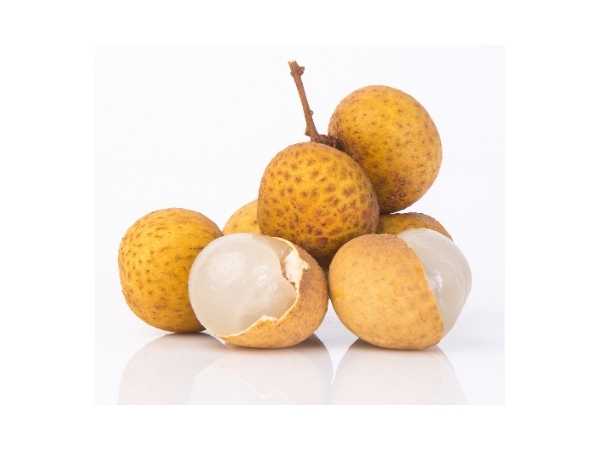
Longan - All Season
Dimocarpus longan 'All Season'
Common Names: All Season Longan, Everbearing Longan, Four Season Longan
Local Name: Puvatti Pazham (Tamil), Longan (Hindi/English)
Family: Sapindaceae
Origin: Thailand/Vietnam (selected for year-round fruiting trait)
Plant Type: Perennial evergreen tree
Variety: All Season — everbearing variety that flowers and fruits multiple times per year without cold induction
Average Lifespan: 40–60+ years
🌿 Botanical Description
| Growth Habit | Medium evergreen tree with spreading, moderately dense canopy |
| Plant Size | 6–10 meters tall; canopy spread 5–8 meters |
| Leaves | Alternate, pinnately compound, 4–8 pairs of leaflets, dark green, leathery |
| Flowers | Small, yellowish-white, in terminal panicles; functionally male, female, and bisexual on same panicle |
| Flower Characteristics | Flowers multiple times per year; does not require cold induction unlike standard longan |
| Fruit | Round, 2–2.5 cm diameter; thin tan shell; translucent sweet flesh; slightly smaller than Diamond River |
| Fruit Color | Light tan to brown shell; translucent white flesh |
| Seed Characteristics | Single round, shiny black seed; not edible |
| Root System | Moderately deep with spreading lateral roots |
☀ Growing Conditions
| Climate | Tropical; does not require cold period for flowering (key advantage) |
| Temperature Range | 22–35°C ideal; tolerates tropical heat; frost-sensitive |
| Rainfall Requirement | 1200–2500 mm annually; consistent moisture preferred |
| Soil Type | Well-drained sandy loam to loam; rich in organic matter |
| Soil pH Preference | 5.5–6.5 |
| Sun Requirement | Full sun (6–8 hours daily) |
| Spacing | 6–8 meters between trees |
| Irrigation Method | Drip irrigation; consistent moisture year-round for continuous fruiting |
| Water Requirement | Moderate to high; continuous fruiting demands consistent water supply |
| Can it Grow in Pots? | Yes, in large containers (50+ liters); will fruit in pots |
🌾 Cultivation & Care
| Fertilizer Schedule | Every 2–3 months due to continuous fruiting; balanced NPK with extra potassium |
| Recommended Organic Fertilizers | Compost, vermicompost, fish emulsion, bone meal, seaweed extract |
| Pesticide Frequency | Regular monitoring; treat as needed year-round |
| Recommended Organic Pesticides | Neem oil, insecticidal soap, pyrethrin, Beauveria bassiana |
| Mulching Practice | Organic mulch maintained year-round |
| Training System | Open center; manage size for easy harvest |
| Pruning Time | After each harvest flush; stagger pruning to maintain continuous production |
| How to Prune | Tip-prune after harvest to stimulate new flowering wood; remove dead and weak branches |
| Common Pests | Longan stink bug, fruit borer, mites, scale insects |
| Common Diseases | Witches' broom, leaf spot, fruit rot, powdery mildew |
| Disease Prevention & Remedies | Good air circulation, copper fungicides, sanitation, remove infected panicles |
🌸 Flowering & Fruiting
| Flowering Months | Year-round; multiple flushes per year |
| Fruiting Season | Year-round; 3–4 harvest cycles per year in tropical climates |
| Days to Harvest | 120–150 days from flowering per cycle |
| Harvest Indicators | Shell turns tan-brown, flesh becomes translucent and sweet, fruit detaches easily |
| Average Yield per Plant | 40–100 kg per tree per year (cumulative from multiple harvests) |
| Pollination Type | Self-pollination and insect pollination |
| Pollination Notes | Self-fertile; bees improve fruit set; continuous flowering provides year-round pollinator food |
🌱 Pollination & Propagation
| Pollination Details | Self-fertile; produces functional male and bisexual flowers |
| Propagation by Seeds | Seeds germinate quickly but seedlings may not retain everbearing trait |
| Propagation by Cuttings | Air layering (marcotting) effective; fruits in 2–3 years |
| Propagation by Grafting | Cleft or veneer grafting on seedling rootstock; essential to maintain All Season trait |
💧 Environmental Impact & Sustainability
| Water Usage | Moderate to high due to continuous fruiting |
| Soil Conservation Practices | Evergreen canopy provides year-round cover; mulching prevents erosion |
| Organic Practices Used | Composting, biological pest control, cover cropping |
| Companion Plants | Leguminous cover crops, lemongrass, basil |
| Biodiversity Benefits | Year-round flowering provides continuous food for pollinators |
💰 Economic Importance
| Commercial Production Regions | Thailand, Vietnam, China, India (emerging), Australia |
| Market Uses | Fresh fruit year-round; off-season premium pricing |
| Processing Uses | Dried longan, canned fruit, beverages, desserts |
| Market Value (Approx.) | ₹200–600 per kg; premium during off-season months |
🌿 Cultural Significance
| Symbolism | Longan symbolizes good luck and fertility in Chinese culture; "Dragon Eye" name |
| Traditional Uses | Dried longan in TCM as blood tonic; fruit in festive desserts and soups |
🍈 Nutritional Information
| Calories | 60 kcal per 100g |
| Dietary Fiber | 1.1 g per 100g |
| Vitamin C | 84 mg per 100g (140% DV) |
| Vitamin A | Trace amounts |
| Iron | 0.13 mg per 100g |
| Potassium | 266 mg per 100g |
| Antioxidants | Gallic acid, ellagic acid, polyphenols |
| Other Key Nutrients | Riboflavin, niacin, copper, manganese |
🌿 Medicinal Uses
| Anxiety & Sleep | Dried longan used in TCM as calming agent; nourishes heart and spleen |
| Immune Support | Very high vitamin C content boosts immunity |
| Anti-inflammatory Properties | Polyphenols show anti-inflammatory and antioxidant activity |
| Heart Health | Potassium and antioxidants support cardiovascular health |
| Digestive Health | Traditionally used to strengthen digestion in TCM |
Disclaimer: Information provided is for educational purposes only and not a substitute for medical advice.
📸 Photo Gallery
📝 Orchard Observation Notes
Add your field observations here.