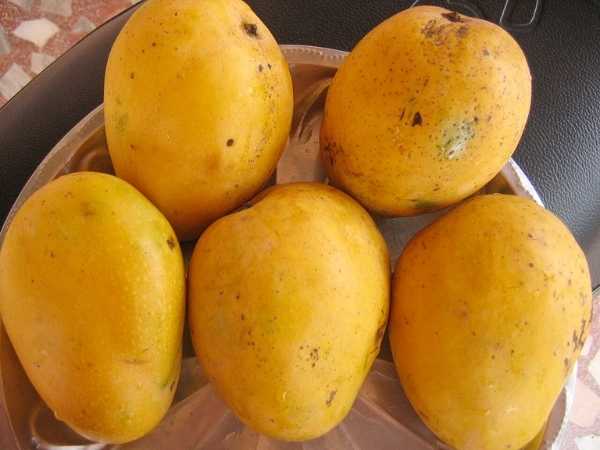
Mango - Bangalore
Mangifera indica 'Bangalore'
Common Names: Bangalore Mango, Thothapuri, Totapuri, Collector, Kallamai
Local Name: Thothapuri (Tamil/Kannada), Totapuri (Hindi), Ginimoothi (Telugu)
Family: Anacardiaceae
Origin: Karnataka, India
Plant Type: Large evergreen tree, 10–15 meters tall
Variety: Thothapuri — distinctive parrot-beak shape, dual-purpose (table and processing)
Average Lifespan: 40–100+ years
🌿 Botanical Description
| Growth Habit | Large, vigorous tree with upright to spreading canopy |
| Plant Size | 10–15 meters tall; canopy spread 8–12 meters |
| Leaves | Simple, alternate, lanceolate, 15–30 cm long; new leaves pinkish-red turning dark green |
| Flowers | Small, yellowish-white in large terminal panicles (20–40 cm long) |
| Flower Characteristics | Both male and bisexual flowers on same panicle; mildly fragrant |
| Fruit | Medium to large, 250–450 g; distinctive elongated shape with pointed beak (parrot-beak); firm flesh, mildly sweet with slight tang |
| Fruit Color | Green turning bright yellow with green tinge when ripe; prominent beak tip |
| Seed Characteristics | Large polyembryonic seed; commonly used as rootstock for grafting other varieties |
| Root System | Deep taproot with extensive lateral root system; very hardy and drought-tolerant |
☀ Growing Conditions
| Climate | Tropical to subtropical; adaptable to various conditions |
| Temperature Range | 24–35°C ideal; tolerates up to 45°C; frost-sensitive |
| Rainfall Requirement | 750–2500 mm annually; dry spell before flowering improves yield |
| Soil Type | Adaptable; grows in laterite, red loam, alluvial, and even rocky soils |
| Soil pH Preference | 5.5–7.5 |
| Sun Requirement | Full sun (8+ hours daily) |
| Spacing | 8–10 meters between trees |
| Irrigation Method | Basin or drip irrigation; reduce watering during flowering |
| Water Requirement | Low to moderate; very drought-tolerant once established |
| Can it Grow in Pots? | Young grafted trees in large pots (50+ liters); vigorous grower, will need root pruning |
🌾 Cultivation & Care
| Fertilizer Schedule | 3 times per year — pre-flowering, post-fruit set, post-harvest |
| Recommended Organic Fertilizers | FYM (25–50 kg/tree/year), neem cake, bone meal, vermicompost |
| Pesticide Frequency | 2–3 sprays during flowering and fruiting season |
| Recommended Organic Pesticides | Neem oil, panchagavya, garlic-chili spray, fruit fly traps |
| Mulching Practice | Organic mulch around base; keep away from trunk |
| Training System | Open center or modified leader system |
| Pruning Time | After harvest (July–August) |
| How to Prune | Remove dead, diseased, and crossing branches; tip-prune for compact growth; thin canopy center |
| Common Pests | Mango hopper, fruit fly, stem borer, mealybug, leaf webber, stone weevil |
| Common Diseases | Anthracnose, powdery mildew, bacterial canker, sooty mold |
| Disease Prevention & Remedies | Copper-based fungicides, proper spacing, remove fallen debris, good sanitation |
🌸 Flowering & Fruiting
| Flowering Months | December–February (South India) |
| Fruiting Season | March–June; early to mid-season variety |
| Days to Harvest | 90–110 days from flowering |
| Harvest Indicators | Fruit turns yellow-green; shoulders fill out; firm flesh; slight aroma at stem end |
| Average Yield per Plant | 200–400 fruits per tree (mature); relatively regular bearer |
| Pollination Type | Cross-pollination by insects (flies, bees) |
| Pollination Notes | Good fruit set compared to other varieties; houseflies are primary pollinators |
💰 Economic Importance
| Commercial Production Regions | Karnataka, Andhra Pradesh, Tamil Nadu, Telangana, Maharashtra |
| Market Uses | Processing (pulp industry mainstay), table fruit, pickle (raw mango) |
| Processing Uses | Mango pulp (Totapuri pulp is India's largest export), juice, canned slices, pickle, dried mango |
| Market Value (Approx.) | ₹30–80 per kg; lower than dessert varieties but huge volume; backbone of India's mango pulp export industry |
🍈 Nutritional Information
| Calories | 60 kcal per 100g |
| Dietary Fiber | 1.6 g per 100g |
| Vitamin C | 36 mg per 100g |
| Vitamin A | 1082 IU per 100g |
| Iron | 0.16 mg per 100g |
| Potassium | 168 mg per 100g |
| Antioxidants | Beta-carotene, mangiferin, quercetin |
| Other Key Nutrients | Folate, vitamin B6, copper, vitamin E |
🌿 Medicinal Uses
| Immune Support | High vitamin C and A content boosts immunity |
| Anti-inflammatory Properties | Mangiferin compound shows anti-inflammatory and antioxidant effects |
| Digestive Health | Raw Thothapuri used in traditional medicine for digestive ailments; ripe fruit aids digestion |
| Heart Health | Fiber and potassium support cardiovascular health |
Disclaimer: Information provided is for educational purposes only and not a substitute for medical advice.
📸 Photo Gallery
📝 Orchard Observation Notes
Add your field observations here.