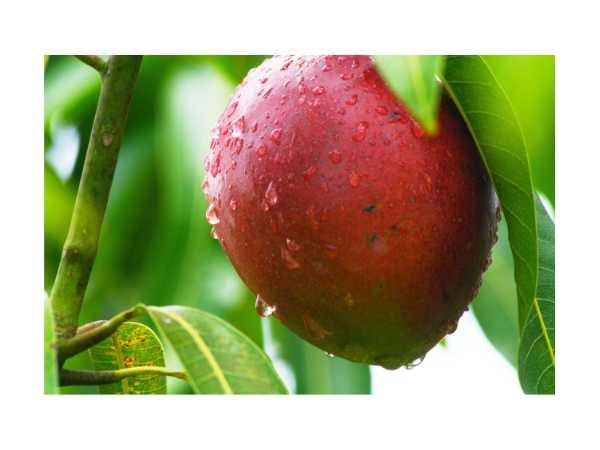
Mango Miyazaki
Mangifera indica 'Miyazaki' (Irwin)
Common Names: Miyazaki Mango, Taiyo no Tamago (Egg of the Sun), Japanese Red Mango, Irwin Mango
Local Name: 太陽のタマゴ (Japanese), Miyazaki Mango (English)
Family: Anacardiaceae
Origin: Irwin variety from Florida, USA; perfected in Miyazaki Prefecture, Japan
Plant Type: Perennial evergreen tree
Variety: Irwin cultivar — deep ruby-red, premium greenhouse mango; world's most expensive mango variety
Average Lifespan: 30–60+ years
🌿 Botanical Description
| Growth Habit | Compact, semi-dwarf tree with dense, rounded canopy; well-suited to greenhouse cultivation |
| Plant Size | 3–6 meters tall (managed); canopy spread 3–5 meters |
| Leaves | Simple, alternate, lanceolate, 15–25 cm long; new flush deep burgundy-red turning glossy dark green |
| Flowers | Small, pinkish-red in compact terminal panicles (15–25 cm long) |
| Flower Characteristics | Both male and bisexual flowers; sweet fragrance; blooms prolifically under controlled conditions |
| Fruit | Oval to ovate, 300–500 g (premium grade 350g+); thin skin with rich, creamy, fiberless pulp; Brix 15–18° |
| Fruit Color | Deep ruby-red to crimson over entire surface; no green patches at maturity |
| Seed Characteristics | Medium monoembryonic seed; relatively small compared to fruit size |
| Root System | Moderate taproot with lateral roots; manageable in container or greenhouse settings |
☀ Growing Conditions
| Climate | Tropical to warm subtropical; commercially grown in heated greenhouses in Japan |
| Temperature Range | 25–32°C ideal; greenhouse maintained at 28–30°C; frost-sensitive below 5°C |
| Rainfall Requirement | Controlled irrigation in greenhouse; 800–1500 mm equivalent annually |
| Soil Type | Well-drained, fertile loamy soil; premium potting mix in greenhouse culture |
| Soil pH Preference | 5.5–7.0 |
| Sun Requirement | Full sun (8+ hours); supplemental lighting in greenhouse during winter |
| Spacing | 3–5 meters in greenhouse; 6–8 meters in open field (tropical regions) |
| Irrigation Method | Precision drip irrigation; carefully controlled moisture during fruit development |
| Water Requirement | Moderate; precise water management critical for premium fruit quality |
| Can it Grow in Pots? | Yes, excellent container variety; commonly grown in large pots in Japanese greenhouses |
🌾 Cultivation & Care
| Fertilizer Schedule | Monthly during growing season; balanced NPK with extra potassium during fruiting |
| Recommended Organic Fertilizers | Compost, fish emulsion, bone meal, seaweed extract, vermicompost |
| Pesticide Frequency | Minimal in greenhouse; preventive sprays 2–3 times per season |
| Recommended Organic Pesticides | Neem oil, insecticidal soap, biological controls (predatory mites), sticky traps |
| Mulching Practice | Organic mulch in greenhouse beds; reflective mulch to enhance red coloring |
| Training System | Espalier or open vase; individual fruit suspended in nets to prevent drop damage |
| Pruning Time | After harvest; maintain compact form for greenhouse management |
| How to Prune | Tip-prune for compact growth; thin fruit to 1–2 per panicle for premium size |
| Common Pests | Thrips, mealybug, scale insects, spider mites (greenhouse pests) |
| Common Diseases | Anthracnose, powdery mildew, stem-end rot |
| Disease Prevention & Remedies | Greenhouse climate control, good ventilation, copper fungicides, fruit bagging |
🌸 Flowering & Fruiting
| Flowering Months | February–March (Japan greenhouse); varies in tropical open-field |
| Fruiting Season | April–July (Japan); year-round possible in tropics |
| Days to Harvest | 100–120 days from flowering |
| Harvest Indicators | Fruit turns uniformly deep red, drops naturally into net, intense sweet aroma; Brix 15+ |
| Average Yield per Plant | 20–50 premium fruits per tree (thinned for quality); up to 100 in open field |
| Pollination Type | Self-fertile; cross-pollination improves fruit set |
| Pollination Notes | Hand pollination practiced in greenhouses; bees introduced during flowering |
🌱 Pollination & Propagation
| Pollination Details | Self-fertile Irwin variety; hand pollination and bee introduction in greenhouse |
| Propagation by Seeds | Monoembryonic; seedlings do not come true-to-type; used for rootstock |
| Propagation by Cuttings | Air layering possible but grafting preferred for uniformity |
| Propagation by Grafting | Veneer or cleft grafting on vigorous rootstock; tissue culture also used in Japan |
💧 Environmental Impact & Sustainability
| Water Usage | Moderate; precision irrigation minimizes waste in greenhouse |
| Soil Conservation Practices | Greenhouse cultivation reduces land footprint; mulching conserves moisture |
| Organic Practices Used | Integrated pest management, biological controls, organic fertilizers |
| Companion Plants | Not typically intercropped in greenhouse; herbs as pest deterrents in open field |
| Biodiversity Benefits | Greenhouse pollinator programs support bee populations; open-field trees provide habitat |
💰 Economic Importance
| Commercial Production Regions | Miyazaki Prefecture (Japan), Okinawa, Taiwan, India (emerging), Thailand |
| Market Uses | Ultra-premium gift fruit, luxury dessert, high-end retail |
| Processing Uses | Rarely processed; consumed fresh as luxury fruit; some use in premium confections |
| Market Value (Approx.) | ¥3,000–5,000 per fruit ($20–35 USD); Taiyo no Tamago grade: ¥10,000–50,000+ per pair at auction |
🌿 Cultural Significance
| Symbolism | Taiyo no Tamago (Egg of the Sun) — symbol of Japanese agricultural craftsmanship and luxury gifting culture |
| Traditional Uses | Premium gift fruit in Japanese oseibo and ochugen gift-giving seasons; status symbol |
🍈 Nutritional Information
| Calories | 64 kcal per 100g |
| Dietary Fiber | 1.6 g per 100g |
| Vitamin C | 36 mg per 100g |
| Vitamin A | 1082 IU per 100g |
| Iron | 0.16 mg per 100g |
| Potassium | 168 mg per 100g |
| Antioxidants | Rich in beta-carotene, mangiferin, lycopene (red skin), quercetin |
| Other Key Nutrients | Folate, vitamin B6, copper, vitamin E |
🌿 Medicinal Uses
| Anxiety & Sleep | Not a primary use for mango |
| Immune Support | High vitamin C and A content boosts immunity |
| Anti-inflammatory Properties | Mangiferin and lycopene show anti-inflammatory and antioxidant effects |
| Heart Health | Fiber and potassium support cardiovascular health |
| Digestive Health | Enzymes like amylase aid digestion; fiber promotes gut health |
Disclaimer: Information provided is for educational purposes only and not a substitute for medical advice.
📸 Photo Gallery
📝 Orchard Observation Notes
Add your field observations here.