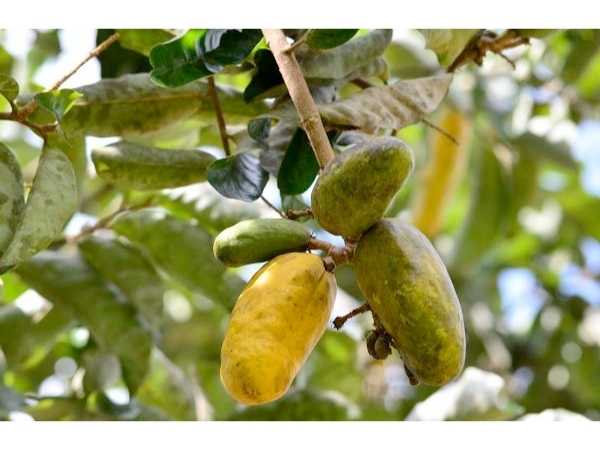
Olosapo
Couepia polyandra
Common Names: Olosapo, Zapote de Mico, Monkey Sapote
Local Name: Olosapo (Spanish/Central American)
Family: Chrysobalanaceae
Origin: Central America (Mexico, Guatemala, Honduras, El Salvador)
Plant Type: Perennial evergreen tree
Variety: Wild species; very few cultivated selections
Average Lifespan: 50–80 years
🌿 Botanical Description
| Growth Habit | Medium to large evergreen tree with dense rounded canopy |
| Plant Size | 10–20 meters tall; canopy spread 8–12 meters |
| Leaves | Alternate, simple, elliptic to oblong, 8–15 cm long, leathery, dark green above with pale underside |
| Flowers | Small, white to cream, 5-petaled, in terminal or axillary racemes |
| Flower Characteristics | Mildly fragrant; attract bees and insects; numerous stamens |
| Fruit | Oval drupe, 5–8 cm long, thin skin with sweet aromatic flesh surrounding a single large seed |
| Fruit Color | Yellow to orange-brown when ripe; flesh yellow-orange |
| Seed Characteristics | Single large seed with hard shell; edible kernel when roasted |
| Root System | Deep taproot with lateral roots; wind-resistant |
☀ Growing Conditions
| Climate | Tropical lowland to mid-elevation; frost-intolerant |
| Temperature Range | 22–35°C ideal; does not tolerate frost |
| Rainfall Requirement | 1500–3000 mm annually; tolerates seasonal dry periods |
| Soil Type | Deep, well-drained, fertile soil; tolerates various soil types |
| Soil pH Preference | 5.5–7.0 |
| Sun Requirement | Full sun (6+ hours daily) |
| Spacing | 8–10 meters between trees |
| Irrigation Method | Rain-fed in native habitat; supplemental watering in dry periods |
| Water Requirement | Moderate; somewhat drought-tolerant once established |
| Can it Grow in Pots? | Not recommended — grows too large |
🌾 Cultivation & Care
| Fertilizer Schedule | Twice yearly with organic matter |
| Recommended Organic Fertilizers | Compost, well-rotted manure, bone meal |
| Pesticide Frequency | Rarely needed; naturally pest-resistant |
| Recommended Organic Pesticides | Neem oil if needed |
| Mulching Practice | Organic mulch around base to retain moisture |
| Training System | Natural form; minimal training needed |
| Pruning Time | After fruiting season |
| How to Prune | Remove dead branches; light shaping as needed |
| Common Pests | Fruit fly, birds, monkeys (fruit predators) |
| Common Diseases | Generally disease-free; occasional fungal leaf spot |
| Disease Prevention & Remedies | Good air circulation; remove fallen fruit; rarely needs treatment |
🌸 Flowering & Fruiting
| Flowering Months | March–May (dry season to early rainy season) |
| Fruiting Season | July–October; coincides with rainy season |
| Days to Harvest | 90–120 days from flowering |
| Harvest Indicators | Fruit turns yellow-orange, softens, aromatic scent; falls when fully ripe |
| Average Yield per Plant | 40–80 kg per tree per year (estimated for mature tree) |
| Pollination Type | Insect pollination (bees) |
| Pollination Notes | Bees are primary pollinators; may benefit from cross-pollination |
🌱 Pollination & Propagation
| Pollination Details | Insect-pollinated; bees attracted to fragrant flowers |
| Propagation by Seeds | Fresh seeds germinate in 3–6 weeks; seedlings slow-growing; fruit in 5–8 years |
| Propagation by Cuttings | Air layering possible but slow; limited information available |
| Propagation by Grafting | Grafting on Chrysobalanaceae rootstock possible; limited commercial practice |
💧 Environmental Impact & Sustainability
| Water Usage | Moderate; adapted to seasonal tropical rainfall |
| Soil Conservation Practices | Dense canopy and deep roots prevent erosion |
| Organic Practices Used | Minimal inputs; grows naturally in forest settings |
| Companion Plants | Other Central American fruit trees; cacao, vanilla as understorey |
| Biodiversity Benefits | Important food source for monkeys and birds; supports Central American forest biodiversity |
💰 Economic Importance
| Commercial Production Regions | Mexico (Pacific coast), Guatemala, Honduras, El Salvador — very limited cultivation |
| Market Uses | Fresh fruit in local markets; roasted seeds |
| Processing Uses | Eaten fresh; seed kernel roasted and eaten; limited processing |
| Market Value (Approx.) | Rarely traded commercially; local market fruit in Central America |
🌿 Cultural Significance
| Symbolism | Represents Central American biodiversity; rare and underutilized fruit species |
| Traditional Uses | Fruit eaten fresh by indigenous communities; seed kernel roasted as snack; wood used locally for construction |
🍈 Nutritional Information
| Calories | Estimated 60–80 kcal per 100g |
| Dietary Fiber | Moderate fiber content |
| Vitamin C | Present (limited data available) |
| Vitamin A | Present as carotenoids (yellow-orange flesh) |
| Iron | Trace amounts |
| Potassium | Present |
| Antioxidants | Carotenoids and phenolic compounds |
| Other Key Nutrients | Seed kernel rich in oil and protein |
🌿 Medicinal Uses
| Anxiety & Sleep | Not documented |
| Immune Support | Antioxidant content supports general health |
| Anti-inflammatory Properties | Limited research; Chrysobalanaceae family known for bioactive compounds |
| Heart Health | Seed oil may have nutritional benefits (limited data) |
| Digestive Health | Fiber content aids digestion |
Disclaimer: Information provided is for educational purposes only and not a substitute for medical advice.
📸 Photo Gallery
📝 Orchard Observation Notes
Add your field observations here.