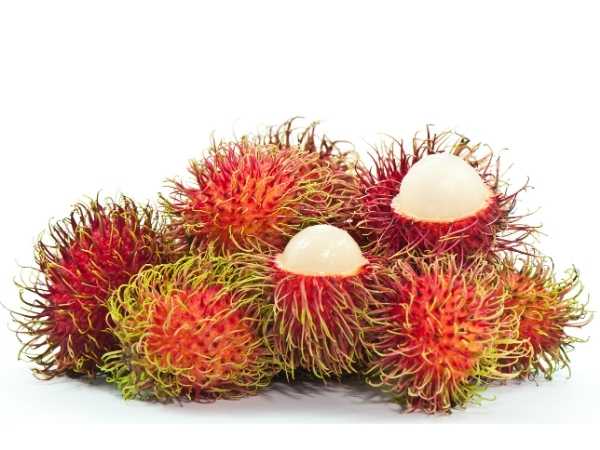
Rambutan - Rongrien
Nephelium lappaceum 'Rongrien'
Common Names: Rongrien Rambutan, Thai Rambutan
Local Name: Ngo Rong Rien (Thai), Rambutan (Malay/Tamil)
Family: Sapindaceae
Origin: Thailand (premium cultivar from Surat Thani province)
Plant Type: Perennial evergreen tree
Variety: Rongrien — Thai premium variety with bright red fruit, sweet freestone flesh, and small seed
Average Lifespan: 30–50+ years
🌿 Botanical Description
| Growth Habit | Medium to large evergreen tree with dense, spreading canopy |
| Plant Size | 10–20 meters tall; canopy spread 8–12 meters |
| Leaves | Alternate, pinnately compound, 2–4 pairs of leaflets, 7–20 cm each, dark green, leathery |
| Flowers | Small, greenish-white, in terminal or axillary panicles (15–30 cm); no petals |
| Flower Characteristics | Functionally male, female, or hermaphrodite; fragrant; attracts bees |
| Fruit | Oval, 3–5 cm; covered with soft, hair-like spines (spinterns); sweet, translucent white flesh; freestone in Rongrien |
| Fruit Color | Bright red rind with green-tipped spinterns; translucent white sweet flesh |
| Seed Characteristics | Single seed, 1–2 cm; freestone (flesh separates cleanly from seed in Rongrien); seed coat thin |
| Root System | Moderately deep with extensive lateral roots; mycorrhizal associations important |
☀ Growing Conditions
| Climate | Tropical; warm, humid, equatorial conditions; frost-intolerant |
| Temperature Range | 25–35°C ideal; damaged below 10°C; needs high humidity |
| Rainfall Requirement | 2000–3000 mm annually; well-distributed; brief dry spell triggers flowering |
| Soil Type | Deep, well-drained clay loam to sandy loam; rich in organic matter |
| Soil pH Preference | 4.5–6.5 (tolerates acidic soils) |
| Sun Requirement | Full sun (6+ hours daily); young trees need partial shade |
| Spacing | 8–12 meters between trees |
| Irrigation Method | Drip or sprinkler irrigation; withhold water briefly before flowering |
| Water Requirement | High; consistent moisture essential; sensitive to drought |
| Can it Grow in Pots? | Young trees only; requires ground planting for production |
🌾 Cultivation & Care
| Fertilizer Schedule | 3–4 times per year; increase potassium during fruiting for color and sweetness |
| Recommended Organic Fertilizers | FYM, vermicompost, neem cake, bone meal, seaweed extract |
| Pesticide Frequency | Monitor monthly; treat during flowering and fruiting |
| Recommended Organic Pesticides | Neem oil, Beauveria bassiana, insecticidal soap |
| Mulching Practice | Thick organic mulch (8–10 cm); essential for moisture retention |
| Training System | Open center; manage height for easy harvest |
| Pruning Time | After harvest; shape and thin canopy |
| How to Prune | Remove dead wood; thin interior for light; manage height; prune after harvest to stimulate new growth |
| Common Pests | Fruit borer, leaf roller, mealybug, fruit fly, bark borer |
| Common Diseases | Powdery mildew, leaf spot, stem canker, root rot (Phytophthora) |
| Disease Prevention & Remedies | Good drainage, copper fungicides, proper spacing, remove infected material |
🌸 Flowering & Fruiting
| Flowering Months | March–May (triggered by brief dry spell) |
| Fruiting Season | June–September; Rongrien is a reliable seasonal bearer |
| Days to Harvest | 90–120 days from flowering |
| Harvest Indicators | Rind turns bright red, spinterns remain green-tipped, fruit detaches easily from cluster |
| Average Yield per Plant | 60–150 kg per tree per year (mature); Rongrien is a good yielder |
| Pollination Type | Cross-pollination by insects |
| Pollination Notes | Functionally dioecious; need male/hermaphrodite trees nearby; bees and flies are primary pollinators |
🌱 Pollination & Propagation
| Pollination Details | Functionally dioecious; hermaphrodite trees can self-pollinate but cross-pollination improves yield |
| Propagation by Seeds | Seeds germinate in 1–2 weeks; not true-to-type; seedlings take 5–8 years to fruit |
| Propagation by Cuttings | Air layering (marcotting) effective; fruits in 2–3 years |
| Propagation by Grafting | Approach or veneer grafting on seedling rootstock; preferred for Rongrien |
💧 Environmental Impact & Sustainability
| Water Usage | High; requires consistent moisture in tropical conditions |
| Soil Conservation Practices | Large canopy provides ground cover; mulching prevents erosion |
| Organic Practices Used | Composting, biological pest control, mulching, cover cropping |
| Companion Plants | Durian, mangosteen, langsat in mixed tropical orchards |
| Biodiversity Benefits | Flowers attract diverse pollinators; fruit eaten by birds and bats; large canopy provides habitat |
💰 Economic Importance
| Commercial Production Regions | Thailand (Surat Thani, Chanthaburi), Malaysia, Indonesia, Vietnam, India (emerging) |
| Market Uses | Fresh fruit; Rongrien is the most exported Thai rambutan variety |
| Processing Uses | Canned in syrup, dried fruit, juice, jam; seed oil for cosmetics |
| Market Value (Approx.) | ₹150–400 per kg; Rongrien commands premium in export markets |
🌿 Cultural Significance
| Symbolism | Name "rambutan" from Malay "rambut" (hair); symbol of tropical abundance in Southeast Asia |
| Traditional Uses | Seed paste used in traditional medicine; bark decoction for fever; fruit rind as natural dye |
🍈 Nutritional Information
| Calories | 82 kcal per 100g |
| Dietary Fiber | 0.9 g per 100g |
| Vitamin C | 4.9 mg per 100g |
| Vitamin A | Trace amounts |
| Iron | 0.35 mg per 100g |
| Potassium | 42 mg per 100g |
| Antioxidants | Gallic acid, ellagic acid, corilagin (in rind); vitamin C |
| Other Key Nutrients | Manganese, copper, phosphorus, niacin |
🌿 Medicinal Uses
| Anxiety & Sleep | Not a primary medicinal use |
| Immune Support | Vitamin C and antioxidants provide some immune support |
| Anti-inflammatory Properties | Rind extracts show anti-inflammatory and antimicrobial activity |
| Heart Health | Iron content supports blood health; antioxidants support vascular function |
| Digestive Health | Fiber aids digestion; traditionally used for digestive complaints |
Disclaimer: Information provided is for educational purposes only and not a substitute for medical advice.
📸 Photo Gallery
📝 Orchard Observation Notes
Add your field observations here.