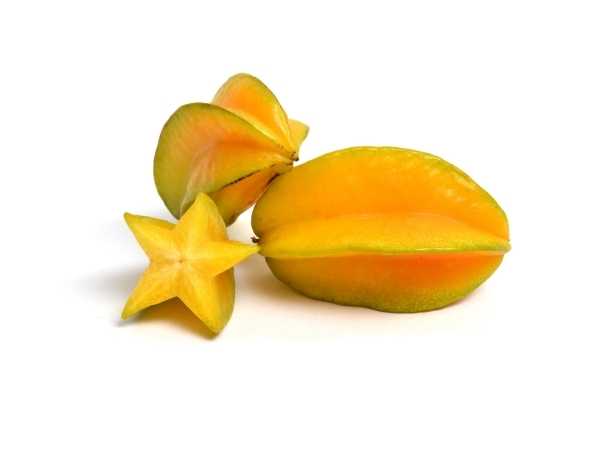
Star Fruit (Regular)
Averrhoa carambola
Common Names: Star Fruit, Carambola, Five Finger Fruit, Five Corner Fruit
Local Name: Thambratham Pazham (Tamil), Kamrakh (Hindi), Kamaranga (Bengali)
Family: Oxalidaceae
Origin: Southeast Asia (Sri Lanka, Moluccas, Indonesia)
Plant Type: Perennial evergreen tree
Variety: Regular (tart) type — classic carambola with tangy-sweet flavor and higher oxalic acid content
Average Lifespan: 20–40 years
🌿 Botanical Description
| Growth Habit | Small to medium evergreen tree with bushy, spreading canopy |
| Plant Size | 5–10 meters tall; canopy spread 4–7 meters |
| Leaves | Alternate, pinnately compound, 5–11 leaflets; sensitive to light and touch (nyctinastic movement) |
| Flowers | Small, pink to lilac-purple, 6–10 mm; borne in clusters on branches and trunk |
| Flower Characteristics | Fragrant; heterostylous; blooms in multiple flushes year-round |
| Fruit | Oblong, 6–13 cm, prominently 5-ridged; waxy, crisp; tart to sweet-tart flavor with higher acidity than sweet types |
| Fruit Color | Green turning yellow to golden-orange when ripe; translucent flesh |
| Seed Characteristics | Small, flat, brown seeds (3–12 per fruit); viable for short period |
| Root System | Shallow, spreading fibrous root system |
☀ Growing Conditions
| Climate | Tropical to warm subtropical; frost-sensitive |
| Temperature Range | 20–35°C ideal; damaged below 2°C |
| Rainfall Requirement | 1000–2000 mm annually |
| Soil Type | Well-drained loamy to sandy loam; adaptable to various soils |
| Soil pH Preference | 5.5–6.5 |
| Sun Requirement | Full sun (6–8 hours daily) |
| Spacing | 5–7 meters between trees |
| Irrigation Method | Drip or basin irrigation |
| Water Requirement | Moderate; consistent moisture during fruiting |
| Can it Grow in Pots? | Yes, in large containers (30–50 liters); fruits well in pots |
🌾 Cultivation & Care
| Fertilizer Schedule | Every 2–3 months; balanced NPK |
| Recommended Organic Fertilizers | Compost, vermicompost, bone meal, fish emulsion |
| Pesticide Frequency | Monitor monthly; treat as needed |
| Recommended Organic Pesticides | Neem oil, insecticidal soap, pyrethrin |
| Mulching Practice | Organic mulch (5–8 cm) around base |
| Training System | Open center; maintain compact form for easy harvest |
| Pruning Time | After harvest flush; light pruning year-round |
| How to Prune | Remove dead wood; thin interior; manage height |
| Common Pests | Fruit fly, scale insects, aphids, leaf roller, stink bugs |
| Common Diseases | Anthracnose, leaf spot, root rot, sooty mold |
| Disease Prevention & Remedies | Good drainage, copper fungicides, sanitation, proper spacing |
🌸 Flowering & Fruiting
| Flowering Months | Year-round in tropics; multiple flushes |
| Fruiting Season | Year-round; 2–3 main harvest periods |
| Days to Harvest | 60–75 days from flowering |
| Harvest Indicators | Fruit turns yellow-orange, ridges become translucent, slight give when pressed |
| Average Yield per Plant | 100–250 kg per tree per year (mature); very prolific |
| Pollination Type | Self-pollination and insect pollination |
| Pollination Notes | Self-fertile; bees improve fruit set |
🌱 Pollination & Propagation
| Pollination Details | Self-fertile; heterostylous; insect-pollinated |
| Propagation by Seeds | Seeds germinate in 1–2 weeks; seedlings fruit in 4–5 years |
| Propagation by Cuttings | Air layering effective; fruits in 2–3 years |
| Propagation by Grafting | Veneer grafting on seedling rootstock; preferred for named varieties |
💧 Environmental Impact & Sustainability
| Water Usage | Moderate; efficient with drip irrigation |
| Soil Conservation Practices | Mulching and cover crops; shallow roots benefit from ground cover |
| Organic Practices Used | Composting, biological pest control, mulching |
| Companion Plants | Leguminous cover crops, marigolds, basil |
| Biodiversity Benefits | Flowers attract bees and butterflies; fruit eaten by birds |
💰 Economic Importance
| Commercial Production Regions | Malaysia, Taiwan, India, Thailand, Brazil, USA (Florida, Hawaii) |
| Market Uses | Fresh fruit, cooking ingredient, garnish, juice |
| Processing Uses | Juice, pickles, chutneys, dried fruit, wine, vinegar |
| Market Value (Approx.) | ₹40–150 per kg |
🌿 Cultural Significance
| Symbolism | Star shape symbolizes good fortune; popular in Asian cuisine and decoration |
| Traditional Uses | Tart fruit used in cooking, chutneys, and pickles; juice as natural cleaning agent; leaves in folk medicine |
🍈 Nutritional Information
| Calories | 31 kcal per 100g |
| Dietary Fiber | 2.8 g per 100g |
| Vitamin C | 34.4 mg per 100g (57% DV) |
| Vitamin A | 61 IU per 100g |
| Iron | 0.08 mg per 100g |
| Potassium | 133 mg per 100g |
| Antioxidants | Quercetin, gallic acid, epicatechin, proanthocyanidins |
| Other Key Nutrients | Oxalic acid (higher in tart varieties), folate, copper |
🌿 Medicinal Uses
| Anxiety & Sleep | Not a primary medicinal use |
| Immune Support | Vitamin C supports immune function |
| Anti-inflammatory Properties | Polyphenols show anti-inflammatory effects |
| Heart Health | Low calorie, high fiber supports cardiovascular health |
| Digestive Health | Fiber aids digestion; traditionally used for appetite stimulation |
Disclaimer: Information provided is for educational purposes only and not a substitute for medical advice. Star fruit should be avoided by people with kidney disease due to high oxalate content.
📸 Photo Gallery
📝 Orchard Observation Notes
Add your field observations here.