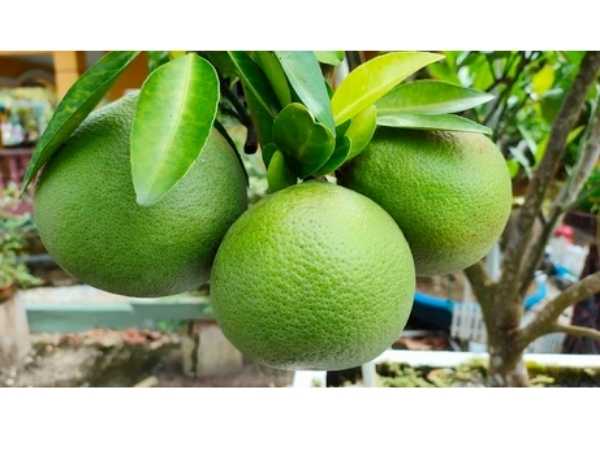
Sweet Lime - Bali
Citrus limetta (Bali variety)
Common Names: Bali Sweet Lime, Balinese Sweet Lime
Local Name: Sathukudi (Tamil), Jeruk Manis (Indonesian)
Family: Rutaceae
Origin: Bali, Indonesia
Plant Type: Small evergreen tree, 4–6 meters tall
Variety: Bali selection — adapted to tropical island conditions, aromatic fruit
Average Lifespan: 20–25 years
🌿 Botanical Description
| Growth Habit | Compact, upright to semi-spreading tree with dense canopy and sparse thorns |
| Plant Size | 4–6 meters tall; canopy spread 3–4 meters |
| Leaves | Simple, alternate, ovate-elliptic, 5–9 cm long; dark green, aromatic, with narrowly winged petioles |
| Flowers | White, fragrant, 2–2.5 cm diameter; borne singly or in small axillary clusters |
| Flower Characteristics | 5-petaled, intensely fragrant; blooms profusely in warm humid conditions |
| Fruit | Round to slightly oblate, 5–7 cm diameter; thin smooth rind, sweet aromatic juice with very low acidity |
| Fruit Color | Green turning pale yellow-green when ripe; slightly more golden than Nagpur variety |
| Seed Characteristics | Polyembryonic; 2–6 small seeds per fruit; occasional seedless fruits |
| Root System | Moderate taproot with spreading lateral roots; tolerates volcanic soils well |
☀ Growing Conditions
| Climate | Tropical; thrives in warm, humid equatorial conditions |
| Temperature Range | 24–33°C ideal; frost-intolerant |
| Rainfall Requirement | 1500–2500 mm annually; tolerates high humidity |
| Soil Type | Well-drained volcanic, loamy, or sandy loam soil rich in minerals |
| Soil pH Preference | 5.5–7.0 |
| Sun Requirement | Full sun (6+ hours daily) |
| Spacing | 4–5 meters between trees |
| Irrigation Method | Drip or basin irrigation; natural rainfall often sufficient in Bali-like climates |
| Water Requirement | Moderate; consistent moisture but good drainage essential |
| Can it Grow in Pots? | Yes, suitable for large containers (25–30 liters); compact habit makes it pot-friendly |
🌾 Cultivation & Care
| Fertilizer Schedule | Quarterly during active growth; organic feeding preferred |
| Recommended Organic Fertilizers | Compost, vermicompost, neem cake, fish emulsion, seaweed extract |
| Pesticide Frequency | Monthly monitoring; treat during new flush and fruiting |
| Recommended Organic Pesticides | Neem oil, insecticidal soap, garlic-chili spray, yellow sticky traps |
| Mulching Practice | Organic mulch (coconut husk, rice straw, dried leaves) around root zone |
| Training System | Open center system; maintain 3–4 well-spaced scaffold branches |
| Pruning Time | After harvest; light shaping year-round |
| How to Prune | Remove dead wood, water sprouts, and crossing branches; maintain compact form |
| Common Pests | Citrus leaf miner, aphids, scale insects, fruit fly, mealybugs |
| Common Diseases | Citrus canker, Phytophthora root rot, anthracnose, sooty mold |
| Disease Prevention & Remedies | Ensure good drainage, copper-based fungicides, remove infected material, avoid waterlogging |
🌸 Flowering & Fruiting
| Flowering Months | Year-round in equatorial conditions; main flush during dry season |
| Fruiting Season | Year-round; peak harvest 5–6 months after main flowering |
| Days to Harvest | 140–170 days from flowering |
| Harvest Indicators | Fruit turns pale yellow-green; slight softening; sweet fragrance |
| Average Yield per Plant | 100–200 fruits per tree per year |
| Pollination Type | Self-pollination; parthenocarpy occurs |
| Pollination Notes | Single tree sufficient; insect visitors improve fruit set |
💰 Economic Importance
| Commercial Production Regions | Bali, Java, and other Indonesian islands; niche variety in Indian home orchards |
| Market Uses | Fresh fruit, juice, ceremonial offerings in Balinese culture |
| Processing Uses | Fresh juice, flavoring, essential oil from peel |
| Market Value (Approx.) | ₹50–120 per kg; premium as an imported variety |
🍈 Nutritional Information
| Calories | 43 kcal per 100g |
| Dietary Fiber | 0.5 g per 100g |
| Vitamin C | 50 mg per 100g |
| Vitamin A | Trace amounts |
| Iron | 0.7 mg per 100g |
| Potassium | 490 mg per 100g |
| Antioxidants | Flavonoids, limonoids, vitamin C |
| Other Key Nutrients | Calcium, phosphorus, natural sugars, thiamine |
📸 Photo Gallery
📝 Orchard Observation Notes
Add your field observations here.