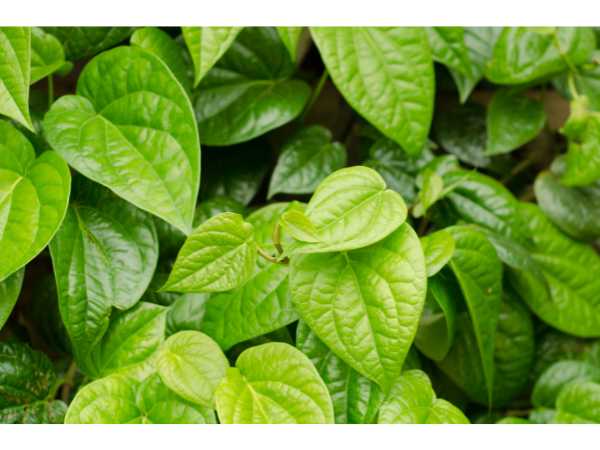
Betel Leaf
Piper betle
Common Names: Betel Leaf, Betel Vine, Pan Leaf
Local Name: Vettrilai (Tamil), Pan (Hindi), Nagavalli (Sanskrit)
Family: Piperaceae
Origin: South and Southeast Asia
Plant Type: Perennial climbing vine
Average Lifespan: 10–15 years with proper support
🌿 Botanical Description
| Growth Habit | Climbing vine with aerial roots clinging to support structures |
| Plant Size | Vine can reach 5–10 meters in length |
| Leaves | Heart-shaped, glossy, dark green, 10–15 cm long, aromatic with peppery scent |
| Flowers | Small, inconspicuous, borne on catkin-like spikes |
| Root System | Fibrous with adventitious aerial roots for climbing |
☀ Growing Conditions
| Climate | Tropical and subtropical; warm and humid |
| Temperature Range | 20–35°C; sensitive to frost and cold winds |
| Rainfall Requirement | 1500–2500 mm annually; high humidity essential |
| Soil Type | Rich, well-drained loamy soil with high organic matter |
| Soil pH Preference | 6.0–7.5 |
| Sun Requirement | Partial shade; protect from harsh afternoon sun |
| Spacing | 1–1.5 meters between plants; needs support poles or trellis |
| Irrigation Method | Regular watering; keep soil moist but not waterlogged |
| Water Requirement | Moderate to high; consistent moisture required |
| Can it Grow in Pots? | Yes, in large pots with a climbing support |
🌾 Cultivation & Care
| Fertilizer Schedule | Every 3–4 weeks with nitrogen-rich fertilizer to promote leaf growth |
| Recommended Organic Fertilizers | Compost, cow dung manure, vermicompost, neem cake |
| Pesticide Frequency | Monthly preventive spray; more frequent during monsoon |
| Recommended Organic Pesticides | Neem oil, Bordeaux mixture for fungal diseases |
| Mulching Practice | Mulch base with dry leaves or straw to retain moisture |
| Pruning Time | Regular pinching to encourage bushy growth and more leaves |
| How to Prune | Pinch growing tips; remove old or diseased stems; train vine on support |
| Common Pests | Leaf-eating caterpillars, mites, aphids, whiteflies |
| Common Diseases | Phytophthora foot rot, leaf blight, powdery mildew, mosaic virus |
| Disease Prevention & Remedies | Good air circulation, avoid waterlogging, use disease-free planting material |
🌱 Pollination & Propagation
| Propagation by Cuttings | Stem cuttings with 3–4 nodes root easily in moist soil; most common method |
| Propagation by Seeds | Rarely used; seeds have short viability |
💧 Environmental Impact & Sustainability
| Water Usage | Moderate; shade gardens reduce water evaporation |
| Companion Plants | Areca palm (traditional support tree), coconut, banana |
| Biodiversity Benefits | Provides dense ground cover; supports insects and small fauna |
💰 Economic Importance
| Commercial Production Regions | India (West Bengal, Andhra Pradesh, Tamil Nadu), Bangladesh, Sri Lanka, Southeast Asia |
| Market Uses | Fresh leaves for betel quid (paan), religious offerings, traditional medicine |
| Market Value (Approx.) | ₹50–200 per bundle of 50 leaves; varies by variety and region |
🌿 Cultural Significance
| Symbolism | Sacred in Hindu and Buddhist traditions; offered to deities and used in auspicious ceremonies |
| Traditional Uses | Chewed with areca nut and lime as a digestive stimulant; used in wedding rituals and hospitality across South Asia |
🌿 Medicinal Uses
| Digestive Health | Stimulates digestive enzymes; traditionally used to relieve indigestion and flatulence |
| Anti-inflammatory Properties | Leaf extracts show anti-inflammatory and analgesic activity in studies |
| Immune Support | Rich in antioxidants including eugenol and hydroxychavicol |
| Heart Health | Traditional use as a mild cardiac tonic; however, excessive use with areca nut is harmful |
Disclaimer: Information provided is for educational purposes only and not a substitute for medical advice.
📝 Orchard Observation Notes
Add your field observations here.