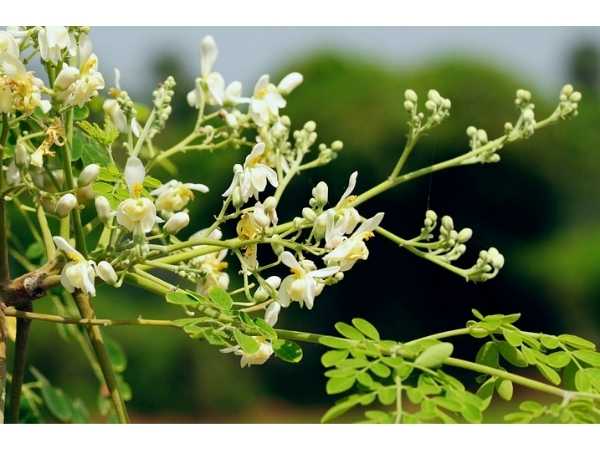
Moringa Tree
Moringa oleifera
Common Names: Moringa, Drumstick Tree, Horseradish Tree, Ben Oil Tree
Local Name: Murungai (Tamil), Sahjan (Hindi), Munaga (Telugu)
Family: Moringaceae
Origin: Northwestern India (sub-Himalayan regions)
Plant Type: Fast-growing deciduous tree
Variety: PKM-1, PKM-2 (high-yielding), Jaffna, ODC-3
Average Lifespan: 20–30 years
🌿 Botanical Description
| Growth Habit | Fast-growing, slender deciduous tree; can grow 3–5 meters in first year |
| Plant Size | 5–12 meters tall; open, drooping canopy |
| Leaves | Tripinnately compound, small oval leaflets (1–2 cm), feathery appearance |
| Flowers | Fragrant, creamy-white, 2.5 cm across, in drooping panicles |
| Flower Characteristics | 5 unequal petals, mildly sweet fragrance; attracts bees |
| Fruit | Long, slender, triangular pods (drumsticks), 20–60 cm long |
| Fruit Color | Green when young, turning brown when mature and dry |
| Seed Characteristics | Round, 3-winged seeds (1 cm); 10–20 seeds per pod; contain ben oil |
| Root System | Thick, tuberous taproot; white, pungent (horseradish-like) |
☀ Growing Conditions
| Climate | Tropical to subtropical; highly drought-tolerant |
| Temperature Range | 25–35°C ideal; tolerates up to 48°C; frost-sensitive |
| Rainfall Requirement | 250–1500 mm annually; thrives even in arid conditions |
| Soil Type | Well-drained sandy loam; tolerates poor soils; avoid waterlogging |
| Soil pH Preference | 6.3–7.0 (tolerates 5.0–9.0) |
| Sun Requirement | Full sun (6+ hours daily) |
| Spacing | 3–5 meters for tree form; 1 meter for intensive leaf harvest |
| Irrigation Method | Drip or flood irrigation; minimal once established |
| Water Requirement | Low; extremely drought-tolerant |
| Can it Grow in Pots? | Yes, in large pots (20+ liters); keep pruned for compact growth |
🌾 Cultivation & Care
| Fertilizer Schedule | At planting and every 3–4 months; light feeding sufficient |
| Recommended Organic Fertilizers | FYM, vermicompost, neem cake; moringa is not a heavy feeder |
| Pesticide Frequency | Rarely needed; moringa is naturally pest-resistant |
| Recommended Organic Pesticides | Neem oil for occasional caterpillar or aphid issues |
| Mulching Practice | Light mulch to retain moisture in dry areas |
| Training System | Pollard or coppice for leaf production; single leader for pods |
| Pruning Time | After each harvest cycle; promotes branching |
| How to Prune | Cut back to 1–1.5 meters for bushy regrowth; tip-prune for branching |
| Common Pests | Pod borer, hairy caterpillar, bark caterpillar (generally minor) |
| Common Diseases | Root rot (in waterlogged soil), dieback, fruit rot |
| Disease Prevention & Remedies | Ensure good drainage; avoid overwatering; remove infected parts |
🌸 Flowering & Fruiting
| Flowering Months | January–March (South India); can flower year-round in tropics |
| Fruiting Season | March–June (main season); some varieties fruit twice a year |
| Days to Harvest | Pods: 60–90 days from flowering; Leaves: harvestable from 60 days after planting |
| Harvest Indicators | Pods snap easily when bent; tender green for cooking |
| Average Yield per Plant | 300–400 pods per tree per year (mature); 6–10 kg leaves per harvest |
| Pollination Type | Self-pollination and insect pollination |
| Pollination Notes | Bees, sunbirds, and other insects are pollinators |
🌱 Pollination & Propagation
| Pollination Details | Self-fertile; cross-pollination by insects improves yield |
| Propagation by Seeds | Direct sowing or nursery; germinates in 5–12 days; fruits in 6–8 months |
| Propagation by Cuttings | Hardwood cuttings (1–1.5 m, 4–5 cm thick); plant directly; fruits in 6 months |
| Propagation by Grafting | Not commonly practiced for moringa |
💧 Environmental Impact & Sustainability
| Water Usage | Very low; one of the most water-efficient food trees |
| Soil Conservation Practices | Deep taproot prevents erosion; leaf litter enriches soil |
| Organic Practices Used | Moringa leaf extract used as natural plant growth enhancer |
| Companion Plants | Legumes, vegetables (moringa provides light shade) |
| Biodiversity Benefits | Seeds used for water purification; supports pollinators; agroforestry species |
💰 Economic Importance
| Commercial Production Regions | India (Tamil Nadu, Andhra Pradesh, Karnataka), Philippines, Africa |
| Market Uses | Fresh drumsticks, moringa powder, moringa oil, supplements |
| Processing Uses | Leaf powder, capsules, tea, oil extraction, water purification |
| Market Value (Approx.) | ₹20–60 per kg (drumsticks); ₹500–1500 per kg (leaf powder) |
🌿 Cultural Significance
| Symbolism | Known as the "Miracle Tree" and "Tree of Life" for its nutritional density |
| Traditional Uses | Used in Siddha and Ayurvedic medicine for centuries; drumstick sambar is a South Indian staple |
🍈 Nutritional Information
| Calories | 64 kcal per 100g (leaves) |
| Dietary Fiber | 2.0 g per 100g |
| Vitamin C | 51.7 mg per 100g (leaves); 7x more than oranges (dried powder) |
| Vitamin A | 7564 IU per 100g (leaves); 4x more than carrots |
| Iron | 4.0 mg per 100g (leaves); 3x more than spinach |
| Potassium | 337 mg per 100g |
| Antioxidants | Quercetin, chlorogenic acid, beta-carotene, vitamin E |
| Other Key Nutrients | Calcium (185 mg), protein (9.4 g), all essential amino acids |
🌿 Medicinal Uses
| Anxiety & Sleep | Leaf extract shows adaptogenic properties; may reduce stress |
| Immune Support | Extremely high in vitamins A, C, and iron; boosts immunity significantly |
| Anti-inflammatory Properties | Isothiocyanates in leaves have potent anti-inflammatory effects |
| Heart Health | May lower cholesterol; leaf powder shows lipid-lowering effects in studies |
| Digestive Health | Fiber and isothiocyanates support gut health; traditionally used for digestive issues |
Disclaimer: Information provided is for educational purposes only and not a substitute for medical advice.
📸 Photo Gallery
📝 Orchard Observation Notes
Add your field observations here.