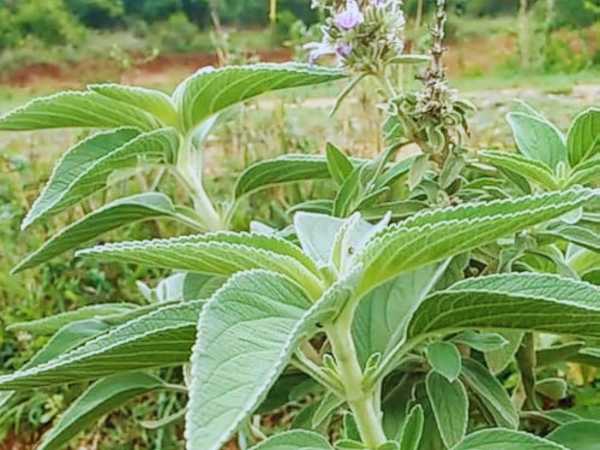
Pei Mirati
Anisomeles malabarica
Common Names: Pei Mirati, Malabar Catmint, Indian Catmint
Local Name: Pei Mirati (Tamil), Peimuratti (Tamil), Gobhi (Hindi)
Family: Lamiaceae
Origin: South Asia and Southeast Asia
Plant Type: Annual or short-lived perennial herb
Average Lifespan: 1–2 years; self-seeds readily
🌿 Botanical Description
| Growth Habit | Erect, branching herb with square stems (typical of Lamiaceae family) |
| Plant Size | 60–120 cm tall |
| Leaves | Ovate to lanceolate, 5–10 cm long, serrated margins, aromatic, soft-hairy; strong minty-camphor scent |
| Flowers | Small, tubular, pink to purple, borne in dense whorls along stem; typical mint-family flower structure |
| Flower Characteristics | Attractive to bees and butterflies; blooms profusely in cooler months |
| Root System | Fibrous, shallow taproot |
☀ Growing Conditions
| Climate | Tropical and subtropical; grows as a weed in disturbed areas |
| Temperature Range | 20–35°C; tolerates heat well |
| Rainfall Requirement | 600–1500 mm annually; drought-tolerant once established |
| Soil Type | Well-drained, moderately fertile soil; grows in poor soils |
| Soil pH Preference | 6.0–7.5 |
| Sun Requirement | Full sun to partial shade |
| Spacing | 30–50 cm between plants |
| Irrigation Method | Minimal irrigation; tolerates dry conditions |
| Water Requirement | Low; drought-tolerant |
| Can it Grow in Pots? | Yes, in medium-sized containers |
🌾 Cultivation & Care
| Fertilizer Schedule | Minimal; compost at planting is sufficient |
| Recommended Organic Fertilizers | Compost, vermicompost; avoid excess nitrogen which reduces medicinal potency |
| Common Pests | Generally pest-resistant due to aromatic oils; occasional aphids |
| Common Diseases | Powdery mildew in humid conditions; root rot if overwatered |
| Disease Prevention & Remedies | Good drainage, adequate spacing for air circulation |
| Pruning Time | Regular pinching to encourage bushy growth and delay flowering |
| How to Prune | Pinch growing tips; harvest leaves before flowering for best medicinal quality |
🌸 Flowering & Fruiting
| Flowering Months | October–February (cooler months in South India) |
| Pollination Type | Insect pollinated; bees and butterflies |
| Pollination Notes | Excellent pollinator plant; attracts diverse bee species |
🌱 Pollination & Propagation
| Propagation by Seeds | Seeds germinate readily in 1–2 weeks; self-seeds prolifically |
| Propagation by Cuttings | Stem cuttings root easily in moist soil |
💧 Environmental Impact & Sustainability
| Water Usage | Very low; ideal for dry gardens and medicinal herb beds |
| Biodiversity Benefits | Excellent pollinator plant; attracts bees, butterflies, and beneficial insects |
| Companion Plants | Other medicinal herbs; repels some pests due to aromatic oils |
💰 Economic Importance
| Commercial Production Regions | Tamil Nadu, Kerala, Karnataka (India); Sri Lanka, Southeast Asia |
| Market Uses | Traditional medicine, Ayurvedic and Siddha formulations, herbal teas |
| Market Value (Approx.) | Sold as dried herb in traditional medicine markets; ₹100–300 per kg dried |
🌿 Cultural Significance
| Symbolism | Important plant in Siddha medicine tradition of Tamil Nadu; used for centuries in traditional healing |
| Traditional Uses | Used in Siddha and Ayurvedic medicine for fever, rheumatism, and skin diseases; leaves applied as poultice for joint pain |
🌿 Medicinal Uses
| Anti-inflammatory Properties | Ovatodiolide compound shows significant anti-inflammatory activity; used for arthritis and joint pain |
| Immune Support | Antimicrobial properties; used traditionally to treat infections and fever |
| Digestive Health | Leaf decoction used for stomach disorders and intestinal worms |
| Anxiety & Sleep | Mild sedative properties; used in traditional medicine for nervous disorders |
Disclaimer: Information provided is for educational purposes only and not a substitute for medical advice.
📝 Orchard Observation Notes
Add your field observations here.