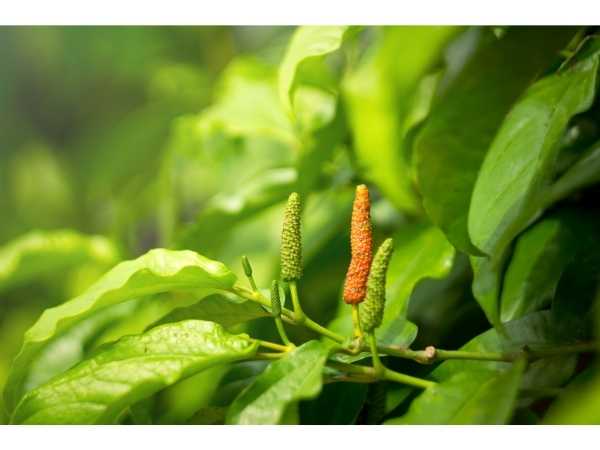
Thippili / Indian Long Pepper
Piper longum
Common Names: Indian Long Pepper, Long Pepper, Thippili
Local Name: திப்பிலி (Tamil), Pipli (Hindi)
Family: Piperaceae
Origin: India, Nepal, Sri Lanka
Plant Type: Perennial climbing shrub
Average Lifespan: Perennial; 3–5 years productive life
🌿 Botanical Description
| Growth Habit | Climbing or trailing shrub; stems root at nodes |
| Plant Size | Climbs 2–5 meters |
| Leaves | Ovate to cordate, alternate; dark green, glossy; aromatic |
| Flowers | Tiny; in cylindrical spikes; male and female on separate plants |
| Root System | Fibrous root system; adventitious roots at nodes for climbing |
☀ Growing Conditions
| Climate | Tropical; humid; prefers forest understory conditions |
| Temperature Range | 20–35°C |
| Soil Type | Well-drained, fertile loamy soil rich in organic matter |
| Soil pH Preference | 5.5–7.0 |
| Sun Requirement | Partial shade; protect from harsh afternoon sun |
| Water Requirement | Moderate to high; consistent moisture; good drainage essential |
| Can it Grow in Pots? | Yes, in large containers with a trellis |
🌾 Cultivation & Care
| Fertilizer Schedule | Monthly with compost or vermicompost; mulch to retain moisture |
| Common Pests | Phytophthora root rot; pollu beetle; leaf spot in humid conditions |
🌱 Pollination & Propagation
| Propagation by Cuttings | Stem cuttings with 2–3 nodes root easily in moist, shaded conditions |
💧 Environmental Impact & Sustainability
| Water Usage | Moderate; grows well under shade trees; suitable for agroforestry systems |
| Biodiversity Benefits | Grows as understory plant; fruits eaten by birds; supports forest biodiversity |
🌿 Medicinal Uses
| Immune Support | Fruits used for respiratory conditions, asthma, and bronchitis; key ingredient in Trikatu formulation |
| Digestive Health | Used for digestive issues, loss of appetite, and as a carminative in Ayurveda and Siddha |
| Anti-inflammatory Properties | Contains piperine; anti-inflammatory, analgesic, and bioavailability-enhancing properties |
Disclaimer: Information provided is for educational purposes only and not a substitute for medical advice.
📝 Orchard Observation Notes
Add your field observations here.