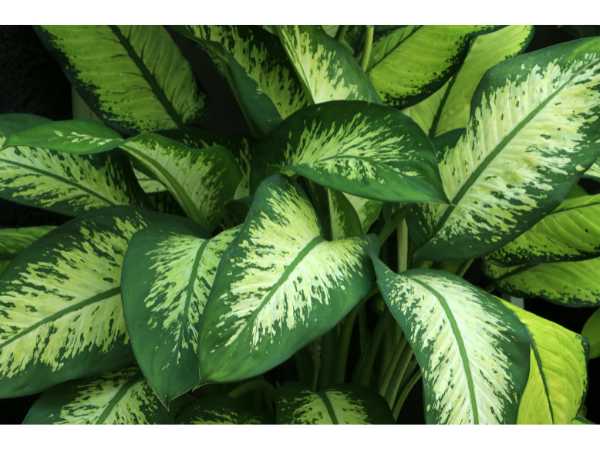
Dumb Cane
Dieffenbachia Camille
Common Names: Dumb Cane, Dieffenbachia, Leopard Lily
Local Name: Dumb Cane (Tamil/Hindi)
Family: Araceae
Origin: Tropical Americas (Mexico to Argentina)
Plant Type: Evergreen tropical perennial
Variety: Camille (cream-white center with green margins)
Average Lifespan: Many years with proper care
🌿 Botanical Description
| Growth Habit | Upright, cane-like stems with large leaves; becomes leggy over time |
| Plant Size | 0.5–1.5 meters tall indoors; up to 3 meters in tropical conditions |
| Leaves | Large, oval, 20–40 cm long; Camille variety has creamy-white center with dark green margins; striking variegation |
| Flowers | Spathe and spadix; rarely flowers indoors; flowers are insignificant |
| Root System | Fibrous, shallow; can become rootbound in pots |
☀ Growing Conditions
| Climate | Tropical; warm and humid; ideal indoor plant |
| Temperature Range | 18–30°C; avoid temperatures below 15°C |
| Soil Type | Well-draining, rich potting mix; peat or coco coir with perlite |
| Soil pH Preference | 6.0–7.0 |
| Sun Requirement | Bright indirect light; tolerates low light; direct sun bleaches leaves |
| Irrigation Method | Water when top 2–3 cm of soil is dry; reduce in winter |
| Water Requirement | Moderate; avoid overwatering which causes root rot |
| Can it Grow in Pots? | Yes, ideal container plant; repot every 1–2 years |
🌾 Cultivation & Care
| Fertilizer Schedule | Monthly during growing season with balanced liquid fertilizer |
| Recommended Organic Fertilizers | Diluted worm castings, compost tea |
| Common Pests | Spider mites, mealybugs, aphids, scale insects |
| Common Diseases | Root rot, bacterial leaf spot, fusarium stem rot |
| Disease Prevention & Remedies | Avoid overwatering, ensure good drainage, wipe leaves regularly |
| Pruning Time | Spring; cut back leggy stems to encourage new growth from base |
| How to Prune | Cut cane sections; each section can be propagated; wear gloves as sap is irritating |
🌱 Pollination & Propagation
| Propagation by Cuttings | Stem cuttings or cane sections root in moist soil or water; wear gloves when handling |
| Propagation by Seeds | Rarely used; seeds not commonly available |
💧 Environmental Impact & Sustainability
| Water Usage | Low to moderate; efficient indoor plant |
| Biodiversity Benefits | Air-purifying qualities; removes toxins from indoor environments |
💰 Economic Importance
| Commercial Production Regions | Widely produced in tropical nurseries globally |
| Market Uses | Indoor ornamental, office plant, landscape accent in tropical gardens |
| Market Value (Approx.) | ₹100–500 per plant in Indian nurseries |
🌿 Cultural Significance
| Symbolism | Named "dumb cane" because chewing the stem causes temporary speechlessness due to calcium oxalate crystals |
| Traditional Uses | Popular indoor ornamental worldwide; CAUTION — all parts are toxic to humans and pets; keep away from children and animals |
📝 Orchard Observation Notes
Add your field observations here.