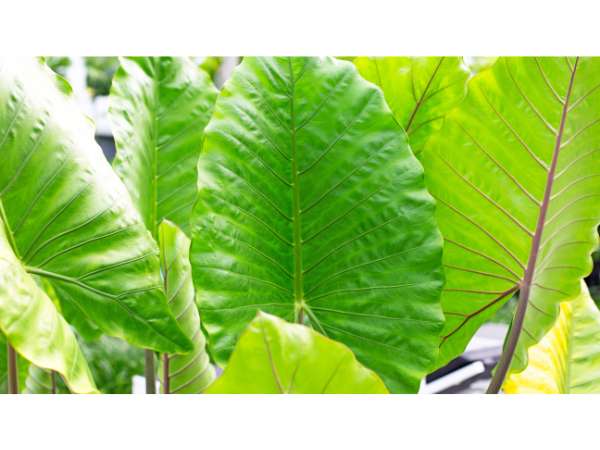
Giant Taro
Alocasia macrorrhizos
Common Names: Giant Taro, Upright Elephant Ear, Giant Alocasia, Ape
Local Name: Cheppankizhangu (Tamil), Arbi (Hindi), Chembu (Malayalam)
Family: Araceae
Origin: Tropical Asia and Pacific Islands
Plant Type: Perennial tropical herb with large rhizome
Average Lifespan: Many years; spreads by offsets
🌿 Botanical Description
| Growth Habit | Upright, clump-forming herb with massive leaves on tall petioles |
| Plant Size | 2–5 meters tall; leaves up to 1.8 meters long |
| Leaves | Enormous, arrow-shaped, glossy dark green; held upright on long petioles; prominent veins |
| Flowers | Spathe and spadix inflorescence; cream-white; fragrant; rarely produced in cultivation |
| Root System | Large, starchy rhizome; produces offsets (pups) around base |
☀ Growing Conditions
| Climate | Tropical and subtropical; warm and humid |
| Temperature Range | 18–35°C; frost-sensitive |
| Soil Type | Rich, moist, well-drained soil with high organic matter |
| Soil pH Preference | 5.5–7.0 |
| Sun Requirement | Partial shade to bright indirect light; protect from harsh afternoon sun |
| Water Requirement | High; keep soil consistently moist; tolerates wet conditions |
| Can it Grow in Pots? | Yes, in very large containers (50+ liters) |
🌾 Cultivation & Care
| Fertilizer Schedule | Monthly during growing season with balanced fertilizer |
| Recommended Organic Fertilizers | Compost, well-rotted manure, worm castings |
| Common Pests | Spider mites, mealybugs, aphids, taro beetle |
| Common Diseases | Root rot, leaf blight, taro leaf blight (Phytophthora) |
| Pruning Time | Remove dead or damaged leaves at base; divide clumps when overcrowded |
| How to Prune | Cut leaf stems at base; wear gloves — sap contains calcium oxalate crystals which irritate skin |
🌱 Pollination & Propagation
| Propagation by Cuttings | Division of offsets (pups) from base of plant; most reliable method |
| Propagation by Seeds | Rarely used; seeds germinate slowly |
💰 Economic Importance
| Market Uses | Ornamental garden plant, indoor statement plant, tropical landscape |
| Market Value (Approx.) | ₹200–800 per plant depending on size |
🌿 Cultural Significance
| Symbolism | Sacred plant in Pacific Island cultures; rhizome is a traditional food staple in many tropical regions |
| Traditional Uses | Rhizome eaten after thorough cooking (raw is toxic); leaves used as natural plates; widely grown as ornamental in tropical gardens |
📝 Orchard Observation Notes
Add your field observations here.