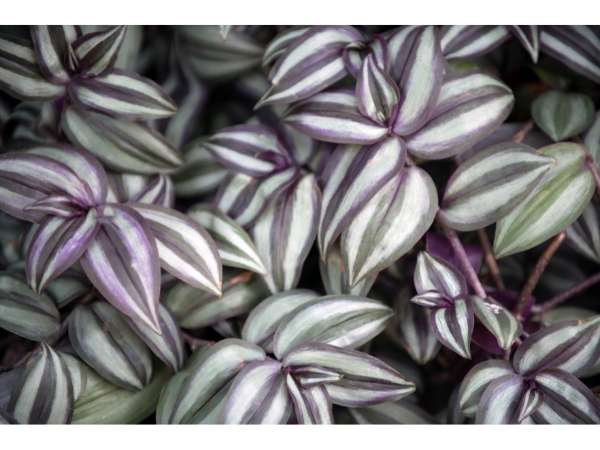
Wandering Jew
Tradescantia zebrina
Common Names: Wandering Jew, Inch Plant, Silver Inch Plant, Zebrina
Local Name: Wandering Jew (Tamil/Hindi)
Family: Commelinaceae
Origin: Mexico and Central America
Plant Type: Perennial trailing herb
Average Lifespan: Many years; essentially indefinite with propagation
🌿 Botanical Description
| Growth Habit | Trailing and spreading; roots at nodes; fast-growing |
| Plant Size | 15–30 cm tall; spreads indefinitely as ground cover |
| Leaves | Oval, 5–8 cm long; upper surface green with two silver stripes; underside deep purple; waxy sheen |
| Flowers | Small, pink-purple, three-petaled; appear at stem tips |
| Root System | Shallow fibrous; roots readily at stem nodes |
☀ Growing Conditions
| Climate | Tropical to subtropical; very adaptable |
| Temperature Range | 15–35°C; frost-sensitive |
| Soil Type | Well-draining potting mix; tolerates most soils |
| Soil pH Preference | 6.0–7.5 |
| Sun Requirement | Bright indirect light to partial shade; more light intensifies purple coloration |
| Water Requirement | Low to moderate; drought-tolerant; allow to dry slightly between waterings |
| Can it Grow in Pots? | Yes, ideal in hanging baskets and pots |
🌾 Cultivation & Care
| Fertilizer Schedule | Monthly during growing season; minimal feeding needed |
| Recommended Organic Fertilizers | Diluted worm castings, compost tea |
| Common Pests | Spider mites, aphids (in dry conditions) |
| Common Diseases | Root rot from overwatering; leaf spot in humid conditions |
| Pruning Time | Year-round; pinch tips to encourage bushy growth |
| How to Prune | Pinch growing tips; cut back leggy stems; cuttings can be propagated |
🌱 Pollination & Propagation
| Propagation by Cuttings | Stem cuttings root in water or soil within 1–2 weeks; one of the easiest plants to propagate |
💰 Economic Importance
| Market Uses | Ground cover, hanging basket, indoor ornamental, border plant |
| Market Value (Approx.) | ₹30–100 per cutting or small pot |
🌿 Cultural Significance
| Symbolism | Named for its wandering growth habit; symbol of resilience and adaptability |
| Traditional Uses | Used in traditional medicine in Mexico for skin conditions; widely used as ornamental ground cover |
📝 Orchard Observation Notes
Add your field observations here.