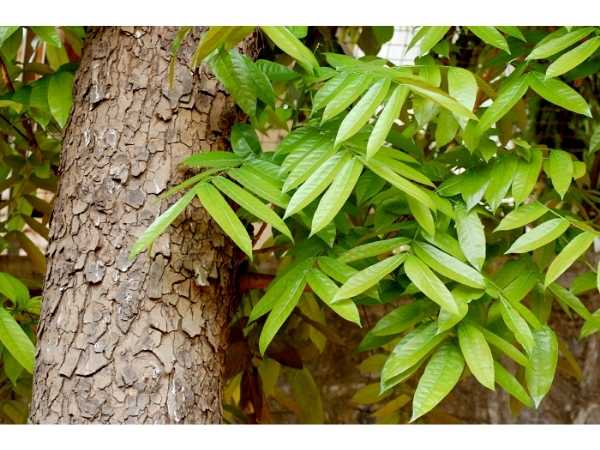
Timber - Mahogany
Swietenia macrophylla
Common Names: Mahogany, Big-leaf Mahogany, Honduras Mahogany
Local Name: Mahogany (Tamil), Mahogany (Hindi)
Family: Meliaceae
Origin: Central and South America
Plant Type: Large deciduous tree, 30–40 meters tall
Variety: Swietenia macrophylla (Big-leaf); related species: S. mahagoni, S. humilis
Average Lifespan: 100–350 years
🌿 Botanical Description
| Growth Habit | Tall, straight-trunked deciduous tree with a broad, spreading crown |
| Plant Size | 30–40 meters tall; trunk diameter up to 2 meters |
| Leaves | Pinnately compound, 12–45 cm long, 3–6 pairs of leaflets; dark green, glossy |
| Flowers | Small, greenish-yellow, fragrant, borne in axillary panicles |
| Flower Characteristics | 5-petaled, 8–10 mm diameter; blooms during dry season |
| Fruit | Large woody capsule, 12–22 cm long, pear-shaped, splits from base when ripe |
| Fruit Color | Grey-brown when mature |
| Seed Characteristics | Winged seeds (samaras), 35–45 per capsule; wind-dispersed |
| Root System | Deep taproot with extensive lateral root system; good wind resistance |
| Bark | Dark brown to grey, deeply fissured and scaly on mature trees |
| Wood | Reddish-brown heartwood; fine, even grain; excellent workability; naturally durable |
☀ Growing Conditions
| Climate | Tropical to subtropical; prefers warm, humid conditions |
| Temperature Range | 20–35°C ideal; sensitive to frost; tolerates brief dry spells |
| Rainfall Requirement | 1000–2500 mm annually; tolerates seasonal drought |
| Soil Type | Deep, well-drained fertile soil; alluvial or volcanic soils preferred |
| Soil pH Preference | 6.0–7.5 |
| Sun Requirement | Full sun; shade-tolerant when young |
| Spacing | 8–12 meters in plantations; wider in agroforestry systems |
| Irrigation Method | Rain-fed in most regions; supplemental irrigation in dry areas during establishment |
| Water Requirement | Moderate to high during establishment; drought-tolerant once mature |
| Can it Grow in Pots? | Only as a young seedling; not suitable for long-term container growing |
🌾 Cultivation & Care
| Fertilizer Schedule | Annual application during first 5 years; minimal once established |
| Recommended Organic Fertilizers | Compost, farmyard manure, green manure cover crops |
| Pesticide Frequency | Monitor for shoot borer; preventive measures recommended |
| Recommended Organic Pesticides | Neem-based formulations for shoot borer management |
| Mulching Practice | Mulch around young trees to retain moisture and suppress weeds |
| Training System | Single-stem training; remove lower branches to promote straight bole |
| Pruning Time | Dry season; formative pruning in first 5–8 years |
| How to Prune | Remove lower branches and competing leaders; maintain single straight trunk for timber quality |
| Common Pests | Mahogany shoot borer (Hypsipyla robusta/grandella) — major pest worldwide |
| Common Diseases | Root rot in waterlogged soils; leaf spot; occasional canker |
| Disease Prevention & Remedies | Mixed planting to reduce shoot borer; good drainage; avoid monoculture plantations |
💧 Environmental Impact
| Carbon Sequestration | Excellent carbon sink; large trees store significant amounts of carbon in wood |
| Soil Conservation Practices | Deep root system prevents erosion; leaf litter enriches soil |
| Biodiversity Benefits | Provides habitat for birds, insects, and epiphytes; supports forest ecosystem |
| Agroforestry Potential | Excellent shade tree for coffee, cacao, and other understory crops |
| Conservation Status | CITES Appendix II — regulated international trade due to overexploitation |
| Sustainable Practices | Plantation-grown mahogany reduces pressure on wild populations; FSC certification available |
💰 Economic Importance
| Commercial Production Regions | Brazil, Peru, Bolivia (native); India, Indonesia, Fiji, Philippines (planted) |
| Market Uses | Premium furniture, cabinetry, boat building, musical instruments, decorative veneers |
| Processing Uses | Sawn timber, veneer, plywood; bark used in traditional medicine |
| Market Value (Approx.) | ₹2,000–5,000 per cubic foot for plantation-grown timber; wild mahogany commands premium prices |
| Harvest Cycle | 25–50 years for timber harvest depending on growing conditions |
| Timber Qualities | Reddish-brown color, fine grain, excellent durability, easy to work, takes polish beautifully |
📸 Photo Gallery
📝 Orchard Observation Notes
Add your field observations here.