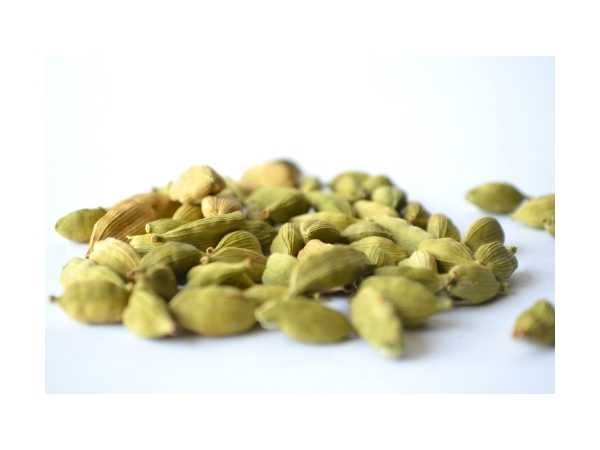
Cardamom / Elaichi
Elettaria cardamomum
Common Names: Cardamom, Green Cardamom, True Cardamom, Queen of Spices
Local Name: Elakkai (Tamil), Elaichi (Hindi)
Family: Zingiberaceae
Origin: Western Ghats, India
Plant Type: Perennial herbaceous plant, 2–4 m tall
🌿 Botanical Description
| Growth Habit: | Clump-forming perennial with erect leafy shoots (pseudostems) arising from a thick, fleshy rhizome. Each clump produces 10–20 tillers. |
| Leaves: | Alternate, linear-lanceolate, 40–60 cm long and 5–8 cm wide, dark green above, pale and silky beneath. Strongly aromatic when crushed. |
| Flowers: | Borne on separate horizontal or trailing panicles (racemes) arising from the base of the plant at ground level. Flowers are white with violet-streaked lips, about 2 cm long. |
| Fruit: | Three-sided oval capsule, 1–2 cm long, pale green to yellowish-green. Each capsule contains 15–20 small, dark brown, aromatic seeds arranged in three rows. |
| Rhizome: | Thick, fleshy, creeping rhizome with distinct nodes; serves as the primary means of vegetative propagation. |
🌤️ Growing Conditions
| Climate: | Tropical montane; requires cool, humid conditions with consistent moisture. Naturally grows as an understory plant in evergreen forests. |
| Temperature: | 10–35 °C; optimal range 18–28 °C. Night temperatures below 15 °C promote flowering. |
| Rainfall: | 1,500–4,000 mm annually, well-distributed. Requires high humidity (75%+) throughout the year. |
| Altitude: | 600–1,500 m above sea level; best quality produced at 800–1,200 m in the Western Ghats. |
| Soil: | Rich, well-drained forest loam with high organic matter content and pH 5.0–6.5. Requires deep, moist soil with good humus layer. |
| Sunlight: | 40–60% shade is ideal; traditionally grown under the canopy of native forest trees. Excessive sunlight causes leaf scorch. |
🌱 Cultivation & Care
| Propagation: | Rhizome division (most common), tissue culture for high-yielding varieties, or seed (slow and variable). Suckers with 2–3 tillers are planted. |
| Spacing: | 2 × 2 m or 3 × 3 m depending on variety and shade conditions. |
| Watering: | Consistent moisture is critical; drip irrigation during dry months significantly improves yield. Mulching with leaf litter retains soil moisture. |
| Fertilization: | Apply NPK (75:75:150 g/plant/year) in split doses. High potassium requirement for capsule development. Organic manure (2–5 kg/plant) applied annually. |
| Shade Management: | Regulate shade trees to maintain 40–60% canopy cover. Excessive shade reduces flowering; too little causes leaf burn and poor capsule set. |
| Pests & Diseases: | Thrips (Sciothrips cardamomi) damage capsules; root grubs; Katte virus (mosaic disease) is the most devastating — spread by aphids, no cure, infected plants must be removed. |
🌸 Flowering & Fruiting
| Flowering Season: | Main flowering April–May with a secondary flush in September–October. Plants begin flowering 2–3 years after planting. |
| Pollination: | Primarily by native honeybees (Apis cerana) and solitary bees. Bee colonies are maintained in cardamom plantations to ensure pollination. |
| Harvest Period: | Capsules are hand-picked every 30–45 days from August to February. Harvested when 75% mature (green but fully developed) for best aroma. |
| Yield: | 150–300 kg dried capsules per hectare; high-yielding varieties with good management can produce up to 500 kg/ha. |
| Processing: | Capsules are dried in electric or fuel-fired dryers at 45–50 °C for 14–18 hours to retain green color. Sun-drying produces bleached, lower-grade product. |
💰 Economic Importance
| Spice Trade: | Third most expensive spice after saffron and vanilla. Guatemala is the world's largest producer; India (Kerala, Karnataka, Tamil Nadu) is the second largest and the largest consumer. |
| Market Value: | Indian cardamom commands premium prices in Middle Eastern markets. Auction centers in Bodinayakanur (Tamil Nadu) and Vandanmedu (Kerala) are major trading hubs. |
| Culinary Use: | Essential in Indian chai, biryanis, and sweets. Used in Scandinavian baking, Middle Eastern coffee (gahwa), and spice blends worldwide. |
| Essential Oil: | Cardamom oil (1,8-cineole 30–40%, α-terpinyl acetate 30–35%) used in food flavoring, perfumery, and pharmaceutical preparations. |
🏛️ Cultural Significance
| Queen of Spices: | Known as the "Queen of Spices" (with black pepper as the "King"), cardamom has been traded from India for over 3,000 years. |
| Traditional Use: | Integral to Indian hospitality — offered to guests in paan, added to sweets at festivals, and used in wedding ceremonies across South Asia. |
| Middle Eastern Culture: | Central to Arab coffee culture; cardamom-spiced coffee (gahwa) is a symbol of hospitality and generosity in Gulf countries. |
💊 Medicinal Uses
| Digestive Aid: | One of the most valued carminatives in Ayurveda; relieves bloating, gas, and nausea. Chewing cardamom seeds after meals aids digestion. |
| Oral Health: | Natural breath freshener with antibacterial properties against oral pathogens. Traditionally chewed to prevent cavities and gum disease. |
| Respiratory Health: | 1,8-cineole acts as a bronchodilator; cardamom is used in traditional medicine for asthma, bronchitis, and respiratory congestion. |
| Detoxification: | Ayurveda considers cardamom a natural detoxifier; used to support kidney function and as a mild diuretic. |
📝 Orchard Observation Notes
Add your field observations here.