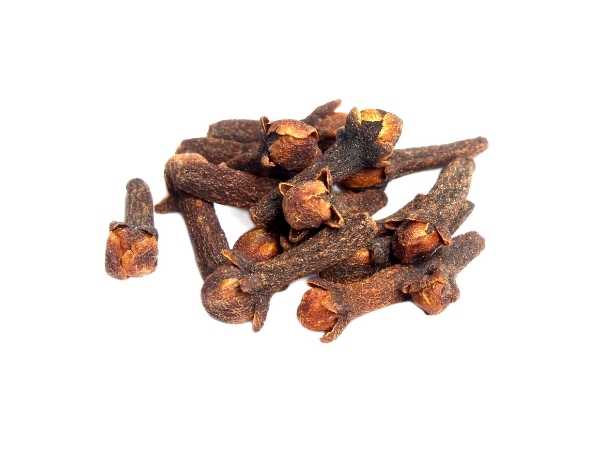
Clove
Syzygium aromaticum
Common Names: Clove, Clove Tree
Local Name: Kirambu (Tamil), Laung (Hindi)
Family: Myrtaceae
Origin: Maluku Islands, Indonesia
Plant Type: Evergreen tree, 8–12 m tall
🌿 Botanical Description
| Trunk: | Smooth grey bark with a straight trunk; branches begin low on the tree forming a conical canopy. |
| Leaves: | Large, opposite, simple, ovate-lanceolate, 8–13 cm long, glossy dark green with prominent oil glands visible when held to light. |
| Flowers: | Crimson flowers borne in terminal clusters (cymes) of 3–15. Each flower has a long calyx tube topped by four spreading sepals and four unopened petals forming the characteristic bud. |
| Fruit: | A fleshy drupe called "mother of clove," about 2.5 cm long, dark purple when ripe, containing one or two seeds. |
| Root System: | Deep taproot with extensive lateral roots; sensitive to waterlogging. |
🌤️ Growing Conditions
| Climate: | Tropical maritime climate; thrives in warm, humid conditions with no prolonged dry season. |
| Temperature: | 20–30 °C; cannot tolerate frost or temperatures below 15 °C. |
| Rainfall: | 1,500–2,500 mm annually, well-distributed throughout the year. |
| Altitude: | Sea level to 900 m; best performance below 600 m. |
| Soil: | Rich, loamy, well-drained volcanic soils with pH 5.5–6.5; does not tolerate waterlogged or sandy soils. |
| Sunlight: | Partial shade when young; full sun at maturity for best bud production. |
🌱 Cultivation & Care
| Propagation: | Seeds (must be sown fresh within one week of harvest as viability drops rapidly). Vegetative propagation through air-layering is also practiced. |
| Spacing: | 6–7 m between trees in all directions. |
| Watering: | Regular watering during establishment; mature trees rely on rainfall but benefit from irrigation during dry spells. |
| Fertilization: | Apply organic manure (10–15 kg/tree/year) and NPK fertilizer; increase potassium during bud formation. |
| Pruning: | Minimal pruning; remove dead or crossing branches to maintain airflow within the canopy. |
| Pests & Diseases: | Stem borers, scale insects; Sumatra disease (bacterial wilt caused by Ralstonia syzygii) is the most serious threat. |
🌸 Flowering & Fruiting
| Flowering Season: | Trees begin flowering after 5–7 years; main flowering occurs September–October in the Northern Hemisphere. |
| Harvest Stage: | Buds are harvested when they turn pink but before they open. Timing is critical — open flowers have significantly less eugenol. |
| Yield: | A mature tree (15+ years) can produce 3–7 kg of dried cloves per year; peak production at 20–25 years. |
| Drying: | Harvested buds are sun-dried for 4–5 days until they turn dark brown and the moisture content drops below 12%. |
💰 Economic Importance
| Spice Trade: | One of the most valuable spices historically; Indonesia, Madagascar, and Tanzania are the top producers. |
| Essential Oil: | Clove oil (70–90% eugenol) is extracted from buds, stems, and leaves; used in dentistry, food flavoring, and perfumery. |
| Kretek Industry: | Indonesia consumes over 50% of world clove production for kretek (clove cigarettes). |
| Food Industry: | Used in spice blends (garam masala, Chinese five-spice), baked goods, beverages, and meat preservation. |
🏛️ Cultural Significance
| Historical Trade: | Cloves were among the first spices traded internationally; Arab traders brought them to Europe by the 4th century. The spice trade wars of the 16th–17th centuries were largely driven by cloves. |
| Traditional Use: | In Indian culture, cloves are offered in religious ceremonies and chewed as a mouth freshener after meals. In Chinese tradition, courtiers held cloves in their mouths when addressing the emperor. |
| Symbolism: | Represents dignity and warmth in the language of spices; associated with protection and prosperity in many Asian cultures. |
💊 Medicinal Uses
| Dental Care: | Eugenol is a powerful analgesic and antiseptic; clove oil is widely used for toothache relief and in dental cements. |
| Digestive Aid: | Stimulates digestive enzyme secretion; used in traditional medicine to treat flatulence, indigestion, and nausea. |
| Antimicrobial: | Strong antibacterial and antifungal properties; effective against foodborne pathogens and oral bacteria. |
| Anti-inflammatory: | Eugenol exhibits anti-inflammatory activity comparable to some pharmaceutical agents; used in Ayurveda for joint pain. |
📝 Orchard Observation Notes
Add your field observations here.