Nutmeg
Myristica fragrans
Common Names: Nutmeg, Mace (aril), Fragrant Nutmeg
Local Name: Jathikkai (Tamil), Jaiphal (Hindi)
Family: Myristicaceae
Origin: Banda Islands, Indonesia
Plant Type: Evergreen tree, 5–13 m tall
🌿 Botanical Description
| Trunk: | Smooth, greyish-brown bark exuding a reddish sap (kino) when cut. Dense, spreading canopy with a pyramidal shape when young. |
| Leaves: | Alternate, elliptic-oblong, 5–15 cm long, dark green and glossy above, paler beneath. Aromatic with visible oil glands when held to light. |
| Flowers: | Small, pale yellow, bell-shaped, waxy flowers in axillary clusters. Dioecious — male trees produce clusters of 1–10 flowers; female trees bear solitary or paired flowers. |
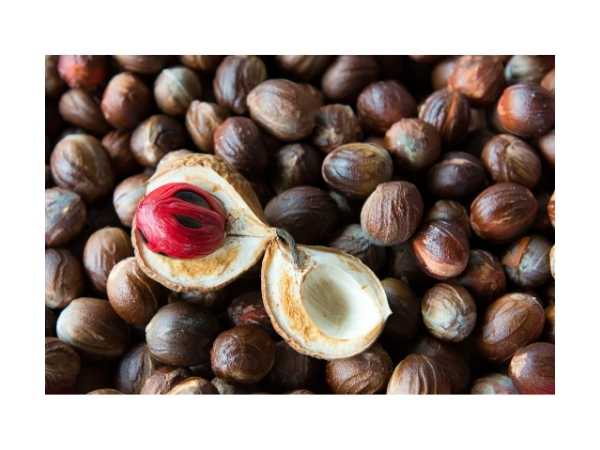
| Fruit: | Fleshy, pendulous, pear-shaped drupe, 6–9 cm long, yellow when ripe. Splits open to reveal a glossy dark brown seed (nutmeg) covered by a bright red, lacy aril (mace). |
| Seed: | The seed kernel is the nutmeg spice — ovoid, 2–3 cm long, with a characteristic marbled pattern of dark veins (ruminate endosperm) when cut in cross-section. |
🌤️ Growing Conditions
| Climate: | Tropical; requires consistently warm, humid conditions with no dry season. USDA zones 10–12. |
| Temperature: | 20–30 °C; optimal around 25–27 °C. Highly frost-sensitive; growth ceases below 15 °C. |
| Rainfall: | 1,500–3,000 mm annually, evenly distributed. High humidity (80%+) is essential for good fruit set. |
| Altitude: | Sea level to 700 m; best performance in lowland tropical areas below 500 m. |
| Soil: | Deep, well-drained, rich volcanic or alluvial loam with pH 5.5–7.0. Requires good organic matter content; intolerant of waterlogging. |
| Sunlight: | Partial shade when young (first 3–4 years); full sun at maturity for maximum fruiting. |
🌱 Cultivation & Care
| Propagation: | Seeds (must be sown fresh; viability lost within 2 weeks). Epicotyl grafting and approach grafting used to ensure female trees and early bearing. |
| Spacing: | 8 × 8 m or 9 × 9 m; plant one male tree per 10–20 female trees for wind pollination. |
| Watering: | Regular irrigation during dry spells; young trees are especially sensitive to drought. Mulching conserves soil moisture. |
| Fertilization: | Apply 20 kg organic manure and NPK (500:250:1000 g/tree/year) for bearing trees. Potassium is critical for fruit quality. |
| Pruning: | Minimal pruning needed; remove dead wood and low-hanging branches. Shape young trees to develop a strong central leader. |
| Pests & Diseases: | Fruit rot (Diplodia natalensis) in humid conditions; bark canker; white cedar moth larvae. Shot hole borer can damage trunks of stressed trees. |
🌸 Flowering & Fruiting
| Flowering Season: | Trees begin flowering at 5–8 years (seed-grown) or 3–4 years (grafted). Flowering occurs year-round in equatorial regions with peaks in June–August. |
| Pollination: | Wind-pollinated; male trees shed abundant pollen. Adequate male-to-female ratio is essential for good fruit set. |
| Fruit Maturity: | Fruits mature 6–9 months after flowering. Ripe fruits split open on the tree, revealing the mace-covered seed. |
| Yield: | A mature tree (15+ years) produces 1,500–2,000 fruits per year. Peak production at 25–30 years; trees can bear for over 60 years. |
| Processing: | Mace is carefully separated from the seed and flattened for drying. Nutmeg seeds are dried slowly over 6–8 weeks until the kernel rattles inside the shell. |
💰 Economic Importance
| Dual Spice: | Unique among spice plants — produces two distinct spices from one fruit: nutmeg (seed kernel) and mace (aril). Both command high market prices. |
| Production: | Indonesia (Banda Islands, North Maluku) produces 75% of the world's nutmeg. India (Kerala), Grenada, and Sri Lanka are other major producers. |
| Essential Oil: | Nutmeg oil (myristicin, sabinene, α-pinene) used in food flavoring, perfumery, and pharmaceutical preparations. Nutmeg butter extracted for cosmetics. |
| Culinary Use: | Essential in béchamel sauce, eggnog, pumpkin pie spice, garam masala, and Dutch/Indonesian cuisine. Mace is used in lighter dishes, sauces, and baking. |
💊 Medicinal Uses
| Digestive Aid: | Used in traditional medicine to treat diarrhea, nausea, and stomach cramps. Small doses stimulate appetite and improve digestion. |
| Sleep Aid: | Warm milk with a pinch of nutmeg is a traditional remedy for insomnia. Contains trimyristin, which has mild sedative properties. |
| Pain Relief: | Nutmeg oil applied topically relieves muscle and joint pain. Used in traditional Unani medicine as an analgesic and anti-inflammatory. |
| Caution: | Nutmeg contains myristicin, which in large doses (more than 5 g) can cause hallucinations, nausea, and toxicity. Normal culinary amounts are safe. |
📝 Orchard Observation Notes
Add your field observations here.